







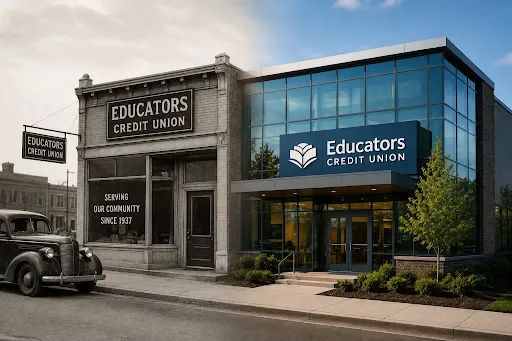
Search “Educators Credit Union” and you’ll bump into a problem nobody warns you about first: the name isn’t unique. A Wisconsin credit union serving Milwaukee Racine and Kenosha shares that exact name with a completely unrelated institution in Waco Texas plus similarly named credit unions scattered across Oklahoma Alabama Montana Illinois and a handful of other states. None of them are connected none of them share a routing number and mixing them up can genuinely mess up a direct deposit or a wire transfer.
This guide sorts that confusion out then settles in on the one most people searching from Wisconsin actually want: the credit union headquartered just outside Racine. You’ll get the routing number real branch addresses across Milwaukee Racine and Kenosha how membership eligibility actually works (spoiler: you don’t need to be a teacher) what the accounts and loan rates look like how the mobile app compares to what you’d get at a bank and how to reach an actual human being when something goes wrong. Every number address and detail below comes from current verifiable sources not a guess dressed up as a fact.
What Is Educators Credit Union?
The story starts in 1937 when a handful of Racine teachers got tired of having nowhere affordable to save or borrow money. The Great Depression had left banks cautious and credit tight so instead of waiting around the teachers pooled what they had and started a cooperative called the Racine Teachers Credit Union. Nearly nine decades later that small teachers’ fund has become one of Wisconsin’s larger financial institutions.
It’s now headquartered in Mount Pleasant holds close to $3.9 billion in assets and counts over 230000 members across southeastern Wisconsin. It operates as a federally insured statechartered credit union which means unlike a bank it has no outside shareholders demanding quarterly profits. Deposits are protected through the NCUA up to $250000 per depositor per ownership category the same protection level FDIC coverage gives a bank account.
A quick rundown:
- Founded 1937 as Racine Teachers Credit Union
- Headquarters: 1326 Willow Rd Mount Pleasant WI 53177
- Over 230000 members
- Roughly $3.9 billion in assets
- About 19–25 branches across southeastern Wisconsin
- NCUAinsured to $250000 per depositor
- Statechartered notforprofit cooperative
- Access to roughly 60000 feefree ATMs nationwide
Why the notforprofit structure actually matters: at a traditional bank profit gets split among investors as dividends. At a credit union there aren’t outside investors to pay so earnings tend to flow back to the people who actually bank there usually in the form of better savings rates lower loan rates or fewer fees. That’s the core financial argument for choosing a credit union over a bank in the first place and it holds up here.
The Routing Number and Why People Get It Wrong

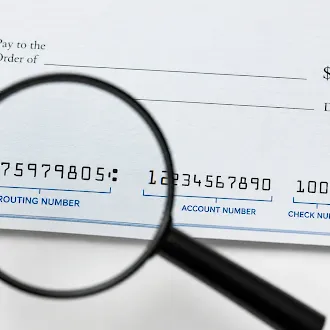
275981378. That’s the routing number for Wisconsin’s Educators Credit Union and you’ll need it any time you’re setting up direct deposit linking a payment app like Zelle or Venmo sending or receiving a wire transfer or automating a recurring bill payment.
Don’t just copy it from this page and move on though a routing number typo or mixup is one of the most common (and most avoidable) banking mistakes people make. Confirm it against your own account first:
- Look at the bottomleft corner of a physical check
- Check your account details inside online or mobile banking
- Pull it from a recent statement
- Call and have a representative confirm it directly
Here’s where the mixup usually happens: if your account is actually with the Waco Texas credit union of the same name the routing number is different 311989852. Grabbing the wrong one isn’t a cosmetic error. It can delay a paycheck by days or cause a wire transfer to bounce back entirely so the thirty seconds it takes to doublecheck is worth it.
Finding a Branch Near Milwaukee Racine or Kenosha
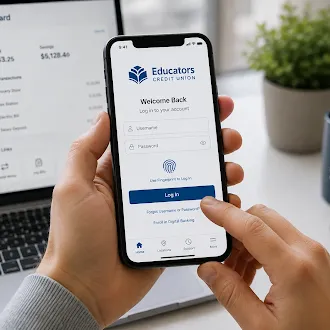
The branch footprint leans heavily toward southeastern Wisconsin and Milwaukee has the densest cluster.
Milwaukee: branches along W. Appleton Avenue W. Forest Home Avenue W. Loomis Road W Park Place and N. Prospect Avenue with reach extending into Oak Creek and New Berlin.
Racine and Mount Pleasant: effectively home base. The main office sits at 1326 Willow Rd in Mount Pleasant with additional branches through Racine itself including one on Rapids Drive.
Kenosha: falls inside the eligible service area with its own local branch access.
Pull back further and the full eligibility map covers roughly 15 counties: Dane Green Jefferson Kenosha Milwaukee Ozaukee Racine Rock Walworth Washington and Waukesha in Wisconsin plus Boone Lake McHenry and Winnebago just across the Illinois line.
Practical tip: branch hours shift and locations occasionally close move or ch
ange hours seasonally. Before driving out for something specific like a notarization or a large cash transaction check the official branch locator on ecu.com or call ahead so the trip isn’t wasted. Beyond physical branches members also get feefree access to roughly 60000 ATMs nationwide through the COOP shared network which matters a lot if you travel outside Wisconsin or live near the edge of the service area.
Getting a Real Person on the Phone
| Contact Method | Details |
| Local phone number | (262) 8865900 |
| Tollfree number | (800) 2365898 |
| Mailing address | PO Box 081040 Racine WI 53408 |
| Main office | 1326 Willow Rd Mount Pleasant WI 53177 |
| Lost or stolen card | Call the main number and follow the prompts any time day or night |
| Website | ecu.com |
If you’re stuck in the phone menu selecting the “existing member” option tends to route you to a live representative faster than the general queue. If you’d rather skip the phone entirely the live chat feature on the website handles quick requests a balance check a routing number confirmation a question about a fee without much of a wait.
Realworld scenario: say your debit card gets declined unexpectedly while you’re out running errands. Calling the main number and following the automated prompts for card issues will get you an explanation faster than waiting for a callback and it works around the clock not just during branch hours.
Who Can Actually Join

A lot of people rule themselves out here for no reason at all. You do not need to be a teacher and you never have despite what the name implies.
Anyone who lives works worships or attends school somewhere in that roughly 15county southeastern Wisconsin and northern Illinois footprint qualifies for membership. Once one person in a household is a member immediate family typically becomes eligible too.
Step by step here’s how to actually sign up:
- Confirm your home or work address falls inside an eligible county
- Bring a governmentissued photo ID driver’s license state ID passport or military ID all work
- Have your Social Security number and current address ready
- Fund the account with whatever the minimum opening deposit is (this figure changes so confirm it before applying)
- Apply online over the phone or in person at a branch
Realworld scenario: take someone living in McHenry County Illinois but commuting into Milwaukee for work. They’d still qualify a work address counts exactly the same as a home address for eligibility purposes so crossborder commuters aren’t shut out.
Accounts Loans and Rates
Nothing exotic in the product lineup here it’s the standard credit union spread generally with softer fees than a comparable account at a traditional bank in the same market.
On the deposit side:
- Free and interestbearing checking accounts
- Standard savings accounts
- Money market accounts
- Share certificates (the credit union equivalent of a CD) across multiple terms
- Individual Retirement Accounts (IRAs)
- Youth and student savings accounts
On the lending side:
- New and used auto loans financed up to 100% of dealer cost or NADA wholesale value
- Fixed and adjustablerate first mortgages
- Home equity loans and lines of credit
- Personal loans
- Credit cards
- Optional addons like GAP insurance and extended vehicle warranties
Weighing the pros and cons before you apply:
In your favor: competitive auto loan pricing for members with solid credit flexible terms on both new and used vehicles and underwriting decisions made locally rather than routed through a call center in another state.
Worth watching for: collateral requirements can get strict on older vehicles your actual rate still depends heavily on your credit profile just like anywhere else and none of this applies if you live work or study outside the eligible service area.
Expert tip: if a car purchase is on the horizon get preapproved before you ever walk into a dealership. Preapproval costs nothing gives you a real interest rate based on your actual credit and puts you in a far stronger negotiating position when the dealer’s finance office starts pitching its own loan.
Login App and Online Banking Fixes
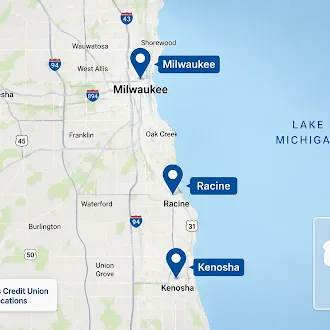
There are two ways to manage an account here: desktop online banking through the website or the mobile app available on both iOS and Android.
The app covers most of what people actually need on a daily basis checking balances transferring funds between accounts mobile check deposit bill pay budgeting and savingsgoal tools loan payments and Zelle transfers. One catch that trips people up constantly: Zelle only works through the mobile app not the desktop site.
If login isn’t cooperating work through this checklist:
- Confirm you’re entering a username not an account number
- Use “Forgot Password” instead of guessing repeatedly too many failed attempts locks the account automatically
- Update the app or clear your browser cache if pages aren’t loading correctly
- Still locked out after that? Skip further troubleshooting and just call a representative can usually clear it in a single conversation
Before your very first login have these ready:
- Your member number or Social Security number for identity verification
- A private secure internet connection skip public WiFi for anything involving your bank account
- Twofactor authentication turned on if the option is offered
- The official app downloaded only from the App Store or Google Play never a thirdparty link
Educators CU vs. Other Wisconsin Credit Unions
| Feature | Educators CU | Summit Credit Union | UW Credit Union |
| Headquarters | Mount Pleasant WI | Madison WI | Madison WI |
| Founded | 1937 | 1935 | 1931 |
| Approx. assets | $3.9 billion | Multibillion statewide | Multibillion statewide |
| Who can join | Live/work/worship/attend school in a 15county SE WI & IL area | Anyone statewide | UW affiliation or within 5 miles of a branch |
| Strongest region | Milwaukee Racine Kenosha | Statewide Madisoncentered | Statewide Madisoncentered |
| Best fit for | MilwaukeeRacineKenosha residents wanting dense local branches | Wisconsin residents anywhere in the state | Students staff and alumni tied to UW |
How to read this table: if you’re planted in the MilwaukeeRacineKenosha corridor the branch density here beats most statewide alternatives in that specific pocket of the state. Live somewhere else in Wisconsin entirely and a statewide credit union will likely serve you better simply because of geography there’s no wrong answer just a question of where you actually live and work.
The Teacher Myth
Here’s the single biggest misconception attached to this credit union: no you don’t have to be a teacher and you never have.
The name is a leftover from 1937 when a group of educators started the cooperative out of necessity but membership opened to the general public within the service area decades ago. This is a common pattern across older credit unions generally: plenty kept a founding group’s name (railroad workers postal employees utility workers) long after opening membership to everyone.
Members today work in government healthcare small business retail skilled trades or nothing at all if they’re retired or still in school. If the “Educators” name has been the only thing holding you back from applying that reason doesn’t actually hold up.
All the Other “Educators Credit Unions” Out There
This is genuinely where most of the online confusion comes from so it deserves its own section. Several credit unions across the country use “Educators” in their name and none of them are branches of one another separate routing numbers separate leadership separate login systems separate everything.
- Educators Credit Union Waco Texas operates as edcu.com serves central Texas routing number 311989852
- Illinois Educators Credit Union a separate institution serving Illinois school employees
- Gulf Coast Educators Federal Credit Union based near Houston Texas
- Oklahoma Educators Credit Union serves Oklahomabased school employees and their families
- Lehigh Valley Educators Credit Union based in Pennsylvania
- North Alabama Educators Credit Union serves the Huntsville Alabama area
- Capital Educators Federal Credit Union based in Boise Idaho
- Hampton Roads / Virginia Educators Credit Union separate Virginiabased institutions
- Montana Educators’ Credit Union based in Great Falls Montana
- Educators Community Credit Union yet another regional institution unrelated to Wisconsin’s
None of these share a routing number a login system or a customer service line with the Wisconsin credit union the name overlap is coincidental not corporate. Before wiring money or setting up direct deposit anywhere take the extra minute to confirm you’re actually on the website tied to where you opened your account.
Explore more knowledge on Penstripe
Frequently Asked Questions
What is the Educators Credit Union routing number? 275981378 specific to the Wisconsin institution. Confirm it against your own check or statement since similarly named credit unions in other states use entirely different routing numbers.
Where is Educators Credit Union headquartered? 1326 Willow Rd Mount Pleasant Wisconsin just outside Racine where the credit union was originally founded back in 1937.
Is Educators Credit Union only for teachers? No. Teachers started it in 1937 but membership has been open to anyone who lives works worships or attends school in its roughly 15county service area for decades now.
How do I reach Educators Credit Union customer service? Call (262) 8865900 or the tollfree line at (800) 2365898 during business hours. Live chat on the website and inbranch visits both work too for simpler questions.
Is my money actually safe at Educators Credit Union? Yes. It’s NCUAinsured up to $250000 per depositor per ownership category the same federal protection level you’d get from FDIC coverage at a bank.
Does Educators Credit Union have a mobile app? Yes on both iOS and Android with mobile check deposit transfers bill pay budgeting tools and Zelle transfers (apponly not available through desktop online banking).
How many branches does Educators Credit Union have? Somewhere around 19 to 25 concentrated mostly in Milwaukee Racine and Kenosha counties with additional locations spread across southeastern Wisconsin.
Is the Educators Credit Union in Waco Texas the same company as the one in Wisconsin? No. They’re completely separate unaffiliated institutions with different routing numbers and different leadership. The shared name is coincidence not affiliation.
Final Thoughts
Nearly 90 years after a group of Racine teachers pooled their savings this credit union has grown into one of Wisconsin’s larger financial institutions with over 230000 members and a solid branch presence around Milwaukee Racine and Kenosha. You don’t need to be an educator to join just live work worship or study somewhere in its service area and its routing number 275981378 belongs to this institution alone not the similarly named ones in Texas Oklahoma or anywhere else.
If you’re in that MilwaukeeRacineKenosha stretch and want memberfirst rates without the fee creep of a big bank it’s a solid option worth checking out. Confirm your eligibility gather your ID and Social Security number and apply online at ecu.com or in person at a branch near you.