






Type Progressive Education Network (PEN) into a search bar and the results get confusing fast. Is it a private school chain with a fee structure? A nonprofit? A conference organizer in the United States? The honest answer is that more than one organization uses this name, and mixing them up leads people to ask questions like what’s the PEN school fee structure? that don’t actually apply to the organization they’re thinking of.
This guide focuses on the Progressive Education Network most people searching from Pakistan mean: PEN, the Lahore-headquartered nonprofit that adopts government schools in Karachi, Lahore, Multan, and dozens of other districts. You’ll get its head office details, how its school model actually works (and why fee structure is the wrong question to ask), where it operates, how to apply for a job there, what people say about it, and how it’s genuinely different from the separately run Progressive Education Network in the United States and the historic Progressive Education Association. Every fact below is drawn from PEN’s own published materials and independent sources, not assumption.

PEN was founded in 2005 by seven friends a mix of bankers, businessmen, professionals, and educationalists who wanted to do something concrete about the gap between Pakistan’s public and private schools. Rather than building new schools from scratch, they studied organizations like BRAC, The Citizens Foundation, and CARE, and settled on a different approach: adopting existing, underperforming government schools and rebuilding them from the inside out.
The first adoptions happened in Lahore in 2010, after roughly a year of negotiation with the City District Government of Lahore. From there, the model expanded into other districts across Punjab and Sindh, including Karachi, Gujrat, and Muzaffargarh in its early years, and it has continued growing since.
Founding Team and Governance
PEN’s founders and board include professionals with backgrounds spanning banking, engineering, law, and international business several with degrees from institutions like Columbia University, LUMS, and MIT. That mix matters for a nonprofit of this size: it brings finance and operations discipline to a mission-driven organization, which is part of why PEN has been able to maintain SECP registration and third-party certification over two decades rather than operating informally.
Quick Facts
- Founded 2005 by seven professional co-founders
- First schools adopted in Lahore, 2010
- Registered as a nonprofit company under Section 42 of the Companies Ordinance 1984
- Regulated by the Securities and Exchange Commission of Pakistan (SECP)
- Certified by the Pakistan Centre for Philanthropy
- ISO 9001 certified for its quality management system
- Operates public-private partnership schools across multiple Pakistani provinces
- Runs Non-Formal Education (NFE) programs for children who dropped out or never enrolled
Why the Adopted Schools Model Matters
PEN doesn’t own the school buildings or replace the government’s role in education the way a private school chain would. Instead, it partners with district education authorities including the Punjab Education Initiatives Management Authority (PEIMA) under agreements that typically run around ten years. PEN pays for infrastructure upgrades, teacher training, and academic reforms, while government ownership of the school itself stays intact. That structure is the single most important thing to understand before anything else about PEN makes sense, and it’s the reason so many of the common questions about PEN fees, ownership, accountability have answers that don’t match what people expect from a private institution.
PEN Head Office and How to Contact It

| Contact Method | Details |
| Head office address | 172-A, Ahmad Block, New Garden Town, Lahore, Punjab 54600, Pakistan |
| Phone | +92 42 3584 2554 / +92 42 3584 7711 |
| +92 349 4443736 / +92 345 0055422 | |
| info@pen.org.pk | |
| Website | pen.org.pk |
When to Contact Head Office vs. a Local School
If you’re trying to reach PEN about a specific school rather than head office matters, it’s usually faster to contact that school directly, since day-to-day academic and administrative questions are typically handled at the campus level rather than routed through Lahore. For donations, partnership inquiries, media requests, or general organizational questions, the head office contact details above are the right starting point.
What to Have Ready Before You Call or Email
- The specific school name and district, if your question relates to a particular campus
- Whether you’re inquiring as a parent, prospective employee, donor, or partner organization this changes who picks up the query internally
- Any reference numbers from prior correspondence, if this is a follow-up
The PEN School System: How the Model Actually Works
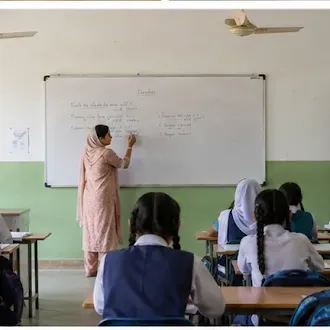
PEN’s approach breaks down into two core models, and understanding the difference clears up a lot of confusion about what a PEN school actually is.
Adopted Government Schools
Under this model, PEN signs a public-private partnership agreement with a district government to take over the improvement of an existing state-run school for a fixed term, generally around ten years. PEN funds and manages infrastructure repairs things like functioning toilets, clean drinking water, and usable classrooms while also investing in teacher training and modern teaching techniques. The school remains a government school in ownership; PEN’s role is closer to an operating partner than an owner.
Non-Formal Education (NFE) Centers
Separately, PEN runs Non-Formal Education programs aimed specifically at children who either dropped out of school or never enrolled in the first place. This model was launched in partnership with District Education Authorities in the Sargodha division and is designed to give those children a genuine second chance at schooling, often through a more flexible, accelerated format than a traditional classroom.
What Changes for Students and Parents
For a family whose child attends a PEN-adopted school, day-to-day life doesn’t look dramatically different from any other government school the same national curriculum generally applies, and the school keeps its original name and government registration. What changes is the quality layer underneath: better-maintained facilities, more consistently trained teachers, and closer performance monitoring than the school likely had before adoption.
Real-world scenario: picture a government primary school in a low-income neighborhood where the roof leaks, there’s no working washroom, and half the teaching staff hasn’t had formal training in over a decade. Under PEN’s adoption model, that same school could see structural repairs, a trained new set of teachers, and a functioning administration within a year or two without ever becoming a private institution or charging its students anything.
Strengths and Limitations of the Model
Where it works well: the model is capital-efficient compared to building new schools from scratch, it keeps education free and accessible for low-income families, and it plugs into existing government infrastructure rather than duplicating it.
Where it’s constrained: adoption agreements depend on government cooperation and can take a long time to negotiate, as PEN’s own early history with the Lahore city government shows. The model also depends on continued donor and corporate funding, since PEN itself doesn’t charge fees to generate revenue the way a private school would.
Does PEN Have a Fee Structure?
This is one of the most searched questions about PEN, and it’s also the one most likely to send someone down the wrong path. Because PEN operates by adopting government schools rather than running a private school chain, education at PEN-managed schools is free for enrolled students there’s no tuition-based fee structure the way there would be at a private academy.
Why the Confusion Exists
The name Progressive Education Network sounds, to a lot of people, like a private school brand similar to how other Pakistani education groups with polished names do charge tuition. PEN’s branding and professional presentation can create that same impression, even though its actual funding model is closer to a development-sector nonprofit than a school business.
How PEN Actually Funds Its Operations
Running the organization requires ongoing donations, corporate partnerships, and funding for infrastructure, teacher salaries, and program delivery all of which PEN discloses through audited financial reporting as required under its SECP registration. Donations made to PEN are also tax-deductible under Pakistan’s Income Tax Ordinance, which is a detail specific to registered nonprofits and another sign that its financial model runs on donor support rather than tuition.
If you’re looking for a fee schedule because you assumed PEN operates like a private school system, that assumption is the actual source of the confusion. The correct expectation is: free public education, improved through nonprofit investment.
Where PEN Operates: Karachi, Lahore, Multan, and Beyond
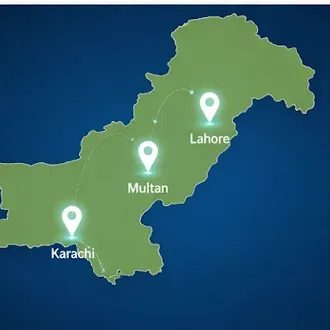
PEN’s footprint has grown significantly since its first Lahore adoptions in 2010. According to its own reporting, the organization has expanded to operate schools across roughly 15 districts of Pakistan, spanning both Punjab and Sindh.
Lahore
The organizational headquarters and the site of PEN’s first adopted schools in 2010, still central to its operations today. Head office administrative functions, donor relations, and overall program management run out of Lahore.
Karachi
Among the earliest cities PEN expanded into outside Punjab, with a provincial head role specifically overseeing Sindh operations according to recent job postings a sign that Karachi and the broader Sindh province represent an active, ongoing part of PEN’s footprint rather than a one-time expansion.
Multan
Included in PEN’s district network, with job listings for roles like Senior Section Manager based there, suggesting active school operations and on-the-ground staffing in the area.
Other Districts
Early expansion also reached Gujrat and Muzaffargarh, with continued growth into additional districts as new public-private partnerships were signed over the years, bringing PEN’s current reach to roughly 15 districts nationwide.
Practical tip: because PEN doesn’t operate the way a searchable retail-style branch locator would each location is a specific adopted government school, not a PEN-branded storefront the most reliable way to confirm whether a specific school in your area is PEN-managed is to contact the head office directly or check current listings on pen.org.pk, since district partnerships do shift over time as contracts end or renew.
PEN Academy and Non-Formal Education
Beyond adopting individual schools, PEN also runs a broader initiative called PEN Academy described by the organization as a collective impact program aimed at improving K-12 student achievement through the use of information and communication technologies (ICTs).
The Goal Behind PEN Academy
The stated ambition behind PEN Academy is large: reaching students from cradle to school and college, and using education technology to extend PEN’s reach well beyond the physical adopted schools. Combined with its Non-Formal Education centers for out-of-school children, PEN Academy represents the organization’s attempt to scale impact without necessarily needing to adopt every individual school one at a time.
How This Fits the Broader Model
Where school adoption is slow and infrastructure-heavy, ed-tech initiatives like PEN Academy are designed to move faster and reach more students per dollar spent at least in theory. This two-track approach (physical adoption plus a technology layer) is a common pattern among education nonprofits trying to scale impact without linearly scaling costs.
Expert insight: the actual outcomes of programs like PEN Academy depend heavily on execution, internet connectivity in target areas, and consistent funding variables that apply to any similar ed-tech initiative anywhere in the world, not just PEN specifically. It’s a reasonable strategy on paper, but it’s worth treating claimed reach numbers as targets rather than guaranteed outcomes unless backed by independently audited data.
Working at PEN: Jobs, Salary, and Careers
PEN regularly posts openings on Pakistani job boards, including roles like Computer Instructor, Project Coordinator, Provincial Head (Sindh), Senior Section Manager, and Locator positions across Lahore, Multan, and other district offices.
Types of Roles Available
Head office roles in Lahore tend to cover finance, donor relations, program management, and organizational strategy. Field and district roles based in cities like Karachi and Multan are closer to the ground, overseeing school-level operations, teacher performance, and academic outcomes across a group of adopted schools.
What to Know Before Applying
- Roles span both head office administrative positions and school-level teaching or management jobs the qualifications and pay differ significantly between the two.
- Exact salary figures aren’t consistently published by PEN itself; third-party job sites list estimates based on past postings and employee submissions, which should be treated as approximate, not official.
- Field-based roles, like a Senior Section Manager overseeing schools in a specific district, typically require prior experience managing large-scale educational or development-sector projects in Pakistan.
- Because PEN is a nonprofit governed by SECP regulations, compensation structures tend to follow development-sector norms rather than private-school-chain pay scales, which can run higher or lower depending on the role and city.
Pros and Cons of Working at a Nonprofit Like PEN
In its favor: mission-driven work with visible community impact, exposure to public-private partnership operations that’s valuable development-sector experience, and roles across a genuine range of functions from teaching to finance to program management.
Worth weighing: nonprofit compensation in Pakistan’s development sector often trails private-sector equivalents for similar experience levels, and funding-dependent organizations can see hiring slow down during donor funding gaps.
Application Checklist
- Check pen.org.pk and major job boards (Indeed Pakistan, BeBee) for current openings rather than relying on old listings
- Confirm whether the role is head-office based (Lahore) or district/school-based (Karachi, Multan, etc.)
- Ask directly about compensation during the interview process rather than relying on third-party salary estimators
- Review PEN’s public mission and model beforehand nonprofit education roles usually suit candidates motivated by the mission, not just the paycheck
- Prepare examples of relevant experience in education, development work, or large-scale program management for field-based roles
PEN Reviews: What People Actually Say
Public review data on PEN is thinner than you’d find for a large private company, which is fairly typical for a mid-sized nonprofit. On its official Facebook page, PEN shows a strong recommendation rate from a small pool of reviewers a positive signal, but based on a sample too small to treat as statistically definitive.
Where Credible Commentary Actually Comes From
Beyond consumer platforms, most third-party commentary on PEN comes from academic and development-sector sources rather than review sites including a widely cited Harvard Business Review case study examining PEN’s early growth decisions, and ongoing coverage from Pakistani nonprofit directories that track its certifications and school counts. These sources tend to focus on organizational strategy and governance rather than day-to-day parent or student satisfaction, which is worth knowing if you’re specifically hunting for the latter.
How to Read PEN’s Reputation Fairly
PEN isn’t a consumer product with thousands of App Store ratings, so the more useful signal is institutional its SECP registration, Pakistan Centre for Philanthropy certification, and ISO 9001 status rather than star ratings. If you’re evaluating PEN as a donor, employee, or partner, those governance credentials tell you more than a review count would. If you’re a parent evaluating a specific PEN-adopted school, the more relevant step is speaking directly with that school’s administration and other parents in your community.
Progressive Education Network vs. Progressive Education Association
These two names get confused constantly, and they’re not the same thing at all.
The Progressive Education Association (1919)
The Progressive Education Association was a U.S. organization founded in 1919, built around the educational philosophy associated with thinkers like John Dewey emphasizing experiential learning, student-centered classrooms, and a break from rigid rote instruction. It operated for decades before dissolving in the 1950s, but its ideas outlived the organization itself and continue to influence what’s broadly called progressive education today.
Progressive Education Network (PEN) in Pakistan
Progressive Education Network in Pakistan, the organization this guide is primarily about, has no organizational connection to that historic U.S. association. It shares a philosophical spirit improving education outcomes but it’s a modern Pakistani nonprofit built around adopting government schools, not a continuation of the 1919 American movement.
PEN Pakistan vs. Progressive Education Network (USA)
To add one more layer: there’s also a present-day Progressive Education Network based in the United States, run as a membership network for independent schools that follow progressive teaching philosophy schools like Miquon School and Hanahau’oli School are among its affiliated members. This U.S.-based network hosts an annual national conference for progressive educators and maintains its own job board for member schools, which is where searches like progressive education network conference or progressive education network national conference are actually pointing.
| Feature | PEN Pakistan | Progressive Education Network (USA) |
| Founded | 2005 | Descended from the Progressive Education Association’s legacy, active today as a modern U.S. membership network |
| Headquarters | Lahore, Pakistan | United States |
| Core model | Adopts and improves existing government schools | Membership network connecting independent progressive schools |
| Funding structure | Nonprofit, SECP-regulated, donor and corporate funded | Membership-based, U.S. nonprofit |
| Notable activity | School infrastructure, teacher training, NFE programs | National conferences, job board, professional development for member schools |
| Who it serves | Underprivileged children in Pakistani public schools | Independent schools and educators in the U.S. |
How to read this table: if your search started with PEN school fee structure, PEN school Lahore, or PEN school head office, you’re almost certainly thinking of the Pakistani organization. If it started with progressive education network conference, you’re likely looking for the U.S. membership network instead and applying information from one to the other (like assuming PEN Pakistan charges membership dues, or that the U.S. network runs adopted government schools) will lead you astray.
Read more content on Penstripe
Frequently Asked Questions
What is the Progressive Education Network (PEN)? PEN is a Pakistani nonprofit founded in 2005 that adopts underperforming government schools through public-private partnerships, funding infrastructure improvements and teacher training while the schools remain government-owned and tuition-free for students.
Where is PEN’s head office located? PEN’s head office is at 172-A, Ahmad Block, New Garden Town, Lahore, Punjab 54600, Pakistan. It can be reached at +92 42 3584 2554 or by email at info@pen.org.pk.
What is the PEN school fee structure? There isn’t one in the traditional sense. PEN-adopted schools are government schools, so education remains free for enrolled students. PEN funds improvements through donations and partnerships, not tuition.
Does PEN operate in Karachi and Multan? Yes. Beyond its Lahore headquarters, PEN operates adopted schools and district offices in Karachi, Multan, and roughly a dozen other districts across Punjab and Sindh, based on its own reporting and current job listings.
Is Progressive Education Network the same as the Progressive Education Association? No. The Progressive Education Association was a U.S. organization founded in 1919 that shaped progressive teaching philosophy before dissolving decades later. PEN Pakistan is an unrelated modern nonprofit with a different founding, mission, and location.
How do I apply for a job at PEN? Openings are posted on pen.org.pk and job boards like Indeed Pakistan and BeBee, covering both head-office roles in Lahore and district-based positions in cities like Karachi and Multan. Confirm exact compensation directly during the hiring process.
Is PEN a government organization? No. PEN is a registered nonprofit company under Section 42 of Pakistan’s Companies Ordinance 1984, regulated by the SECP. It partners with government education departments but isn’t a government body itself.
Is there a Progressive Education Network in the United States too? Yes, and it’s a separate organization from PEN Pakistan. The U.S.-based Progressive Education Network is a membership organization connecting independent progressive schools and hosts its own national conference.
Conclusion
Progressive Education Network, in its Pakistani form, is a nonprofit that has spent two decades trying to close the gap between public and private education by adopting government schools rather than building parallel private ones funding infrastructure, training teachers, and keeping education free for the students who need it most. It’s headquartered in Lahore, active in Karachi, Multan, and a growing list of other districts, and entirely separate from both the historic Progressive Education Association and the present-day U.S.-based Progressive Education Network.