



The importance of education isn’t just something teachers repeat to motivate tired students. It’s a measurable force behind almost every major improvement in a person’s life, from higher income and better health to stronger decision-making and expanded opportunity. At its simplest, education is the process of gaining knowledge, skills, and understanding, whether through formal schooling, hands-on training, or everyday learning experiences.
In today’s fast-changing world, education matters more than ever. Technology is reshaping industries, information is more accessible than at any point in history, and the skills needed to succeed keep evolving. This makes the ability to learn, adapt, and think critically one of the most valuable assets a person can have.
This guide breaks down exactly why education matters, not just in theory, but in practical terms. You’ll learn how it shapes individual lives, why it’s essential for students specifically, how it strengthens entire societies, and what’s currently standing in the way of equal access to it. Whether you’re a student, a parent, or simply someone interested in the bigger picture, this article covers the full scope of what education really does.
What Is Education and Why Does It Matter?
The Simple Meaning of Education
Education is the process of acquiring knowledge, skills, values, and habits, typically through teaching, training, or personal experience. It’s often associated with classrooms and degrees, but that’s only one part of the picture. At its core, education is about learning how to think, understand, and function effectively in the world.
Education Beyond School and College
Formal schooling is just one path to education. Vocational training, online courses, mentorship, self-study, and even everyday problem-solving all contribute to a person’s overall education. This broader view matters because it means learning doesn’t stop at graduation. It’s an ongoing process that continues throughout a person’s life, shaping how they work, think, and adapt to new situations.
Why Is Education Important in Our Life?
Education Builds Knowledge and Understanding
Education gives people the foundational knowledge needed to understand how the world works, from basic literacy and math to more specialized subjects. This understanding directly affects everyday life, whether it’s reading a medical prescription correctly or understanding a loan agreement before signing it.
Education Helps People Make Better Decisions
Informed decisions require accurate information and the ability to evaluate it. Education strengthens both. People with stronger educational backgrounds tend to make more informed choices around health, finances, and major life decisions, simply because they have the tools to evaluate information critically rather than relying on guesswork.
Education Creates New Opportunities
Education opens doors that might otherwise stay closed, from qualifying for a job to accessing scholarships and professional networks. It doesn’t guarantee success, but it consistently expands the range of opportunities available to a person
Major Benefits of Education

Better Career Opportunities
Education is one of the strongest predictors of employability. Employers consistently prioritize candidates with relevant education or training, since it signals both competence and discipline. According to the U.S. Bureau of Labor Statistics, individuals with higher levels of education generally experience lower unemployment rates and higher median weekly earnings compared to those with only a high school diploma.
Financial Growth and Stability
Beyond just landing a job, education is closely tied to long-term financial stability. Higher education levels are consistently linked to higher lifetime earnings, better job security, and greater access to benefits like healthcare and retirement plans.
Improved Problem-Solving Skills
Education trains people to break down complex issues, evaluate multiple solutions, and choose the most effective one. This skill transfers directly into the workplace, where problem-solving is one of the most valued abilities across nearly every industry.
Increased Confidence and Independence
Successfully learning new skills and mastering difficult material builds genuine self-confidence. This confidence often extends beyond academics into a person’s ability to make independent decisions and advocate for themselves in professional and personal settings.
Lifelong Learning
Education instills habits of curiosity and continuous improvement that last well beyond formal schooling. People who value education tend to keep learning throughout their careers, adapting more easily as industries and technologies evolve.
Importance of Education for Students
Builds Strong Academic Skills
For students, education lays the groundwork for essential academic skills like reading comprehension, mathematical reasoning, and scientific literacy. These skills don’t just support classroom performance; they form the basis for how students process information for the rest of their lives.
Develops Critical Thinking
Education pushes students to analyze information rather than simply memorize it. Students who are taught to question, evaluate, and reason through problems develop critical thinking skills that serve them well beyond graduation, in careers, relationships, and everyday decision-making.
Improves Communication Skills
Through writing assignments, group projects, and classroom discussions, students develop the ability to express ideas clearly and listen to others effectively. Strong communication skills remain one of the most requested qualities among employers across virtually every industry.
Prepares Students for Future Careers
Education exposes students to a range of subjects and skills, helping them discover their interests and strengths before choosing a career path. It also builds foundational competencies, like teamwork, time management, and research skills, that apply directly to professional environments.
Role of Education in Society

Reducing Poverty and Inequality
Education is one of the most effective tools for breaking cycles of poverty. According to UNESCO research, each additional year of schooling can meaningfully increase an individual’s future income, and communities with higher education levels consistently show lower poverty rates over time.
Creating Responsible Citizens
Education teaches people about civic responsibility, laws, and community values. Educated populations tend to show higher rates of civic participation, including voting and community involvement, which strengthens democratic institutions.
Supporting Economic Development
Nations with strong education systems generally experience stronger long-term economic growth. Educated workforces attract businesses, drive innovation, and increase overall productivity, which benefits the broader economy, not just individual workers.
Promoting Social Progress
Education plays a direct role in advancing social equality, public health awareness, and reduced discrimination. Societies with widespread access to education tend to see improved outcomes across nearly every major social indicator, from life expectancy to gender equality.
How Education Supports Personal Development
Building Confidence
Mastering new material and overcoming academic challenges builds a genuine sense of accomplishment. This confidence often carries into other areas of life, including relationships, career decisions, and personal goals.
Developing Communication Skills
Education creates structured opportunities to practice expressing ideas, listening actively, and engaging in constructive discussion, skills that strengthen both personal relationships and professional interactions.
Improving Decision-Making
By teaching people to evaluate evidence and consider multiple perspectives, education strengthens the ability to make sound, well-reasoned decisions rather than relying purely on instinct or outside pressure.
Discovering Personal Strengths
Exposure to a variety of subjects and experiences helps individuals identify what they’re genuinely good at and interested in, which often shapes career choices and long-term personal fulfillment.
Importance of Education in Today’s Digital World
The nature of education itself is changing rapidly, and its importance is expanding along with it.
Digital literacy has become as essential as traditional literacy. Understanding how to navigate digital tools, evaluate online information, and use technology responsibly is now a core educational requirement, not an optional extra.
Online learning has expanded access to education far beyond traditional classrooms. Students and professionals alike can now learn new skills through online courses, often at a fraction of the cost of traditional programs.
AI and technology skills are becoming increasingly important as automation reshapes the job market. Education systems that incorporate coding, data literacy, and AI fundamentals are better preparing students for the careers of the near future.
Continuous learning is no longer optional for professionals who want to stay competitive. Industries evolve quickly, and workers who commit to ongoing education, through certifications, workshops, or self-study, tend to adapt more successfully to change.
Preparing for future jobs means education systems must evolve alongside the job market itself. Many of the roles students will eventually hold don’t exist yet, which makes adaptability and foundational learning skills more valuable than memorized, industry-specific knowledge.
Challenges That Limit Access to Education
Understanding the importance of education also means recognizing the real barriers that prevent many people from accessing it.
Poverty
Tuition costs, school supplies, and even transportation can make education financially out of reach for low-income families, both within the United States and globally.
Lack of Educational Resources
Underfunded schools often lack updated textbooks, qualified teachers, and basic infrastructure, all of which directly affect the quality of education students receive.
Gender Inequality
In many parts of the world, girls face additional barriers to education, including cultural expectations, early marriage, and safety concerns, which limit their access compared to boys.
Digital Divide
Not every student has reliable internet access or a personal device for learning. This gap became especially visible during periods of remote learning, when students without technology fell noticeably behind their peers.
How Can We Improve Education?
Addressing these challenges requires action on multiple fronts:
- Better access to schools — Expanding school infrastructure in underserved and rural areas reduces geographic barriers to education.
- Teacher training — Investing in ongoing professional development helps teachers use more effective, evidence-based teaching methods.
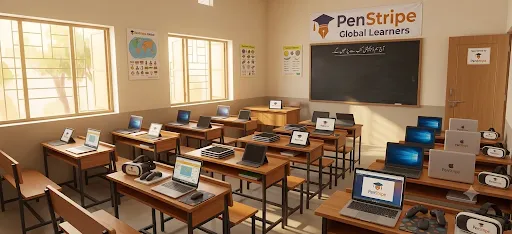
- Technology in classrooms — Providing devices, reliable internet, and digital learning tools helps close the digital divide.
- Affordable learning resources — Expanding access to free or low-cost textbooks, courses, and scholarships reduces financial barriers.
- Equal opportunities — Policies that specifically support girls, low-income students, and marginalized communities help ensure education benefits everyone, not just those with existing advantages.
Frequently Asked Questions
What is the importance of education?
Education is important because it builds knowledge, strengthens decision-making, and creates opportunities for better careers and financial stability. Beyond individual benefits, it also drives economic growth, reduces poverty, and supports more informed, engaged societies.
Why is education important in our life?
Education matters in daily life because it shapes how people understand information, solve problems, and make decisions, from managing finances to navigating healthcare choices. It also opens doors to career opportunities that would otherwise remain inaccessible.
What are the main benefits of education?
The main benefits of education include better career opportunities, financial stability, improved problem-solving skills, increased confidence, and a foundation for lifelong learning. These benefits compound over time, affecting nearly every major life decision.
How does education help society?
Education helps society by reducing poverty, supporting economic development, and creating informed, civically engaged citizens. Communities with higher education levels typically experience improved public health outcomes and stronger social equality.
Why is education important for students?
For students, education builds essential academic skills, critical thinking, and communication abilities while helping them discover their interests and prepare for future careers. These foundational skills carry far beyond the classroom into adulthood.
What is the biggest benefit of education?
While education offers many benefits, most experts point to improved critical thinking and decision-making as the single most impactful outcome, since this skill influences nearly every other area of life, from career choices to personal relationships.
What are 5 importance of education points?
Five key points include: education builds knowledge and skills, improves career opportunities, strengthens decision-making, reduces poverty, and supports personal confidence and independence. Together, these highlight both the individual and societal value of education.
Is education more important than money?
Education and financial stability aren’t opposing goals; they’re connected. Education typically leads to better long-term earning potential, making it a foundation for financial success rather than a competing priority.
Conclusion
The importance of education reaches far beyond grades and diplomas. It shapes how individuals think, make decisions, and build careers, while also strengthening entire communities through reduced poverty, stronger economies, and more informed citizens. From personal development to societal progress, education remains one of the most powerful tools available for creating lasting, positive change.
If there’s one takeaway from this guide, it’s that education is an ongoing investment, not a one-time achievement. Whether you’re a student building foundational skills, a professional pursuing continuous learning, or a parent supporting a child’s education, prioritizing learning today creates opportunities that compound for years to come. Start by identifying one skill or subject worth investing in, and take the first step toward building on it.