



Reading feels like it should get easier with age, but for a lot of people students, adults picking up books again, IELTS candidates staring down a timed section it plateaus instead. Knowing how to improve reading skills isn’t about reading more slowly or more often for its own sake; it’s about training specific, learnable habits that most readers never got taught directly.
This guide covers ten practical strategies that move the needle, whether you’re helping a 5-year-old sound out their first chapter book, coaching a struggling student, prepping for IELTS, or just trying to get through more of your own reading list without losing focus halfway through. You’ll also get a breakdown of what reading skills actually are, how to boost comprehension and speed at the same time, the mistakes quietly working against you, and a simple daily routine you can start today. Strong reading skills touch nearly everything else vocabulary, writing, even how clearly you think through an argument which is exactly why this is worth getting right.
Read our most related post IELTS speaking tips
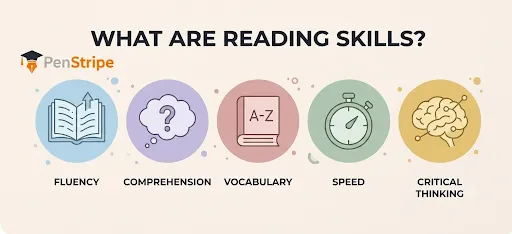
What Are Reading Skills?
Reading skills are the specific abilities that combine to let someone pull meaning out of text and they’re not one single skill, which is why “just read more” doesn’t fix every reading problem on its own.
The Main Types of Reading Skills
Reading fluency is the ability to read text accurately, at a reasonable pace, with natural expression the foundation everything else builds on, since a reader working hard just to decode words has little mental energy left for meaning.
Reading comprehension is understanding what the words actually mean, both literally and between the lines the difference between saying the words out loud correctly and actually following the story or argument.
Vocabulary is the stock of known words a reader can recognize and use. A weak vocabulary caps comprehension no matter how strong the other skills are, since every unfamiliar word is a small gap in the picture.
Reading speed is how quickly a reader moves through text while still comprehending it worth distinguishing from fluency, since speed without comprehension is really just fast decoding, not effective reading.
Critical thinking is evaluating, questioning, and connecting what’s read rather than absorbing it passively spotting bias, weighing an argument, or noticing when a text contradicts itself.
Why Is It Important to Improve Reading Skills?
Reading sits underneath almost every other academic and professional skill, which is exactly why weak reading skills tend to quietly drag down performance in subjects that, on the surface, have nothing to do with reading.
Benefits for Students and Everyday Life
For students, stronger reading skills mean faster, more accurate work across every subject a student who reads efficiently spends less time decoding a math word problem or a science passage and more time actually solving it. For adults, better reading skills translate into faster comprehension at work, stronger writing (since reading and writing skills reinforce each other), and simply getting more out of the time spent reading, whether that’s a novel, a news article, or a dense report.
Real-world scenario: two students read the same history chapter for homework. One decodes every word correctly but finishes with only a vague sense of what happened; the other reads the same chapter in the same amount of time but can explain the cause-and-effect chain clearly. The gap between them isn’t intelligence it’s which specific reading skills each one has actually practiced.
10 Effective Ways to Improve Reading Skills

These strategies work for kids, students, and adults alike, though how you apply each one shifts depending on the reader’s age and goals more on that later in this guide.
1. Set a Daily Reading Goal
Consistency beats intensity. A realistic daily target even 15–20 minutes builds the habit far more reliably than an ambitious weekend binge that burns out after two weeks.
2. Choose Books at Your Reading Level
Text that’s too hard drains energy on decoding instead of understanding; text that’s too easy doesn’t build new skills. The five-finger rule is a simple way to check fit: open to a page, and for every word you don’t recognize, hold up a finger. Two to three fingers by the end of the page usually means the book is a good match zero to one means it’s likely too easy, and four or more suggests it’s too advanced for independent reading right now.
3. Improve Your Vocabulary
Look up unfamiliar words as you encounter them rather than skipping past them, and try using new words in a sentence of your own shortly after learning them active use cements vocabulary far better than passive recognition.
4. Practice Active Reading
Active reading means engaging with the text instead of letting your eyes passively move across it predicting what comes next, questioning the author’s choices, and noticing your own reactions as you go.
5. Take Notes While Reading
Brief margin notes, a running list of key points, or a simple two-column notes page (quote on one side, your thought on the other) keeps your thinking visible and gives you something to review later instead of relying on memory alone.
6. Ask Questions About the Text
Before, during, and after reading, ask questions “What do I think will happen next?” “Why did the author include this detail?” “What’s still unclear to me?” This alone measurably improves comprehension, because it forces the brain to stay actively engaged with meaning rather than just word recognition.
7. Summarize What You Read
After a chapter, article, or section, put the main idea into your own words in one or two sentences. If you can’t summarize it, that’s a reliable sign comprehension broke down somewhere and it’s worth a quick reread.
8. Practice Reading Comprehension
Dedicated comprehension exercises short passages followed by questions build the specific skill of extracting meaning under a bit of pressure, which is different from the more relaxed comprehension built through casual reading.
9. Read Different Types of Content
Fiction, nonfiction, articles, and even instructions or recipes each exercise reading skills differently. A reader who only reads novels may struggle with dense nonfiction, and vice versa variety builds flexibility.
10. Reduce Distractions While Reading
Put the phone in another room, close unnecessary tabs, and read in a consistent, quiet spot. Reading comprehension drops noticeably when attention is split, even if the reader feels like they’re multitasking fine.
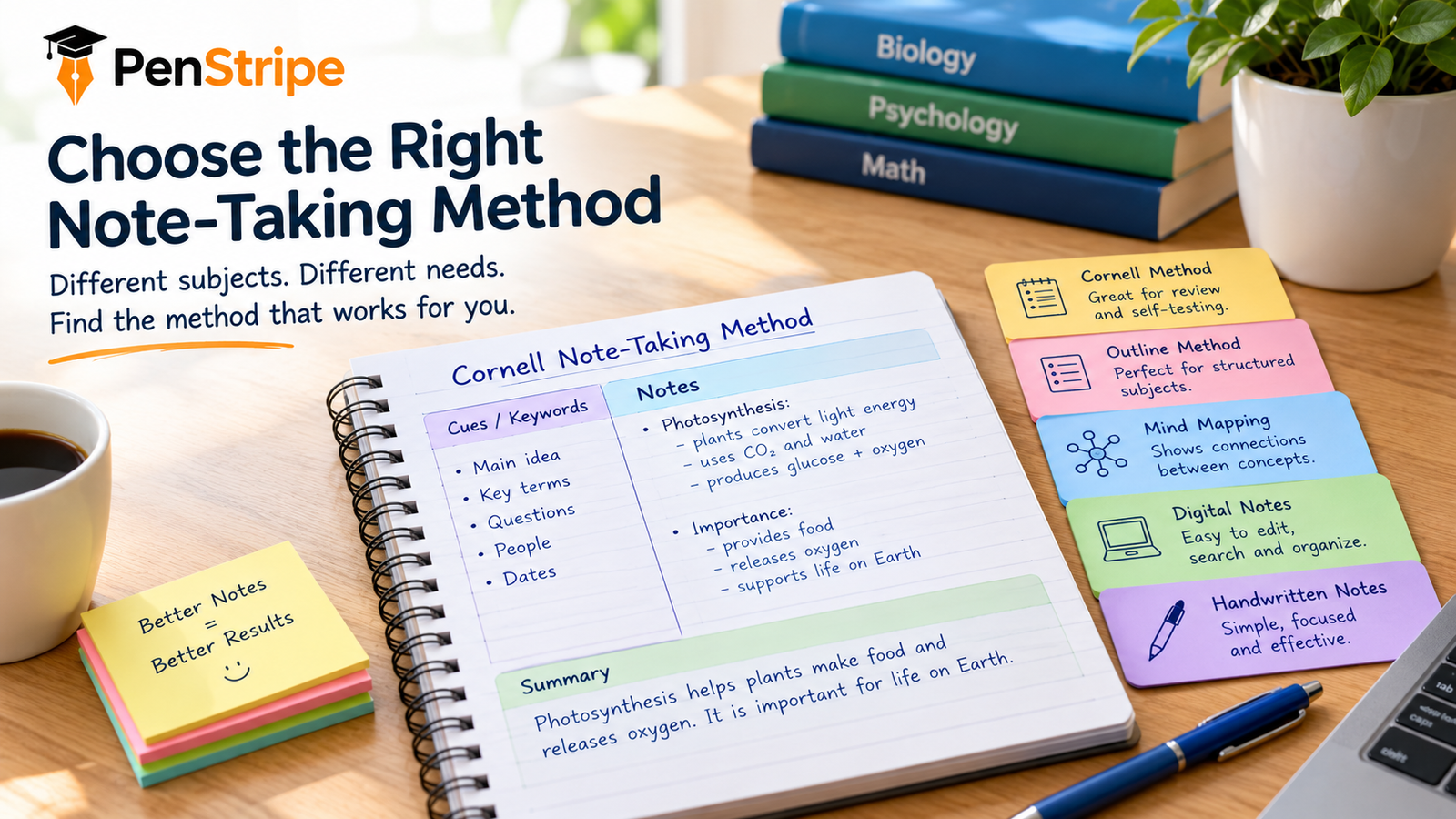
Checklist to put these into practice this week:
- Pick a daily reading time and stick to it for seven days
- Use the five-finger rule on your next book choice
- Keep a running vocabulary list of new words
- Summarize in one sentence after every reading session
- Read at least one nonfiction piece if you usually read fiction, or vice versa
How to Improve Reading Comprehension
Comprehension is where most of the real payoff lives, since it’s the actual point of reading in the first place decoding without understanding isn’t really reading at all.
Before You Read
Preview the title, headings, and any images. Ask what you already know about the topic and what you expect to learn this activates background knowledge, which research consistently shows improves how much new information sticks.
While You Read
Pause periodically to check in: does this still make sense? If not, reread the confusing section immediately rather than pushing forward and hoping it clicks later comprehension gaps tend to compound the longer they go unaddressed.
After You Read
Summarize, and if possible, explain what you read to someone else. Teaching or explaining a concept out loud reliably exposes gaps that silent review misses.
Expert insight: the single highest-leverage habit for improving comprehension is monitoring noticing the moment you’ve stopped understanding. Readers who lack this skill keep reading past confusion without realizing it, which means every other comprehension strategy gets applied too late to help.
How to Improve Reading skills Without Losing Understanding

Reading faster is genuinely useful, but only if comprehension survives the process speed that sacrifices understanding isn’t actually saving time, since you’ll just need to reread anyway.
Eliminate Subvocalization Gradually
Many slower readers silently “say” every word in their head. Practicing with a slightly faster pace than feels fully comfortable pushed just past your subvocalization speed trains the eyes and brain to process text more visually over time.
Use Skimming and Scanning Strategically
Skimming (getting the general idea) and scanning (hunting for a specific detail) aren’t lesser forms of reading they’re the right tool for material that doesn’t need deep, careful reading, like a reference chapter you’re only checking one fact in.
Widen Your Eye Span
Instead of fixating on one word at a time, practice taking in small clusters of words in a single glance. This develops naturally with consistent practice and is a core mechanic behind most speed-reading training.
Practice with a Purpose, Not Just a Timer
Speed practiced without a comprehension check just trains fast skimming, not genuinely faster reading. Pair any speed practice with a quick summary or a few comprehension questions afterward to confirm understanding kept pace.
Common Mistakes That Can Hurt Your Reading Skills
Rereading without a strategy. Simply rereading a confusing paragraph a second time in the exact same way rarely fixes the confusion pair a reread with an active question (“what specifically am I missing here?”) instead.
Choosing books far outside your level. Constantly struggling through text that’s too advanced kills motivation and starves comprehension of the mental bandwidth it needs. Constantly choosing text that’s too easy, on the other hand, stalls growth entirely.
Passive reading. Letting the eyes move across the page without actively predicting, questioning, or summarizing is one of the most common and most fixable habits behind poor reading skills.
Reading in short, distracted bursts. Constant interruptions fragment attention and make it much harder to build a coherent understanding of longer or more complex text.
Ignoring vocabulary gaps. Skipping unfamiliar words repeatedly creates small comprehension holes that add up, especially in denser nonfiction or academic material.
What Causes Poor Reading Skills More Broadly: beyond these day-to-day habits, weak reading skills often trace back to limited early reading exposure, insufficient vocabulary development, undiagnosed learning differences like dyslexia, or simply a lack of consistent practice at an appropriately challenging level. Identifying which of these actually applies matters far more than generic “read more” advice, since the right fix depends heavily on the underlying cause.
A Simple Daily Reading Practice Routine
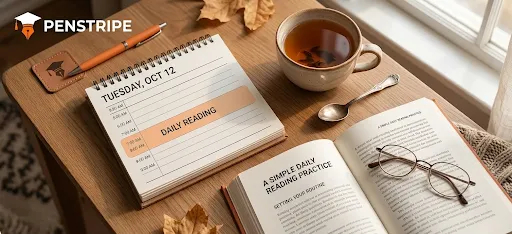
You don’t need an elaborate system consistency matters far more than complexity.
| Time | Activity |
| 2 minutes | Preview: check the title, headings, or table of contents before starting |
| 15–20 minutes | Focused reading at an appropriate level, distractions removed |
| 3 minutes | Summarize what you read in one or two sentences, out loud or in writing |
| 2 minutes | Jot down any unfamiliar words to look up later |
How to adapt this by age: young children (grades 1–3) benefit from shorter blocks 10 minutes of focused reading paired with a parent asking a couple of simple questions afterward works better than a rigid 20-minute solo session. Older students and adults can comfortably extend the focused reading block while keeping the preview-and-summarize bookends, which do most of the comprehension heavy lifting regardless of age.
Frequently Asked Question
How to improve reading skills quickly?
Focus on active reading habits rather than reading volume alone: preview before you start, ask questions as you go, and summarize afterward. These three habits alone produce noticeable comprehension gains within a few weeks of consistent practice, faster than passive reading ever will.
What are the five basic skills of reading?
Phonemic awareness, phonics, fluency, vocabulary, and comprehension are widely recognized as the five foundational reading skills, particularly in early literacy instruction. For older readers and adults, fluency, vocabulary, comprehension, reading speed, and critical thinking are the practical skills most worth targeting directly.
What is the 5-4-3-2-1 reading strategy?
It’s a flexible comprehension and summarizing framework where each number is assigned a different task tied to the text commonly five details noticed, four connections made, three new facts learned, two questions raised, and one main idea identified. Exact versions vary by classroom or resource, but the structure consistently pushes readers toward deeper engagement than a simple summary would.
What is the 5 finger rule for reading?
It’s a quick way to check whether a book matches a reader’s level: open to a page, and hold up one finger for every unfamiliar word encountered. Two to three fingers by the end of the page usually signals a good fit; zero to one means it’s likely too easy, and four or more means it’s probably too difficult for independent reading right now.
What causes poor reading skills?
Common causes include limited exposure to reading during early development, gaps in vocabulary, undiagnosed learning differences such as dyslexia, and simply insufficient practice at an appropriately challenging reading level. Identifying the specific cause matters more than generic advice, since the right intervention differs significantly depending on which factor is actually at play.
How can students improve reading comprehension?
Students benefit most from previewing text before reading, actively questioning and predicting while reading, and summarizing afterward in their own words. Pairing this with reading material at the right difficulty level not too easy, not overwhelming produces the most consistent comprehension gains over time.
How many minutes should I read every day?
Fifteen to twenty minutes of focused, distraction-free reading is a realistic and effective daily target for most readers, students and adults alike. Consistency matters more than duration a shorter daily habit reliably outperforms occasional long reading sessions.
How can I improve reading skills in English as a second language?
Prioritize vocabulary building alongside reading practice, choose text slightly below your comfort level at first to build confidence and fluency, and read the same short passage more than once to reinforce both new words and sentence patterns before moving to more challenging material.
Conclusion
Improving reading skills isn’t about forcing yourself through more pages it’s about training the specific habits, like active questioning, summarizing, and choosing the right level of text, that turn reading from a passive activity into genuine understanding. The ten strategies above cover the full range, from building a consistent daily habit to sharpening comprehension and speed at the same time, and they work whether you’re supporting a young reader, prepping for an exam like IELTS, or simply trying to get more out of your own reading time.
Pick two or three strategies from this list, apply them consistently for the next two weeks, and track how much easier reading starts to feel. Reading skills build gradually, not overnight but with the right habits in place, that progress adds up faster than most people expect.