




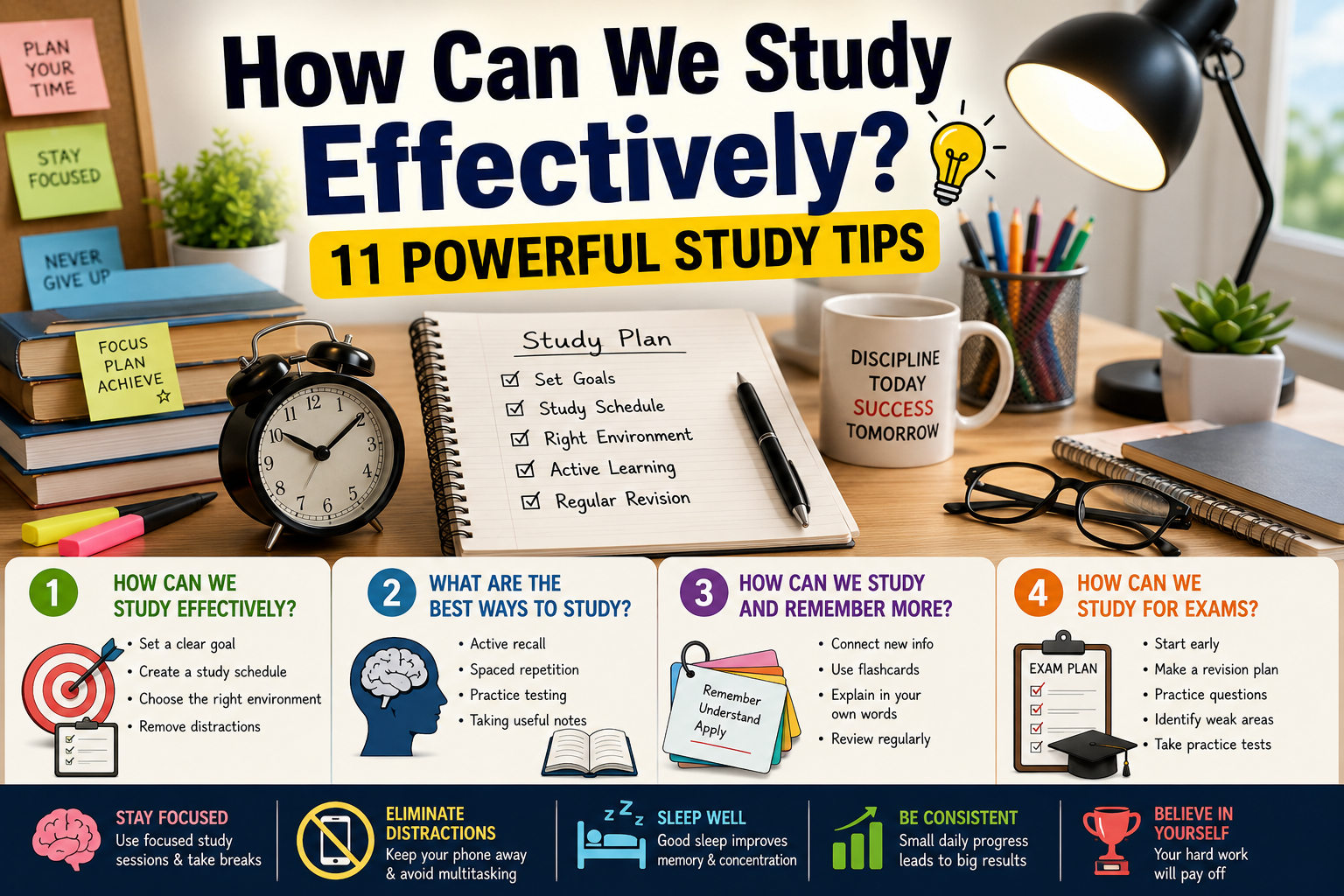
Studying for hours does not always mean learning more. You can spend an entire afternoon reading notes and still struggle to remember the material the next day. The real difference comes from how you study, not simply how long you sit at a desk.
So, how can we study effectively without wasting time? The answer is to combine focused study sessions with proven learning techniques, active practice, good planning, and regular review. Instead of repeatedly reading the same chapter, you can test yourself, explain difficult ideas in your own words, and return to important information over time.
This guide explains practical ways to study smarter for school, college, and exams. You will learn how to create a study routine, improve concentration, remember information longer, prepare for exams, and avoid common study mistakes. Whether you have several weeks to prepare or only a few days, these strategies can help you make each study session more productive.
How Can We Study Effectively?
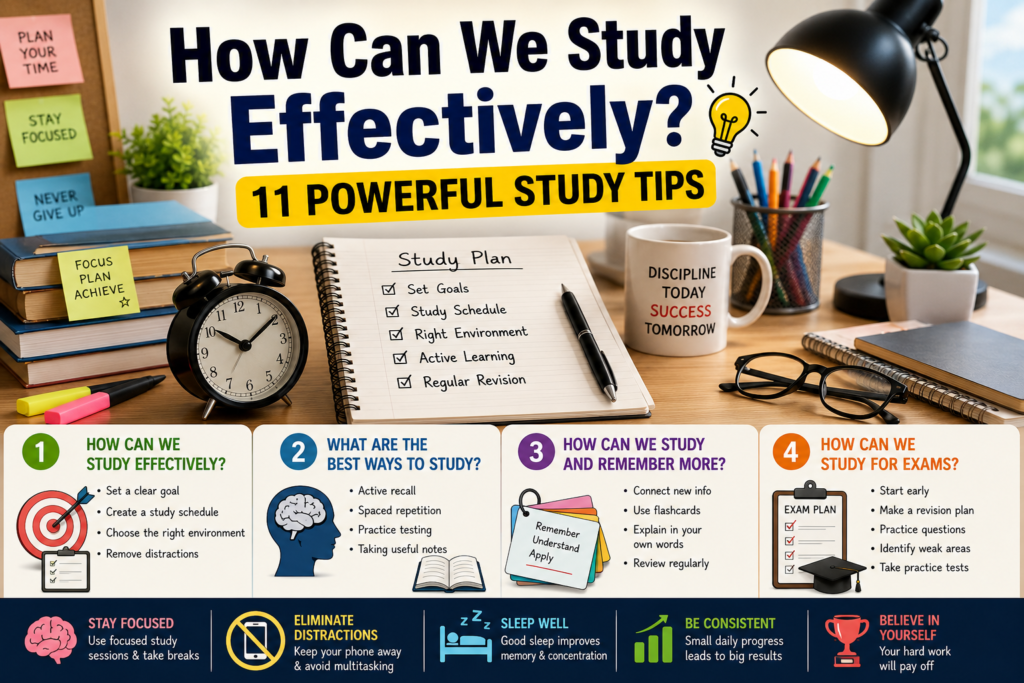
Effective studying starts with a clear plan. Before opening a textbook, decide what you want to accomplish, how much time you have, and which material needs the most attention.
Set a Clear Study Goal
A vague goal such as “study biology” is difficult to measure. A better goal is specific and achievable.
For example:
- Read and understand one chapter.
- Learn 20 vocabulary terms.
- Complete 15 math problems.
- Review yesterday’s lecture notes.
- Explain three difficult concepts without looking at your notes.
Specific goals give your brain a clear target. At the end of the session, you can also check whether you actually completed the task.
Create a Realistic Study Schedule
A study schedule helps you turn good intentions into consistent action.
Start by listing upcoming exams, assignments, projects, and important deadlines. Then divide large subjects into smaller sessions rather than trying to learn everything at once.
For example, instead of planning “study chemistry for six hours,” divide the work into smaller objectives:
| Time | Task |
|---|---|
| 9:00–9:45 | Review key concepts |
| 9:45–10:00 | Break |
| 10:00–10:45 | Practice questions |
| 10:45–11:00 | Break |
| 11:00–11:30 | Self-test and review |
A realistic plan is better than an ambitious schedule you cannot maintain.
Choose the Right Study Environment
Your environment can influence how easily you maintain attention. Choose a location with enough light, comfortable seating, and the materials you need.
Some students work best in a quiet room, while others prefer a library or another low-distraction environment.
Keep unnecessary tabs, games, notifications, and entertainment away from your study area. The easier it is to begin working, the less mental energy you spend fighting distractions.
Remove Distractions Before You Start
Do not wait until you lose focus to deal with distractions.
Put your phone on silent or place it somewhere out of reach. Close unrelated browser tabs and tell people around you when you need uninterrupted time.
If you frequently check social media while studying, consider using an app or device setting that temporarily blocks distracting websites.
What Are the Best Ways to Study?
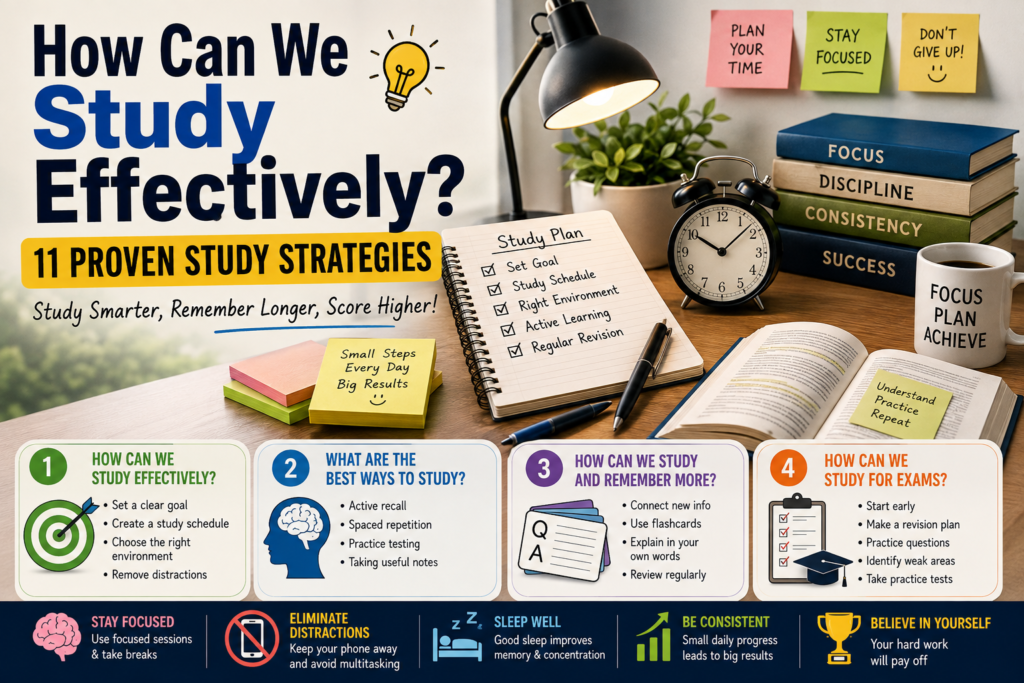
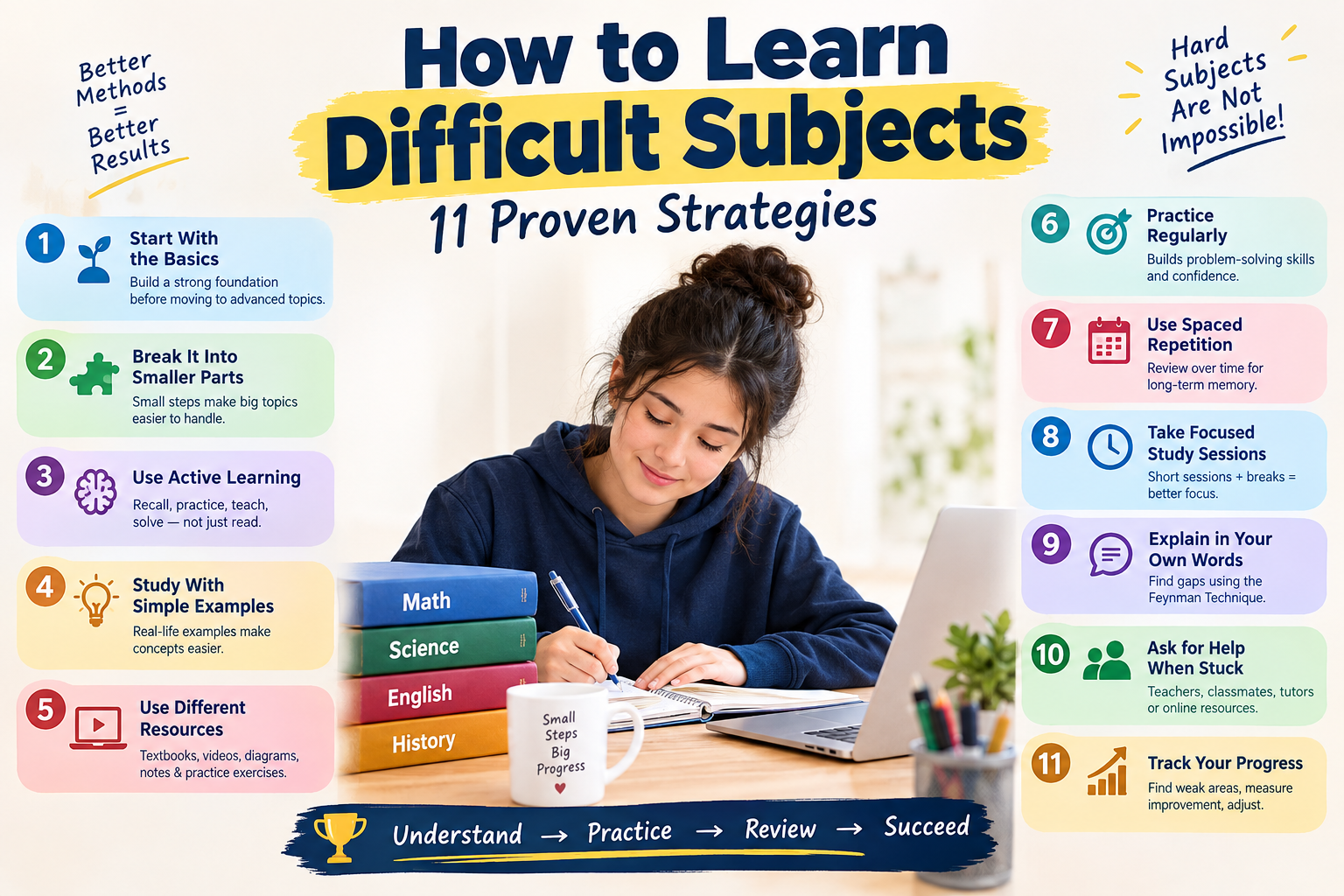
If you want to know how can we study best, focus on methods that require you to actively work with information rather than simply looking at it.
Use Active Recall
Active recall means trying to retrieve information from memory instead of immediately looking at the answer.
After reading a section, close the book and ask yourself:
- What were the main ideas?
- What terms do I remember?
- Can I explain the concept?
- What examples were given?
- What part am I still unsure about?
This turns studying into a retrieval exercise.
For example, after learning about photosynthesis, do not simply reread the definition. Close your notes and explain what photosynthesis does, which organisms use it, and what inputs and outputs are involved.
Practice Spaced Repetition
Spaced repetition involves reviewing information at increasing intervals rather than trying to memorize everything in one session.
You might review new material:
- Later the same day
- The next day
- Several days later
- The following week
- Again before the exam
The exact schedule can vary. The important idea is to revisit information instead of relying on one long cram session.
Use Practice Testing
Practice questions are particularly useful when preparing for assessments.
Instead of asking, “Does this chapter look familiar?” ask yourself whether you can answer questions without looking at the material.
Try:
- End-of-chapter questions
- Flashcards
- Practice exams
- Teacher-provided questions
- Questions you create yourself
When you make a mistake, treat it as useful information. It shows you where additional study is needed.
Take Useful Notes
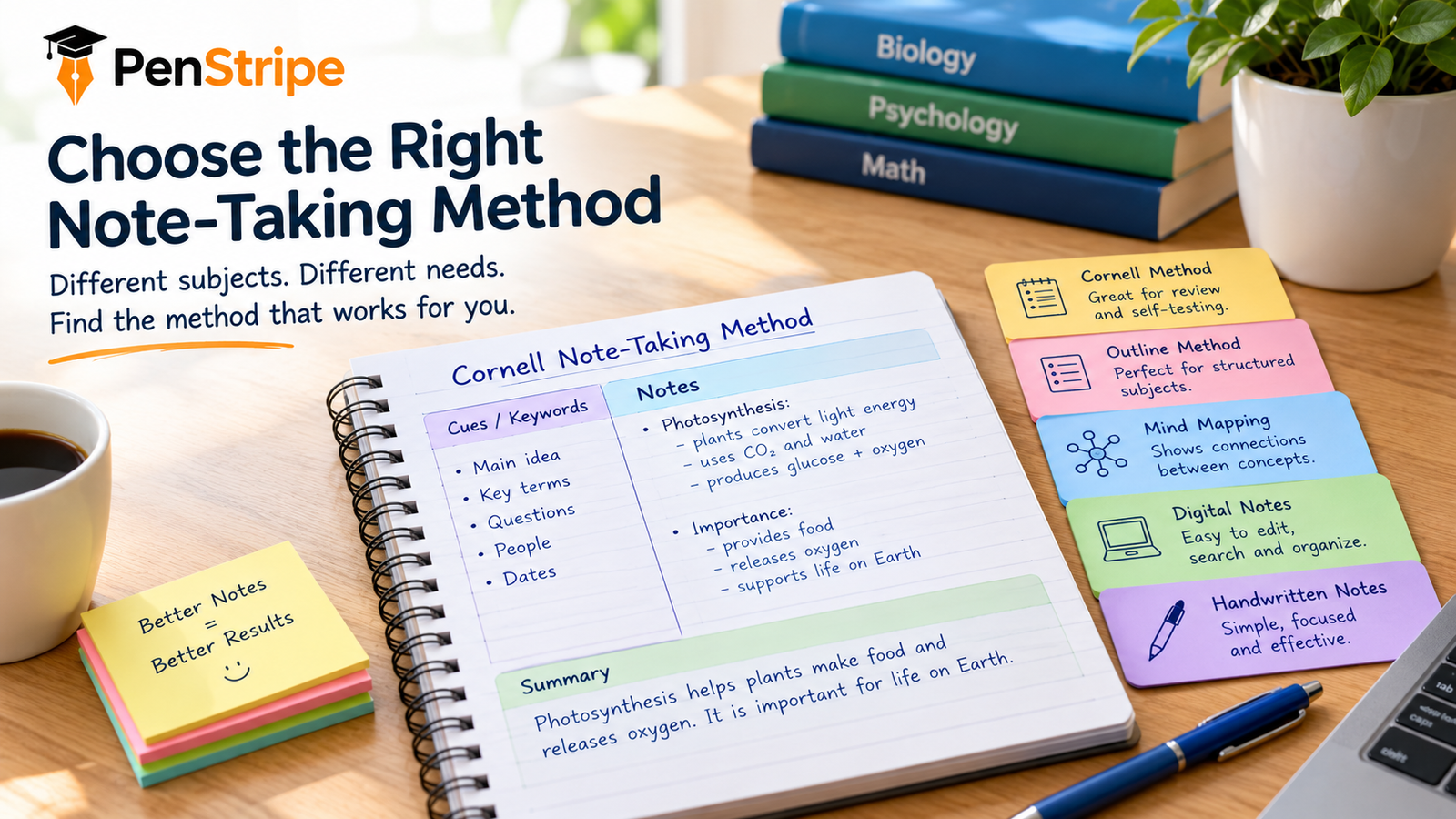
Good notes should help you understand and retrieve information later. They do not need to contain every sentence from a lecture or textbook.
Try organizing notes around:
- Main concepts
- Important definitions
- Examples
- Formulas
- Questions
- Connections between ideas
After class, spend a few minutes cleaning up unclear notes and identifying topics that need further review.
How Can We Study and Remember More?
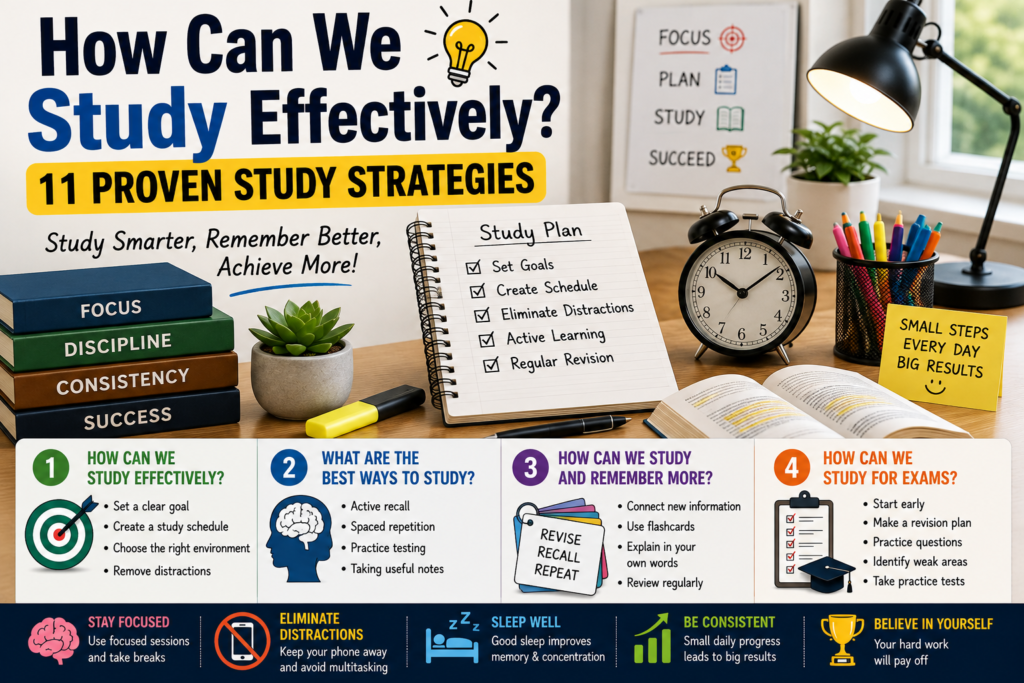
Knowing how can we study is only part of the problem. The next challenge is retaining what you learn.
Connect New Information to Existing Knowledge
New information becomes easier to understand when you connect it to something you already know.
Suppose you are learning a new historical event. Instead of memorizing isolated dates, connect the event to its causes, major people, consequences, and other events happening during the same period.
Ask:
“What does this remind me of?”
“Why did this happen?”
“What changed because of it?”
These questions encourage deeper understanding.
Use Flashcards Strategically
Flashcards can be useful for definitions, vocabulary, formulas, dates, and other information that benefits from repeated recall.
However, avoid creating cards that contain entire paragraphs.
A stronger flashcard asks one focused question.
Front: What is the main function of mitochondria?
Back: They produce most of the cell’s usable energy through cellular respiration.
Try answering before turning the card over. Simply recognizing the answer is less useful than actively retrieving it.
Explain Concepts in Your Own Words
One of the simplest ways to check understanding is to teach the concept to someone else—or pretend that you are teaching it.
Explain the topic without reading your notes.
If you get stuck, that gap is important. Return to the material, understand the missing part, and try the explanation again.
This approach is especially useful for science, mathematics, history, and other subjects where understanding relationships matters.
Review Difficult Topics Regularly
Do not spend all your study time reviewing material you already know.
Create a short list of difficult concepts and revisit them more frequently. When you can answer questions correctly several times, move your attention toward another weak area.
A useful study cycle is:
Learn → Recall → Practice → Check → Correct → Review
This creates a feedback loop that helps you identify what actually needs more work.
How Can We Study for Exams?
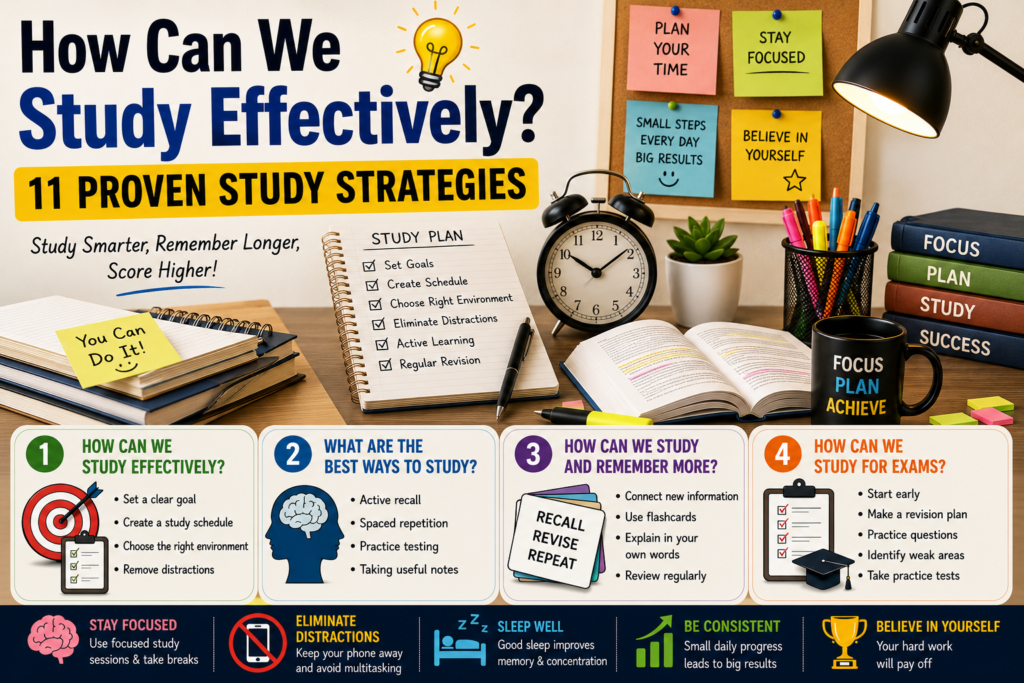
Exam preparation becomes easier when you avoid leaving the entire syllabus until the final night.
Start Early
Starting early gives you time to discover what you do not understand.
Even a short daily review can be more manageable than trying to learn several chapters immediately before an exam.
If you have two weeks, divide the syllabus across the available days and reserve the final days for practice and review.
Make an Exam Revision Plan
Begin with the exam date and work backward.
Rank topics according to:
- Importance
- Difficulty
- How well you currently understand them
- How likely they are to appear on the assessment
Then assign study sessions to the highest-priority areas.
Do not give every chapter exactly the same amount of time if some topics are already strong and others need substantial practice.
Practice With Previous Questions
Previous questions or realistic practice questions can reveal how well you can apply information under test conditions.
After completing a practice set, review every incorrect answer.
Do not simply write down the correct answer. Ask why your original answer was wrong and what reasoning would lead to the correct one.
Identify Weak Areas
A common mistake is repeatedly studying what feels comfortable.
If you already understand a topic, a quick review may be enough. Spend more time on areas where you consistently make mistakes.
You can create three categories:
Green: I understand it.
Yellow: I understand some of it.
Red: I cannot explain or solve it independently.
Prioritize red topics, then work through yellow topics.
Avoid Relying on One-Night Cramming
Students sometimes search for how to study for exams in one night when an exam is approaching quickly. If you are in this situation, prioritize rather than attempting to learn everything.
Focus on:
- The most important concepts
- Frequently tested material
- Topics you almost understand
- Practice questions
- Essential formulas or definitions
If possible, get adequate sleep rather than sacrificing the entire night. Studying while extremely tired can make concentration and recall harder.
How Can We Stay Focused While Studying?
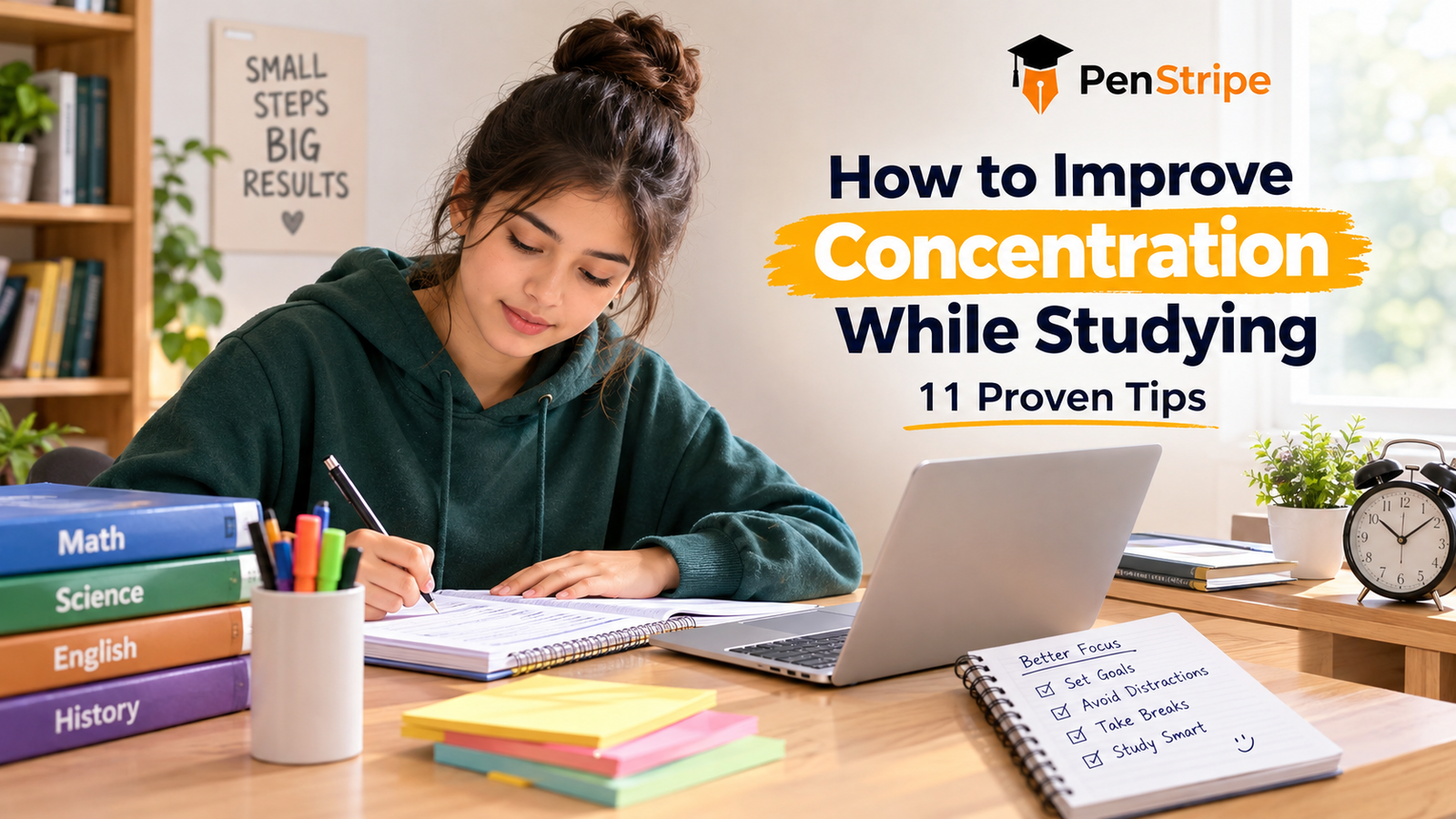
Knowing how can I focus 100% on study is useful, but expecting perfect concentration for hours is unrealistic. A better goal is to create conditions that make focused work easier.
Use Focused Study Sessions
Choose a specific period for concentrated work.
For example, you might study for 40–50 minutes and then take a short break. During the focused period, work on one task rather than switching between subjects, messages, websites, and social media.
Experiment with different session lengths to find what works for you.
Take Strategic Breaks
Breaks are not automatically wasted time. A short break can help you return to the task with renewed attention.
During a break, stand up, walk around, drink water, or rest your eyes.
Try not to turn a five-minute break into 45 minutes of scrolling.
Keep Your Phone Away
Your phone can become a major source of interruption even when you are not actively using it.
If you do not need it for studying, place it in another room or inside a bag. If you need it for a timer or educational app, disable unnecessary notifications.
Reducing the number of interruptions makes it easier to maintain a continuous train of thought.
Avoid Multitasking
Studying while watching videos, checking messages, and switching between assignments may feel productive, but it divides your attention.
Instead, use a single-task approach:
One subject → one task → one focused session.
When the session ends, take a break before changing activities.
Improve Sleep and Daily Habits
Study performance is connected to your broader routine.
Regular sleep, physical activity, hydration, nutritious meals, and reasonable breaks can support your ability to concentrate.
Do not treat sleep as time stolen from studying. If you are exhausted, adding another hour of low-quality studying may be less useful than resting and returning to the material with better attention.
Common Study Mistakes to Avoid
Even a good study plan can fail if your methods are inefficient.
Cramming Everything at the Last Minute
Cramming may help you review information quickly, but it leaves little time for identifying gaps or practicing difficult material.
When possible, distribute learning across multiple sessions.
Passive Rereading
Reading the same page repeatedly can create a feeling of familiarity without proving that you can recall the information.
After reading, close the material and test yourself.
Studying Without a Plan
Opening a textbook without deciding what you want to accomplish can lead to unfocused work.
Start every session with a small, measurable objective.
Skipping Practice
Understanding an example does not necessarily mean you can solve a new problem independently.
Practice applying what you learned, especially for mathematics, science, languages, and other skill-based subjects.
Studying for Too Many Hours Without Breaks
Long sessions are not automatically better sessions.
If your attention has significantly declined, continuing to stare at the same material may have limited value. Use reasonable study blocks and purposeful breaks.
Best Study Methods Compared
Different methods work better for different goals. Use the technique that matches what you are trying to learn.
| Study Method | Best For | Main Benefit | Limitation |
|---|---|---|---|
| Active Recall | Facts and concepts | Strengthens retrieval | Requires effort |
| Spaced Repetition | Long-term memory | Supports repeated review | Requires planning |
| Practice Testing | Exam preparation | Reveals knowledge gaps | Needs good questions |
| Flashcards | Terms and definitions | Fast recall practice | Can oversimplify concepts |
| Note-Taking | Lectures and reading | Organizes information | Passive notes can be ineffective |
| Teaching Others | Complex concepts | Tests understanding | Takes preparation |
| Practice Problems | Math and science | Builds application skills | Requires useful problems |
The strongest approach is often a combination. For example, you could learn a concept, create a few flashcards, use active recall, complete practice questions, and review difficult material later.
Frequently Asked Questions
How can we study effectively?
We can study effectively by setting specific goals, using active recall, practicing questions, reviewing information over time, reducing distractions, and taking purposeful breaks. The goal is not simply to spend more hours studying but to make each session active and focused.
How can I study faster?
Study faster by removing distractions, deciding what you need to learn before starting, and using active methods such as retrieval practice and practice questions. Avoid spending excessive time rereading information you already understand. Focus your effort on important and difficult material.
How can I study and remember everything?
No study method can guarantee that you will remember everything. Instead, improve retention by understanding concepts, testing yourself, using spaced review, practicing difficult material, and connecting new information to what you already know.
How many hours can we study in a day?
There is no single number of hours that works for every student. Productive study time depends on age, workload, difficulty, concentration, and other responsibilities. Rather than chasing a specific number, measure progress by meaningful tasks completed and your ability to recall what you learned.
What is the best study method?
There is no single best method for every situation. Active recall, spaced repetition, and practice testing are strong choices for many learning goals, while practice problems are particularly useful for subjects requiring problem-solving. Combining methods is often more effective than relying on one technique.
How can I focus 100% on study?
Instead of expecting perfect concentration, create a distraction-free environment and work in focused sessions. Put your phone away, choose one task, set a specific goal, and take short planned breaks. If your attention repeatedly drops, check whether sleep, stress, hunger, or an unsuitable study environment is affecting you.
How to study in 7 days?
Start by listing everything you need to learn and divide it across seven days. Prioritize difficult and high-value topics first. Use active recall and practice questions throughout the week, then reserve the final day for targeted review and practice rather than attempting to learn the entire subject from scratch.
How do I study easily?
Make studying easier by breaking large subjects into small tasks. Instead of “learn chemistry,” choose a goal such as “understand acids and bases and complete 10 practice questions.” A clear environment, simple schedule, short focused sessions, and active learning methods can make studying feel more manageable.
Conclusion
So, how can we study effectively? Start by changing the quality of your study sessions rather than simply increasing the number of hours. Set a clear goal, create a realistic schedule, remove distractions, and use active learning techniques such as recall, spaced repetition, and practice testing.
For better memory, connect new ideas to existing knowledge, use focused flashcards, explain difficult concepts in your own words, and revisit challenging material regularly. When exams approach, prioritize weak areas and practice answering questions under realistic conditions.
You do not need to adopt every strategy immediately. Choose two or three techniques that fit your situation and use them consistently. Over time, an intentional study routine can help you learn more efficiently, remember important information longer, and approach exams with greater confidence penstripe