






Walk into pretty much any elementary classroom on a normal morning and youll catch three or four things going on at once. A couple kids curled up somewhere with picture books. One student reading their short story draft to a partner sounding a little nervous about it. Two kids in the corner arguing mostly respectfully over what a character “really meant” by something he said. Reading writing talking listening. All happening at the same time tangled up together. Thats teaching of language arts basically. Its one of the more underappreciated jobs in a school building if you ask me.
Its not English class with a new name slapped on. Language arts covers how we communicate period. Reading writing speaking listening and now viewing too since so much of what kids take in comes through a screen these days. Maybe youre a teacher putting a unit plan together. Maybe youre a parent staring at “ELA” on a report card wondering what it even stands for.
Maybe you got assigned this as a paper topic and you’re just trying to get it done. Whatever the reason here’s the rundown: what this subject actually is how it changes as kids get older which teaching methods hold up once you use them on real kids in a real room and the stuff people usually ask about it.
What Is Language Arts Teaching
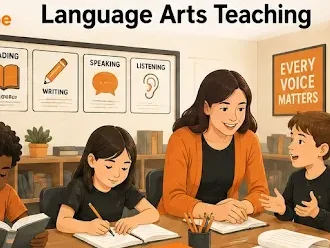
Boiled all the way down its helping kids get better at reading writing speaking listening and the mechanics underneath all that (grammar spelling punctuation) at the same time. Not five separate subjects. A lot of people picture it as grammar Monday reading Tuesday writing Wednesday some kind of weekly rotation you cycle through.
Thats not really how it works when its done well though. Good teaching blends it all together. A kid reads a story talks about it with the class then sits down and writes a response using words and sentence patterns they just picked up from the reading itself.
Why English is called language arts
This ones worth actually answering because the name isnt random. English is one specific language. But walk into most classrooms today and youll find kids who grew up speaking Spanish at home. Or Mandarin. Or Tagalog. Or something else entirely and English is something theyre still building alongside everything else theyre learning in school. Calling it “language arts” gets around that problem. It names the skill communication rather than tying the whole subject to one specific language. Thats a big part of why you see the term on standards documents and report cards instead of just “English” at least up through middle school.
Why it eats up so much of the school day
Theres a real reason this subject takes up so much classroom time especially in the early grades. Research from the National Assessment Governing Board found that reading and writing proficiency by 4th grade predicts how a kid does academically for years afterward more reliably than almost anything else measured that early. Miss that window and everything gets harder. Science. Social studies. Even math word problems start tripping kids up because they cant parse whats being asked. Thats the actual driver behind all those classroom hours not just tradition.
What a Language Arts Teacher Actually Teaches
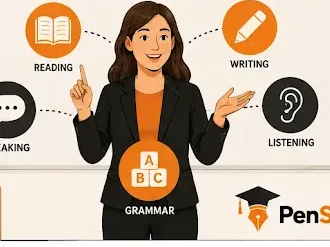
Planning and delivering instruction across reading writing grammar and oral communication. Figuring out where each kid stands and adjusting constantly. Grading essays is the visible part. Its not the whole job not even close.
The core subjects
Reading and literature is the obvious one. Decoding words. Building fluency. Working through fiction and nonfiction both. Kids dig into why a character acted a certain way notice themes that keep resurfacing try to guess why the author made a particular choice on page 40. Poetry and drama fall in here too not just novels.
Writing starts tiny kids learning to form letters in kindergarten and by senior year its grown into a full persuasive essay built around a real argument. Teachers walk kids through prewriting drafting revising editing and eventually publishing. Narrative informative argumentative all of it gets covered along the way.
Speaking and listening gets ignored a lot honestly but its graded and it counts. Kids give presentations. They take part in discussions. They practice actually listening meaning they can repeat back what someone just said before jumping in with their own take. Thats a harder skill than most adults realize.
Then theres language conventions. Grammar punctuation spelling vocabulary. Programs that teach this stuff isolated buried in worksheet packets tend to lose kids fast because none of it feels connected to anything. The stronger programs tie grammar directly to what a kid is writing so they can see for themselves how a run-on sentence wrecks their own paragraph instead of just circling the right answer on a handout.
And then the newer piece: viewing and media literacy. Kids need to be able to read images videos infographics with a critical eye now. Not just printed pages anymore.
What a normal day actually looks like
Whole-class discussions in the morning. Small groups pulled for guided reading or writing later. One-on-one conferences where a teacher sits next to a kid and talks through a draft line by line. Direct grammar instruction squeezed in somewhere. Then classroom management on top of it differentiating for kids with IEPs or English learners and feedback written on every single piece of student work that comes across the desk. Ask anyone whos graded thirty essays in one sitting how long that actually takes.
The planning nobody really sees
Building whole units tied to state standards. Picking texts that match both reading level and what the kids actually care about which is harder than it sounds. Designing tests and projects that measure real understanding instead of whether a kid crammed a vocabulary list the night before a Friday quiz.
Language Arts by Grade Level
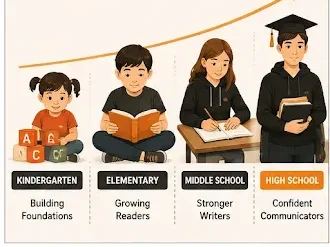
A kindergarten lesson and a senior-year English seminar dont look like the same subject at all on the surface. Theyre aiming at the same place eventually just from very different starting points.
Kindergarten
Foundational stuff. Letter recognition phonemic awareness early phonics learning to hold a pencil correctly (which takes longer than people expect). Teachers rely heavily on read-alouds songs rhyming games. Most of the actual language work at this age happens out loud way before kids start reading on their own.
Elementary school
Around 2nd or 3rd grade something shifts. Kids move from learning to read into reading to learn. Grades 1 through 3 are mostly about decoding fluency simple sentence writing. By 4th and 5th grade theyre handling comprehension strategies writing full paragraphs doing basic research and picking up formal grammar rules.
Middle school
Texts get longer and harder to untangle. Kids stop just summarizing what happened and start actually analyzing why it happened what it means. Multi-paragraph essays become standard. Whole-class novel studies show up. Citing evidence to back up a point becomes a habit theyll carry for years.
High school
Usually just called English at this stage. Literary criticism rhetoric advanced composition. Kids tackle classic and contemporary texts write research papers with real citations and grind through SAT and ACT prep. It ties into adult education too since the GEDs Reasoning Through Language Arts section tests reading comprehension grammar and written responses for adults working toward a diploma equivalency.
Methods That Actually Hold Up
No single method works everywhere and any teacher who insists theres one right way hasnt taught long enough yet. Here are the methods of teaching language arts that keep showing up in classrooms that actually work.
Balanced literacy
Mixes structured phonics with real exposure to good books. Read-alouds shared reading small guided groups independent reading time all under one roof. Its a both-and approach rather than betting everything on a single method.
Structured literacy and phonics
Systematic step-by-step phonics instruction and it matters a lot for kids with dyslexia or other reading difficulties. This approach picked up steam after research tied to the “science of reading” showed explicit phonics helps almost every early reader not just the ones who are struggling.
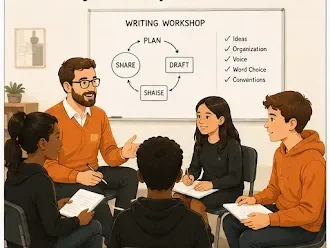
The writing workshop model
Made popular by people like Lucy Calkins. Kids get real extended time to write about topics they pick themselves then get feedback through peer and teacher conferences. Treats young writers a bit like actual authors drafting and revising and rewriting instead of turning in one cold draft and calling it done.
Thematic units and technology
Thematic units tie reading writing and grammar to one central topic instead of splitting them into separate blocks. A unit built around “courage” might weave in a novel study a persuasive essay a class debate and vocabulary work all at once. Stack technology on top of that adaptive reading apps shared digital docs multimedia presentations and youve got most of what a modern classroom actually looks like.
The 5 Cs of Language Teaching
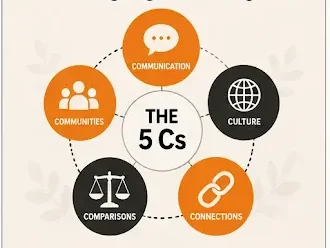
This framework shows up constantly in language instruction and its worth knowing even outside a foreign-language classroom since its shaped a lot of English language arts standards too.
Communication. Expressing and understanding ideas through reading writing speaking listening.
Culture. Recognizing how language reflects the values and worldview of whoevers speaking it.
Connections. Tying language skills into other subjects like social studies or science.
Comparisons. Noticing patterns and differences between your own language use and other forms of communication.
Communities. Actually using these skills outside the classroom where it counts.
It started as a world-language framework specifically but its crept into general language arts standards too. Mostly because communication was never meant to stop at the classroom door in the first place.
What This Looks Like in a Real Classroom
Say a 5th grade teacher hands out a short article about ocean pollution. Kids read it. Thats reading. They break into small groups and talk it through. Thats speaking and listening. They pick apart how the author tried to convince them of something. Thats media literacy. Then they write a paragraph arguing for or against a proposed fix. Thats writing and conventions. One lesson four skills nothing wasted.
Or take a middle school teacher running a novel study for the whole class. Kids keep a journal tracking how a character changes over the book. They sit through a Socratic seminar arguing over a moral dilemma from a chapter. Then they write an essay pulling in actual quotes as evidence. Different grade same basic idea: reading discussion analysis and formal writing all wrapped into one unit.
Language Arts vs. Related Fields and Career Paths
People confuse language arts with nearby fields all the time and it only gets messier once you throw degree programs into the mix.
How its different from social studies and ESL
Language arts is about communication itself skills that apply across every subject a kid takes. Social studies is about history geography civics and it uses reading and research as tools to get there rather than as the main point. ESL and TESOL programs zero in specifically on teaching English to kids who are still picking it up with heavier focus on listening comprehension and pronunciation.
Degrees worth knowing about
Teachers who want to specialize often go for a master of arts in English language teaching or a master of arts in education with a major in English language teaching or a master of arts in teaching English as a second language. Plenty of universities now offer a master of arts in English language teaching online aimed at working teachers who cant just pick up and move for a campus program.
On the undergrad side theres the bachelor of arts in English and English language teaching and in some regions a bachelor of arts honours in Tamil and Tamil language teaching for people focused on that specific track. Anyone doing serious research in the field has probably come across the Handbook of Research on Teaching the English Language Arts at some point. It gets cited a lot for instructional methods and curriculum design work.
Where to Find Language Arts Resources
Free PDFs and notes
People searching for a language arts PDF or teaching of language arts notes usually want condensed material. Grade-level standards grammar rule sheets lesson plan templates that sort of thing. State education department websites and university teacher-prep programs tend to be the most reliable places to look since the material is standards-aligned and free. Worth double-checking the date on anything you find online since curriculum requirements shift every few years and old material can be misleading.
Full curriculum options
Some families and private educators skip the piecemeal approach entirely and just go with a full curriculum. The Good and the Beautiful is a popular one known for a character-focused approach that folds literature study writing and grammar into a single sequence. Mostly used by homeschool families though a handful of private schools use it too as a literature-heavy alternative to a standard textbook series.
Language Arts vs. Everything People Confuse It With
| Subject | Primary Focus | Typical Skills Taught | Common Grade Levels |
| Language Arts | Communication as a whole | Reading writing speaking listening grammar | K–12 |
| English Language Teaching (ELT) | Teaching English to non-native speakers | Grammar vocabulary conversational fluency | All ages often adult learners |
| ESL / TESOL | English instruction for English learners | Listening comprehension pronunciation academic English | K–12 and adult programs |
| Social Studies | History geography civics | Research analysis informational reading | K–12 |
| Reading Intervention | Remediation for struggling readers | Phonics decoding fluency | Typically K–5 |
Read valuable content on Penstripe
Common Questions
What is language arts teaching? Helping kids build reading writing speaking listening and grammar skills together instead of as separate subjects. Teachers connect them so a kid uses what they just read to shape their own writing and discussion rather than treating each skill like it lives on its own island.
What does a language arts teacher teach? Reading comprehension writing in different formats grammar and vocabulary speaking and listening. In practice thats leading discussions running small reading or writing groups teaching grammar directly and giving feedback on student writing basically all year.
What are the 5 Cs of language teaching? Communication Culture Connections Comparisons and Communities. Started in world-language education now it shapes a lot of general English language arts standards too nudging teachers to connect skills to real use instead of isolated drills.
What is language arts in high school? Usually just called English by then. Focused on literary criticism rhetoric advanced composition. Kids analyze classic and contemporary texts write research papers with real citations and prep for the SAT ACT and for adult learners the GEDs Reasoning Through Language Arts section.
What is language arts in elementary school? It moves from learning to read toward reading to learn. Early grades focus on decoding and fluency. By 4th and 5th grade kids add comprehension strategies paragraph writing basic research and formal grammar usually alongside independent reading and small guided groups.
What is language arts in kindergarten? Foundational: letter recognition phonemic awareness early phonics even pencil grip. Most of it happens out loud through read-alouds songs rhyming games laying the groundwork before kids read independently.
Why is English called language arts? Because it covers communication broadly not one single language. A lot of classrooms have kids still learning English at home so the term names the skill communication instead of locking the subject to one specific language.
What are some language arts examples? A classic one: kids read a nonfiction article talk it over in small groups break down how the author tried to persuade them then write a response paragraph. One activity four skills reading speaking listening and writing in a single lesson.
Wrapping Up
Teaching of language arts was never really five separate subjects pretending to be one thing. Its reading writing speaking listening grammar and media literacy working together shifting in difficulty from kindergarten read-alouds all the way to high school research papers. The methods that actually hold up balanced literacy structured phonics the writing workshop model share one thing in common. They connect skills instead of isolating them.
If youre a teacher building lessons pick one method that fits your actual classroom and layer the 5 Cs on top so communication stays tied to something real. If youre a parent or student just trying to make sense of whats on a report card now you know whats under that label. Either way this is one of the more foundational subjects a kid will sit through and understanding how its taught makes it a lot easier to actually support.