





Why Academic Performance Matters
Improving your grades is not simply about spending more hours with a textbook. Students often work hard but still struggle because they rely on passive reading, inconsistent schedules, distractions, or last-minute exam preparation. Learning how to improve academic performance means finding a study system that helps you understand, remember, and apply information more effectively.
Academic performance can improve when several small habits work together. A realistic study routine, focused sessions, active learning, good time management, sufficient sleep, and regular review can make studying more productive without requiring you to study all day.
The good news is that you do not need to completely change your life overnight. Start with one or two habits, measure your progress, and gradually build a stronger routine. This guide explains practical strategies that can help high school and college students study more effectively, stay motivated, reduce procrastination, and perform better on assignments and exams.
Build Better Study Habits
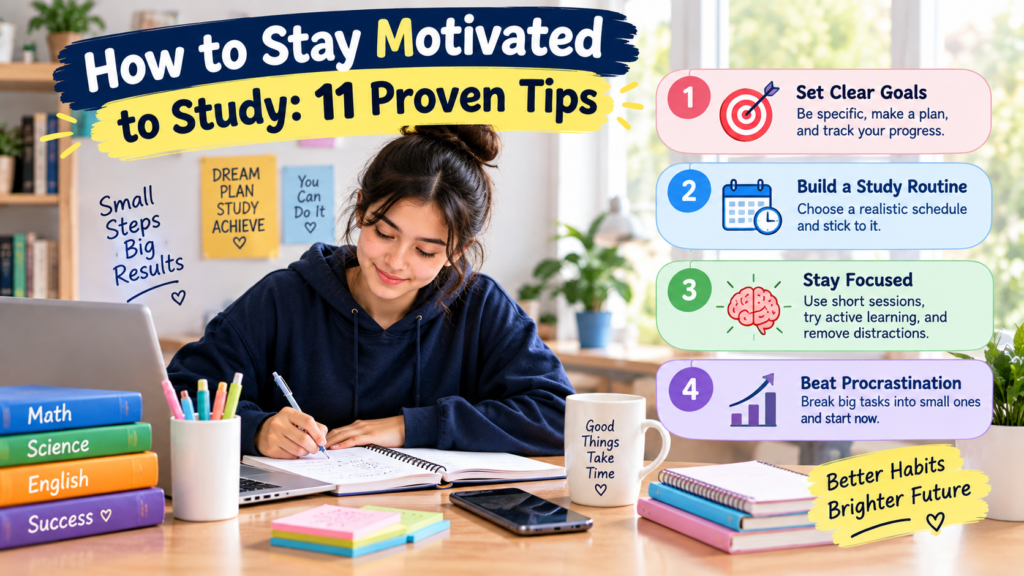
Create a Consistent Study Routine
One of the simplest ways to improve academic performance is to make studying a regular part of your day. A consistent routine reduces the need to decide when and what to study every time you sit down.
Choose a realistic study period based on your schedule. For example, you might study from 5:00 to 6:30 p.m. after school or dedicate an hour to coursework after dinner.
Your routine should include:
- A specific study time
- Clear subjects or tasks
- Short breaks
- A distraction-free environment
- A daily review period
Consistency matters more than creating an unrealistic schedule that you cannot maintain.
Set Specific Academic Goals
Vague goals such as “I need to study more” are difficult to measure. Instead, create specific goals.
For example:
“Review Chapter 4 and complete 20 practice questions by 7 p.m.”
This gives you a clear target and makes progress easier to track.
You can divide goals into three levels:
| Goal Type | Example |
|---|---|
| Daily | Complete 30 practice questions |
| Weekly | Finish two chapters |
| Long-term | Raise math grade from B to A |
Breaking a large academic goal into smaller tasks can make difficult coursework feel more manageable.
Improve Your Study Environment
Your environment can influence how easily you maintain concentration. Keep your desk organized and remove unnecessary distractions before beginning.
Put your phone away or activate Do Not Disturb. Keep only the materials you need nearby. If background noise helps you concentrate, use quiet instrumental audio, but avoid anything that repeatedly pulls your attention away from your work.
A useful rule is simple: make studying easy to start and distractions difficult to access.
Master Time Management and Focus
Make a Practical Study Schedule
Effective time management is not about filling every hour with schoolwork. It is about deciding what deserves your attention first.
Start by listing upcoming:
- Exams
- Assignments
- Projects
- Reading
- Homework
- Important deadlines
Then rank tasks according to urgency and importance.
For example, an exam scheduled tomorrow deserves more immediate attention than an assignment due next week. However, starting the assignment early can prevent another stressful deadline later.
Leave some flexible time in your schedule because unexpected responsibilities are part of student life.
Use the Pomodoro Technique
The Pomodoro technique is a simple method for organizing focused work. A common version involves studying for 25 minutes followed by a five-minute break. After several sessions, you take a longer break.
You can also adapt the method to your attention span. For example:
- 25 minutes study + 5 minutes break
- 40 minutes study + 10 minutes break
- 50 minutes study + 10 minutes break
The exact timing is less important than protecting periods of uninterrupted concentration.
Beat Procrastination With the Five-Minute Start
Sometimes the hardest part of studying is beginning.
Instead of telling yourself that you must study for three hours, commit to working for only five minutes. Open the textbook, write the first answer, or review the first concept.
Once you begin, continuing often feels easier because you have already overcome the initial resistance.
When procrastination becomes a pattern, identify the reason behind it. A task may feel boring, confusing, too difficult, or simply too large. Breaking it into a smaller first step can remove much of that friction.
Use Smarter Learning Techniques
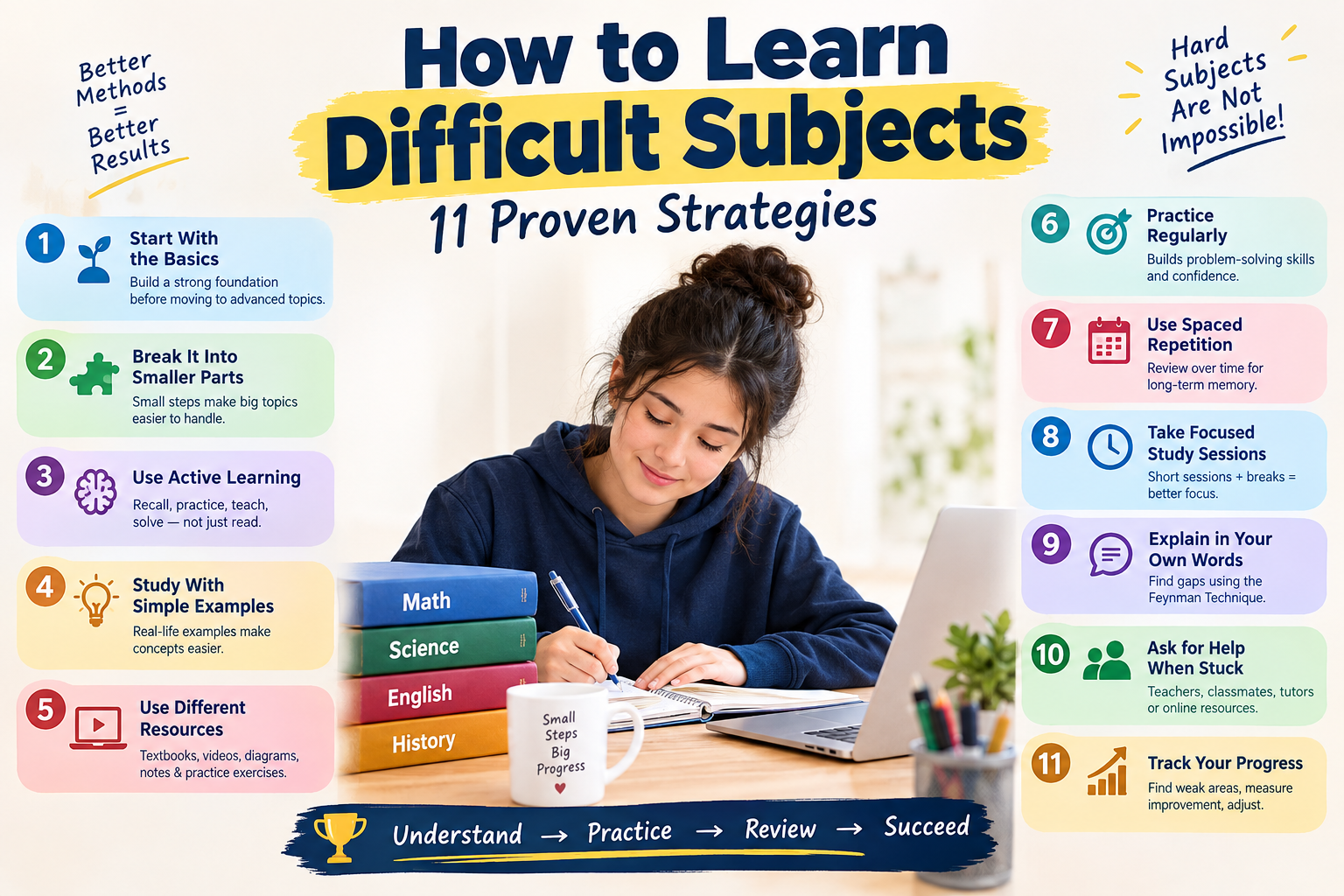
Practice Active Recall
Active recall is one of the most useful study techniques for remembering information. Rather than repeatedly reading your notes, close the book and try to retrieve the information from memory.
For example, after studying the causes of a historical event, ask yourself:
“What were the three major causes?”
Then answer without looking at your notes.
You can use active recall with:
- Flashcards
- Practice questions
- Self-quizzes
- Blank-page summaries
- Verbal explanations
The goal is to make your brain retrieve information rather than simply recognize it on a page.
Use Spaced Repetition
Spaced repetition means reviewing information at increasing intervals instead of cramming everything into one session.
For example:
Day 1: Learn the material
Day 2: Review it
Day 4: Test yourself again
Day 7: Review difficult points
Day 14: Complete another recall session
This approach is particularly useful for vocabulary, formulas, definitions, scientific concepts, and other information that must be remembered over time.
Learn by Explaining
One powerful way to discover whether you understand a topic is to explain it in simple language.
Imagine teaching the concept to another student who has never studied it.
If you become stuck, that is a signal that your understanding may have a gap. Return to the relevant material, clarify the difficult point, and explain it again.
This technique can transform studying from passive reading into meaningful learning.
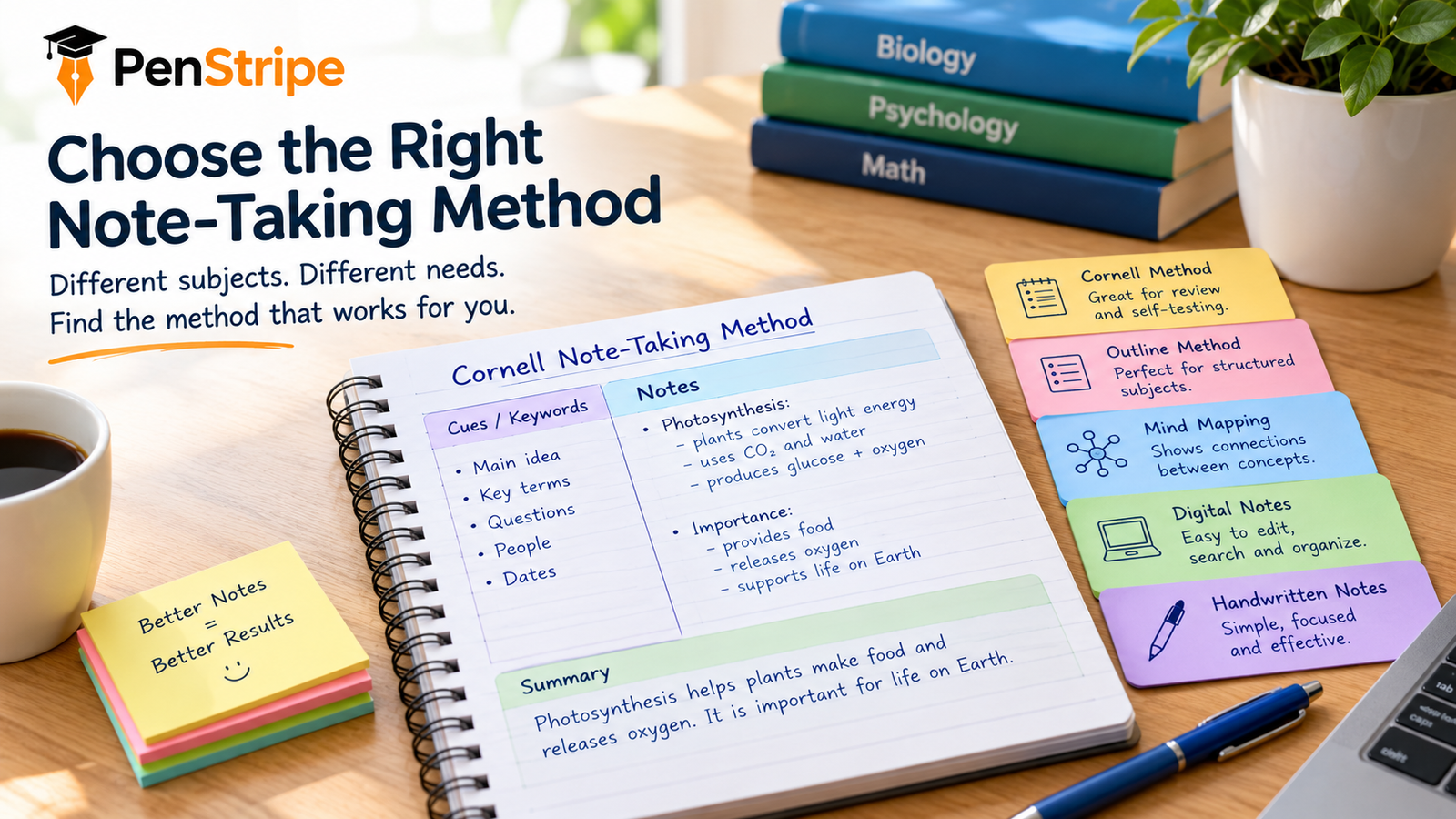
Match the Method to the Subject

Not every subject should be studied in exactly the same way.
| Subject | Useful Strategy |
|---|---|
| Mathematics | Practice problems |
| Biology | Diagrams + active recall |
| History | Timelines + cause-and-effect questions |
| Languages | Vocabulary + speaking + writing |
| Chemistry | Concept review + problem solving |
| Literature | Close reading + evidence-based analysis |
The most effective approach depends on what you need to do with the information.
Prepare Better for Exams
Start Exam Preparation Early
Waiting until the night before an exam creates unnecessary pressure. Early preparation gives you time to identify weak areas and seek help.
Start by reviewing the syllabus or exam topics. Divide the material into smaller sections and assign them to different days.
A simple exam plan might look like this:
Monday: Chapter 1
Tuesday: Chapter 2
Wednesday: Chapter 3
Thursday: Practice questions
Friday: Review weak areas
Saturday: Full practice test
This approach gives you multiple opportunities to revisit difficult material.
Use Practice Tests
Practice tests can reveal what you actually know better than simply rereading notes.
Try to recreate exam conditions. Set a timer, put your notes away, and answer questions without assistance.
Afterward, do not only count your score. Analyze your mistakes.
Ask:
- Did I misunderstand the concept?
- Did I forget a fact?
- Did I misread the question?
- Did I make a calculation error?
- Did I run out of time?
Understanding why you made a mistake is often more valuable than simply knowing that the answer was wrong.
Ask for Help Early
Struggling with a topic does not mean you are incapable of learning it. Sometimes you simply need a different explanation.
Ask a teacher, tutor, classmate, academic adviser, or instructor when a concept remains unclear.
Instead of saying, “I don’t understand anything,” identify the exact problem:
“I understand how to calculate the first step, but I don’t understand why we use this formula in the second step.”
Specific questions make it easier for someone to give you useful help.
Support Your Brain and Academic Health
Prioritize Quality Sleep
Sleep is closely connected to learning, attention, and memory. Staying awake all night to study may give you more study time temporarily, but it can leave you less alert and less effective the next day.
Most teenagers need about 8–10 hours of sleep per night, while adults generally need at least 7 hours.
Create a regular sleep schedule when possible. Avoid turning every exam into an all-night study session. A rested brain is better positioned to focus, process information, and recall what you learned.
Take Regular Movement Breaks
Exercise does not have to mean spending hours in a gym. Walking, stretching, cycling, sports, or another form of physical activity can help you take meaningful breaks from studying.
For example, after completing a focused study block, take a short walk rather than automatically opening social media.
The purpose of a break is to refresh your attention, not replace studying with another activity that consumes the entire evening.
Protect Your Mental Energy
Academic pressure can make students feel overwhelmed. When your workload seems impossible, avoid trying to solve everything simultaneously.
Write down the tasks that are worrying you. Choose the most important next step and complete it before moving to the next one.
If persistent sadness, anxiety, hopelessness, or overwhelming stress is interfering with school or daily life, consider speaking with a trusted adult, school counselor, healthcare professional, or another appropriate support person. Academic performance matters, but your overall well-being matters too.
Avoid These Common Study Mistakes
Some habits can make studying less effective even when you spend many hours doing it.
Common mistakes include:
- Cramming everything the night before
- Studying while constantly checking your phone
- Highlighting entire pages without testing yourself
- Creating an unrealistic schedule
- Skipping sleep to gain study time
- Avoiding difficult subjects
- Never reviewing previous material
- Measuring progress only by study hours
The better question is not “How long did I study?” but “What did I actually learn?”
A Simple 7-Day Academic Improvement Plan
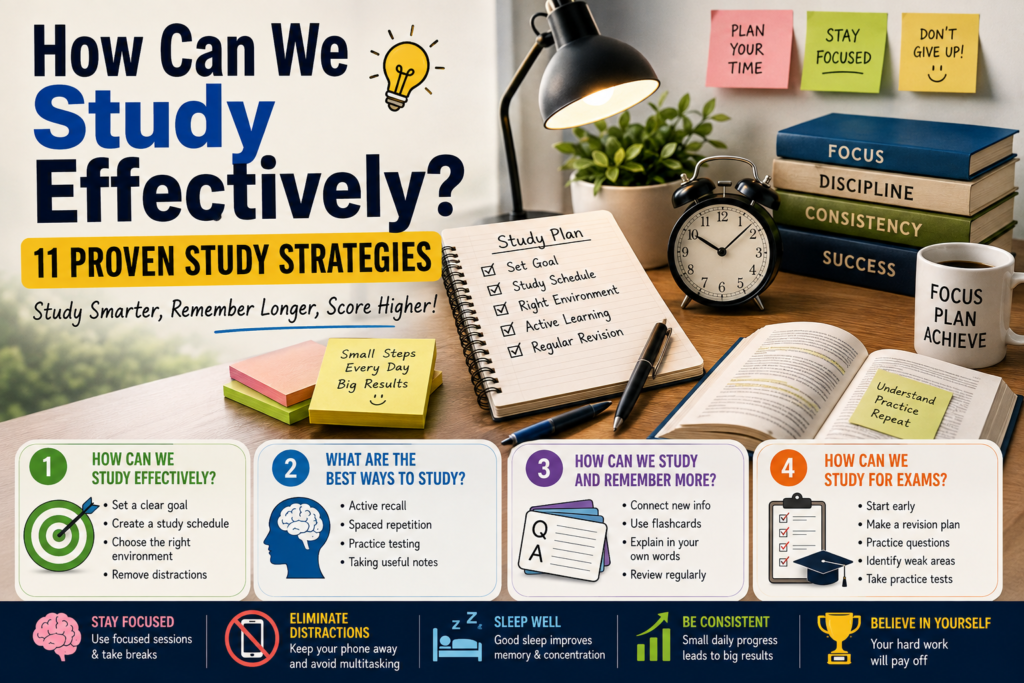
If you are unsure where to begin, use this one-week reset.
| Day | Main Action |
|---|---|
| Day 1 | Identify weak subjects and upcoming deadlines |
| Day 2 | Create a realistic weekly study schedule |
| Day 3 | Replace passive reading with active recall |
| Day 4 | Practice difficult questions |
| Day 5 | Review previous material using spaced repetition |
| Day 6 | Take a practice test and analyze mistakes |
| Day 7 | Review progress and adjust your routine |
After seven days, keep the strategies that worked and modify the ones that did not.
Academic improvement is rarely a single dramatic change. It is usually the result of repeating effective behaviors until they become normal.
Frequently Asked Questions
How can I improve my academic performance quickly?
Start by identifying your biggest problem rather than changing everything at once. Create a realistic study schedule, remove major distractions, use active recall, practice questions, and review difficult material regularly. Improving sleep and attending classes consistently can also support better learning. Focus on high-impact habits first and track your results over several weeks.
What are the best study habits for better grades?
The most useful study habits include consistent study sessions, active recall, spaced repetition, practice testing, organized notes, distraction-free work periods, and regular review. It is also important to start assignments and exam preparation early instead of relying on last-minute cramming.
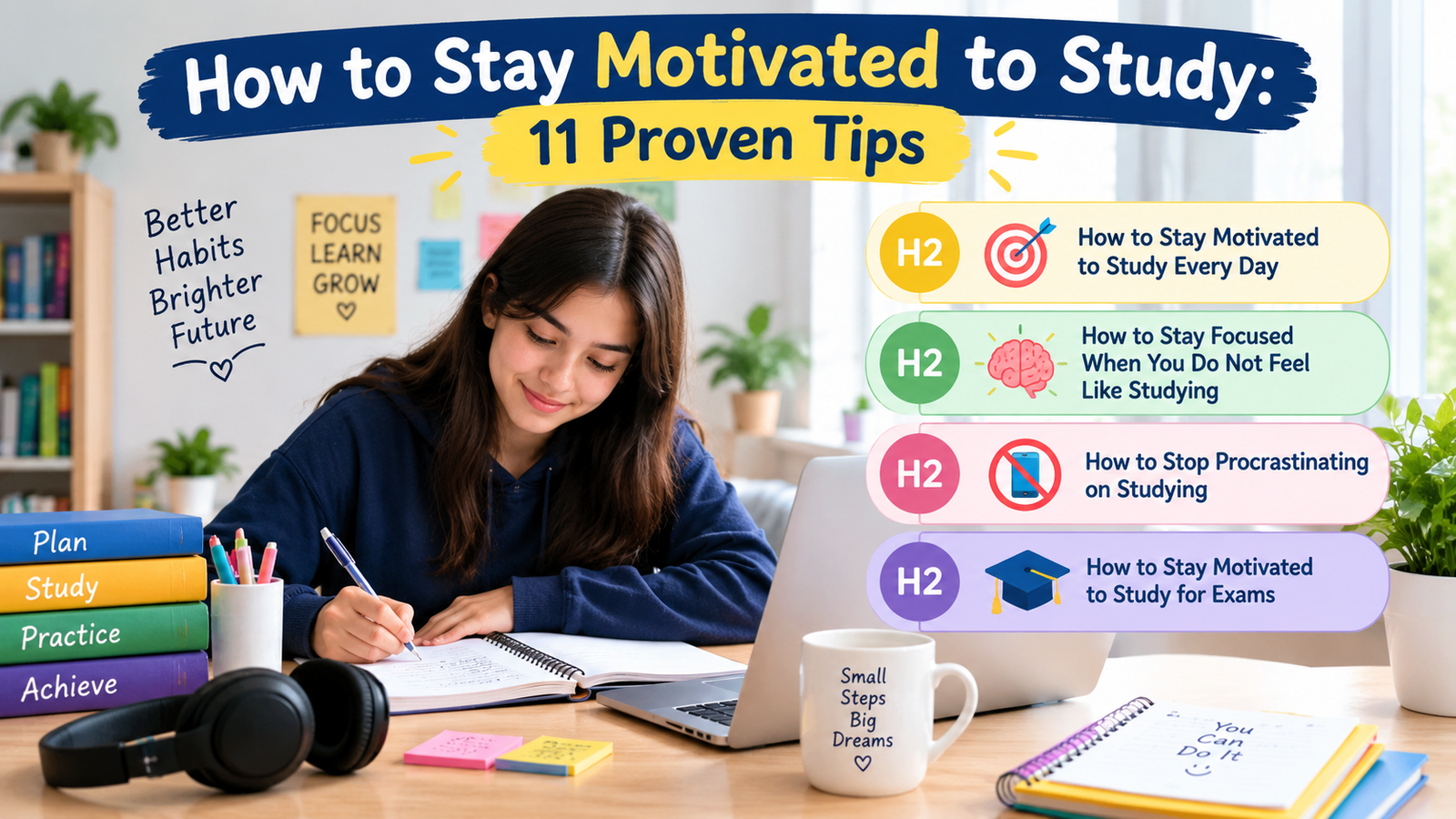
How do I stay motivated to study every day?
Do not depend entirely on motivation. Build a routine that makes studying automatic. Set small, specific goals, begin with an easy task, remove distractions, and reward yourself after completing planned work. When you feel tired or overwhelmed, reduce the size of the task rather than abandoning your entire study session.
How can I get motivated to study when tired?
First determine whether you are genuinely exhausted or simply avoiding a difficult task. If you need sleep, rest rather than forcing yourself through ineffective studying. If you are mildly tired, try a short study session, drink water, move around, and start with a simple task. Consistent sleep is more useful than repeatedly relying on late-night study sessions.
How can I stay motivated to study for exams?
Divide exam preparation into small daily targets instead of viewing the entire syllabus as one huge task. Use practice questions, active recall, and spaced repetition to make progress measurable. Keep a visible list of completed topics and focus on improvement rather than perfection. Starting early also reduces the pressure that can destroy motivation.
How does the Pomodoro technique help students?
The Pomodoro technique divides study time into focused work periods followed by short breaks. This can make large assignments feel more manageable and provide a clear structure for concentration. Students can adjust the length of the sessions to suit their needs. The method works best when breaks are genuinely restorative rather than becoming long periods of social media use.
Can better sleep improve academic performance?
Yes. Adequate sleep supports attention, learning, memory, and daytime alertness. Regularly sacrificing sleep for late-night studying can make it harder to concentrate and recall information. Students should aim for an appropriate sleep schedule rather than treating sleep as time that can always be exchanged for additional study hours.
What should I do if I study hard but my grades do not improve?
Change how you study before simply increasing the number of hours. Check whether you are actively testing your knowledge, practicing the types of questions used in assessments, reviewing mistakes, and addressing weak concepts. Ask your teacher for feedback and compare your study methods with your actual exam errors. More hours are not always the solution; better learning strategies may be.
Conclusion
Learning how to improve academic performance is less about studying endlessly and more about studying with purpose. Build a consistent routine, set specific goals, manage your time, protect your focus, and use active learning techniques such as retrieval practice and spaced repetition.
For exams, start early, complete practice questions, analyze mistakes, and ask for help when you get stuck. At the same time, protect the habits that support learning outside the classroom, especially adequate sleep, movement, and healthy stress management.
You do not need to adopt every strategy today. Choose two improvements that fit your current routine and practice them consistently. Once they become habits, add another. With the right system and steady effort, you can make meaningful progress toward stronger learning and better academic results penstripe