







The Department of Education plays an important role in shaping education policy, supporting students, assisting educators, and managing federal education programs. For students and families, understanding how an education department works can make it easier to find financial aid, educational resources, and support programs.
In the United States, education is not controlled by one office alone. Federal agencies, state education departments, local school districts, colleges, and individual schools all have different responsibilities. The U.S. Department of Education focuses primarily on federal education programs, financial assistance, civil rights protections, research, and national education information rather than running local schools directly.
This guide explains what the department does, who it serves, how education funding works, and where students, teachers, and families can look for useful resources.
What Is the Department of Education?
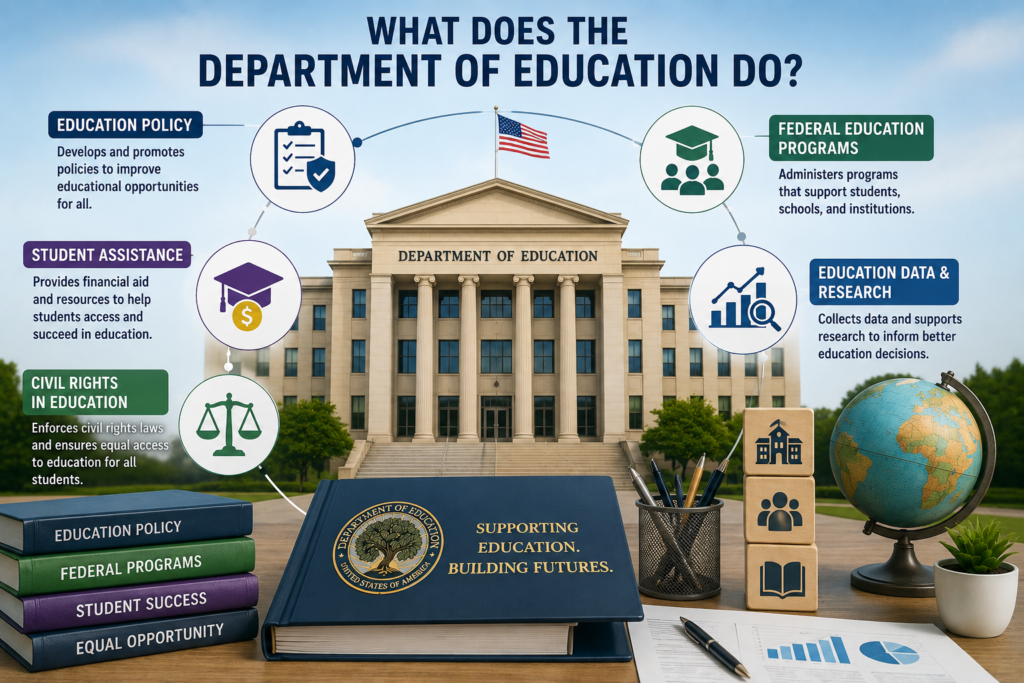
The Department of Education is a government agency responsible for administering and coordinating important federal education programs and activities. In the United States, the U.S. Department of Education works with states, schools, colleges, students, families, and other organizations.
It is important to understand that the federal department does not operate most public schools. State and local authorities have major responsibilities for curriculum, school operations, staffing, and many education decisions.
Purpose of the U.S. Department of Education
The department’s broad purpose is to promote educational opportunity and administer federal programs that support learners and educational institutions.
Its work can include financial assistance, education data, research, civil rights enforcement, and programs designed to improve access to education.
For example, a college student looking for federal financial aid may interact with programs associated with the Department of Education, while a local school district may receive federal support through specific education programs.
When Was the Department of Education Established?
The modern U.S. Department of Education was established as a Cabinet-level department in 1979 through federal legislation, with the department beginning operations in 1980.
Before that, federal education responsibilities were handled through earlier government structures. The creation of a Cabinet-level department reflected the growing federal role in education-related programs and administration.
What Does the Department of Education Do?
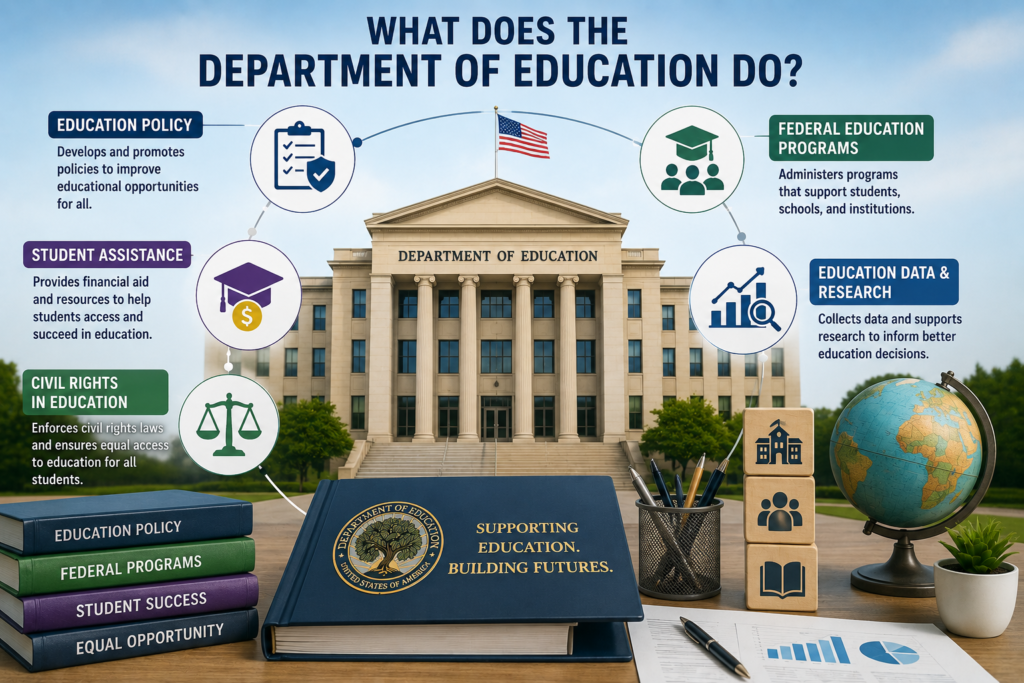
The department has several major responsibilities, but its role is different from that of a local school district. Its work generally centers on federal education programs, student assistance, research, data, and legal protections.
Main Responsibilities
Key responsibilities can include:
- Administering federal education programs
- Managing or overseeing federal student aid programs
- Supporting educational research and data collection
- Enforcing certain federal civil rights laws
- Providing information and resources to education stakeholders
- Working with states and educational institutions on federal programs
The department’s responsibilities can change as federal laws, regulations, budgets, and government policies change.
Education Policy
Federal education policy can influence areas such as student financial aid, special education, accountability, civil rights, and access to educational opportunities.
However, states and local governments retain substantial authority over public education. This means a federal education policy does not necessarily determine what happens in every classroom.
Federal Education Programs
Federal programs provide funding or services for specific educational purposes. Depending on the program, support may be directed toward students, schools, teachers, colleges, or other eligible organizations.
Federal funding usually comes with eligibility requirements and rules explaining how the money can be used.
Student Assistance
One of the department’s most visible areas is student financial assistance. Federal student aid can help eligible students pay for higher education through grants, loans, and other forms of assistance.
Students should always review official eligibility rules and application requirements before making financial decisions.
Education Data and Research
Education data helps policymakers, educators, researchers, and the public understand trends in schools and higher education.
Research can cover areas such as academic achievement, graduation, enrollment, educational access, and other issues affecting learners.
Civil Rights in Education
Federal civil rights protections help address discrimination in educational settings covered by federal law. The relevant laws can protect students from discrimination based on characteristics specified by those laws.
Students and families who believe their federal education rights have been violated can review official complaint and enforcement information.
Who Does the Department of Education Serve?
The department’s programs can affect several groups, including students, teachers, schools, colleges, parents, and families.
Students
Students may benefit from federal financial aid programs, educational information, disability-related protections, and other federal initiatives.
For college students, financial aid is particularly important because federal programs can help eligible students manage the cost of higher education.
Teachers and Educators
Teachers may benefit indirectly or directly from federal education programs, professional development initiatives, educational research, and resources.
However, teacher licensing, employment, certification, and many classroom decisions are generally handled at the state or local level.
Schools and Institutions
Schools and educational institutions can participate in federal programs when they meet applicable requirements.
Federal support may be connected to areas such as disadvantaged students, special education, school improvement, research, or higher education.
Parents and Families
Parents can use education resources to understand financial aid, student rights, school-related programs, and other opportunities.
Families should distinguish between federal information and state or district-specific rules because education systems vary considerably across the country.
Major Department of Education Programs
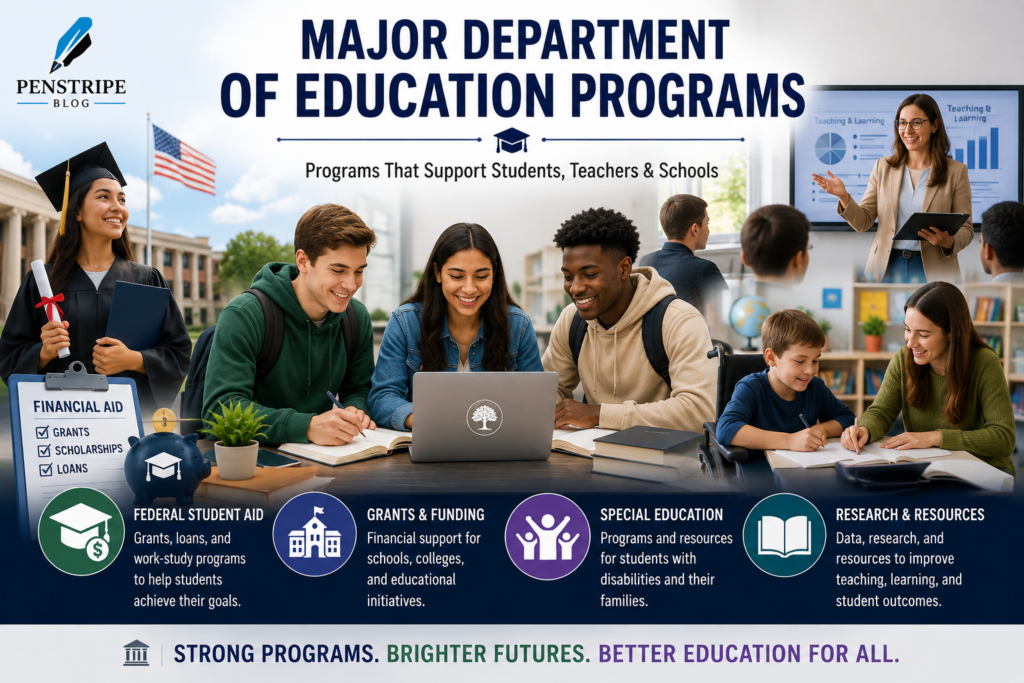
The Department of Education has been associated with a wide range of federal programs covering K–12 education, higher education, student aid, special education, research, and other areas.
Federal Student Aid
Federal Student Aid is one of the best-known areas associated with the department. It helps eligible students access financial assistance for college and career education.
Depending on eligibility, federal student aid can include grants, work-study opportunities, and federal student loans.
Students should complete the appropriate federal financial aid application and carefully review their school’s financial aid information.
Grants and Financial Support
Federal education grants can provide funding for specific students, institutions, schools, programs, or educational purposes.
Unlike a loan, a grant generally does not have to be repaid when its conditions are met. However, eligibility and requirements differ from one program to another.
Special Education Programs
Federal special education programs support eligible students with disabilities and help schools meet requirements established under federal law.
The Individuals with Disabilities Education Act, commonly known as IDEA, is a major federal law governing special education and related services.
Educational Research and Resources
Federal education research and data can provide useful information for educators, researchers, policymakers, and the public.
These resources can help people understand educational trends and evaluate approaches to teaching and learning.
How Does the Department of Education Help Students?
Students interact with the education system in different ways depending on their age, school, location, and educational goals.
Student Loans and Financial Aid
For eligible higher-education students, federal financial aid can reduce some of the immediate cost of college or career training.
Financial aid can involve grants, loans, work-study, and other assistance. Because loans generally have repayment obligations, students should understand interest rates, repayment terms, and borrowing limits before accepting them.
College and Career Resources
Students can find federal information related to college access, financial aid, career preparation, and postsecondary education.
Using official sources is especially important when researching financial aid because application deadlines, eligibility rules, and program requirements can change.
Support for Students With Disabilities
Students with qualifying disabilities may have legal rights to educational services and protections under federal law.
For younger students, special education services can involve individualized educational planning and related support when eligibility requirements are met.
How Does the Department of Education Support Teachers?
Teachers are central to the education system, but many teacher-related decisions are made by states, districts, and schools.
Teacher Resources
Federal education resources can provide research, instructional information, professional learning materials, and program guidance.
Teachers can combine these resources with state standards and local school policies when planning instruction.
Professional Development
Professional development helps educators strengthen teaching knowledge and classroom skills.
Federal programs may support certain professional development activities, although availability depends on the specific program, funding, and eligibility rules.
Education Grants and Programs
Some federal education programs provide funding that can support schools, educators, and educational initiatives.
Teachers interested in funding opportunities should check the requirements of each program instead of assuming that every federal grant is available to individual educators.
How Is Education Funded in the United States?
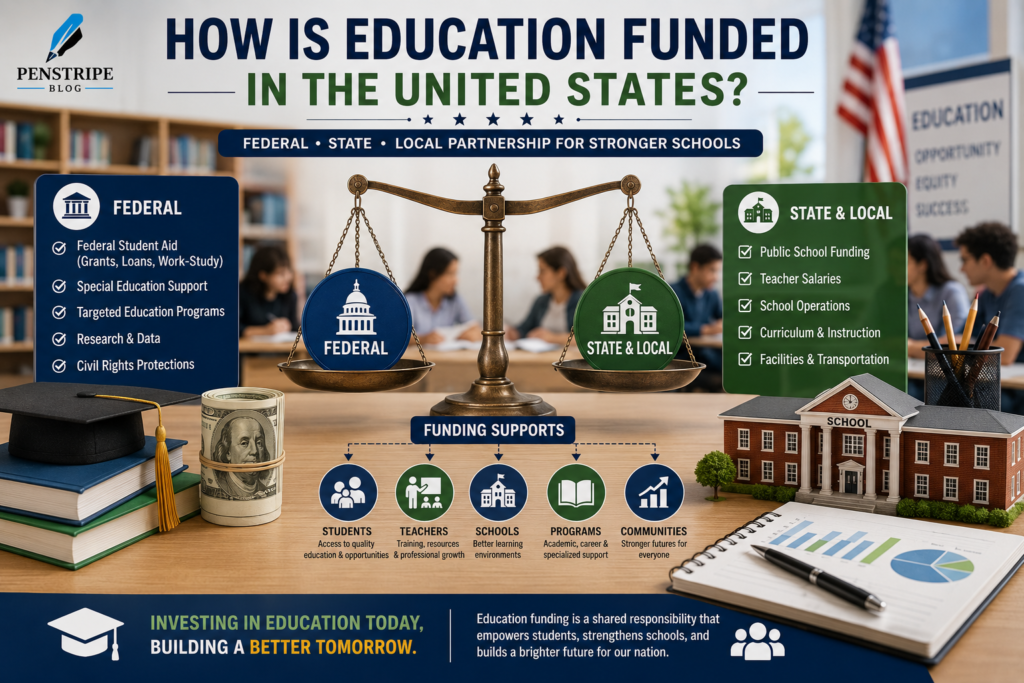
Education funding in the United States comes from multiple levels of government and other sources. This structure is one reason education can look different from one state or school district to another.
Federal vs. State Education Funding
| Funding Level | Typical Role | Examples |
| Federal | Targeted national programs and assistance | Student aid, special education support, selected grants |
| State | Major support for public education | School funding, state programs, standards |
| Local | Community and district-level support | Property-tax revenue, local school operations |
The exact funding structure varies by state.
The federal government generally represents a smaller portion of overall K–12 public education funding than state and local sources. Federal money is often targeted toward specific purposes rather than providing unrestricted funding for every school expense.
How Federal Education Grants Work
Federal grants normally come with rules describing who can receive the funds and how they can be used.
For example, a program might be designed to support students from particular backgrounds, improve educational services, or address a specific educational need.
Schools and organizations should carefully follow the relevant program guidance, reporting requirements, and spending rules.
Department of Education Policies and Regulations
Education policies can affect how federal programs operate and how participating institutions meet federal requirements.
Why Education Policies Matter
Policies matter because they establish rules, priorities, eligibility requirements, and responsibilities.
For students, policy can influence financial aid and educational protections. For institutions, it can affect program participation, reporting, compliance, and funding.
How Schools and Institutions Follow Federal Rules
Schools and institutions participating in federal programs may have to meet specific legal and administrative requirements.
These requirements can include reporting information, protecting student rights, maintaining records, and using federal funds for approved purposes.
Because regulations can change, institutions should rely on current official guidance rather than outdated articles or social media posts.
How to Find Department of Education Resources
Finding reliable education information is easier when you start with official government sources.
Official Websites and Online Resources
For U.S. education information, official federal government websites are generally the best starting point.
Useful sources can include:
- U.S. Department of Education resources
- Federal Student Aid information
- State education department websites
- Local school district websites
- College and university financial aid offices
Always check the date of information because education programs, deadlines, policies, and agency responsibilities can change.
Finding Programs and Financial Assistance
If you are searching for financial assistance, first identify whether you are looking for a grant, scholarship, loan, work-study opportunity, or another form of support.
Then check:
- Eligibility requirements
- Application deadlines
- Required documents
- Repayment conditions, if applicable
- Official application instructions
Avoid paying a third-party website simply to access basic federal financial aid information when the official government source provides it directly.
Stay in touch with Penstripe
Frequently Asked Questions
What does the Department of Education do?
The Department of Education administers federal education programs and supports areas such as student financial aid, education research, data, and civil rights enforcement. It does not directly operate most public schools in the United States. State and local authorities handle many day-to-day education decisions.
What is the main purpose of the Department of Education?
Its broad purpose is to support educational opportunity and administer federal education programs. Its work includes areas such as financial aid, education research, data, and enforcement of applicable federal education rights. The department works within federal laws and does not replace state and local education authorities.
Who does the Department of Education help?
The department’s programs can serve students, families, teachers, schools, colleges, and other eligible organizations. The type of support depends on the specific federal program. For example, students may receive financial aid, while schools may participate in targeted federal education programs.
What programs does the Department of Education offer?
Federal education programs cover several areas, including student financial aid, special education, educational research, grants, and support for specific educational needs. Programs have different eligibility rules, funding levels, and application processes, so applicants should check current official information before applying.
How does the Department of Education support students?
It supports students through federal financial aid and other education programs. Depending on eligibility, students may access grants, federal loans, work-study opportunities, disability-related educational protections, and other resources. The available support depends on the student’s circumstances and the requirements of each program.
How can I find Department of Education resources?
Start with official federal government education websites and then check your state education department, local school district, or college financial aid office when the question involves state or local rules. Using official sources helps you find current requirements, deadlines, forms, and program information.
What are the main education departments in Pakistan?
Pakistan’s education system includes federal and provincial education authorities rather than one single department controlling all education. The federal Ministry of Federal Education and Professional Training handles federal-level responsibilities, while provincial departments manage many school and education matters within their respective provinces.
What is the main concept of education?
The main concept of education is the development of knowledge, skills, understanding, values, and abilities that help people participate effectively in society and pursue personal and professional goals. Education can take place through schools, colleges, universities, vocational institutions, families, communities, and other learning environments.
Conclusion
The Department of Education is an important part of the U.S. federal education system, particularly in areas such as student financial aid, federal education programs, research, data, and civil rights protections. At the same time, it is important to remember that states and local school systems have major responsibilities for public education.
For students and families, the most useful approach is to identify the specific type of help needed and then consult the appropriate official source. Whether you are researching financial aid, special education, teacher resources, education funding, or federal policies, current government guidance should be your starting point.
Understanding the role of the department can help students, educators, and families navigate the wider education system with greater confidence and make better-informed decisions.