






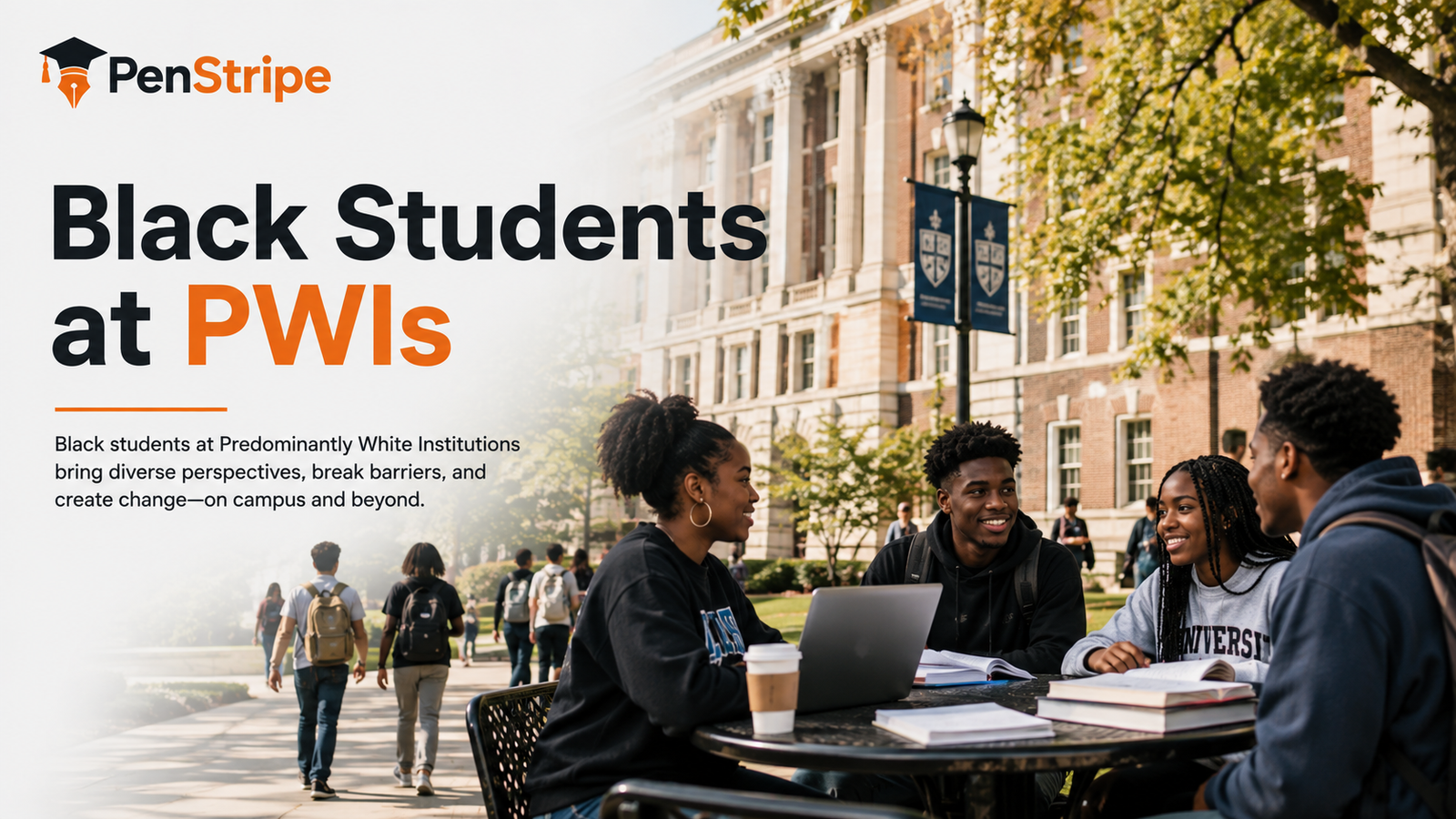
Black students at PWIs make up a small but meaningful share of enrollment at most large American colleges, and their experience often looks very different from what admissions brochures show. Predominantly White Institutions, or PWIs, are schools where white students make up the majority, and roughly 95 percent of colleges in the United States fall into that category simply based on demographics. That means most Black college students in America attend a PWI at some point, whether by choice or because an HBCU was never nearby or affordable.
This guide pulls together the real numbers, the honest quotes from students and researchers, and the practical strategies that actually help Black students succeed once they get on campus. You will see the current Black student statistics at PWIs, learn what the research says about graduation rates, understand the emotional side of the experience, and walk away with a clear picture of how HBCU vs. PWI statistics compare. This is written for students, parents, and educators who want facts, not assumptions.
What Does It Mean to Be a Black Student at a PWI
The Basic Definition
A PWI is any college or university where white students make up more than half the student body. It is not an official government classification, just a widely used term in research, journalism, and everyday conversation about higher education.
Why This Topic Matters So Much
Since the vast majority of American colleges are PWIs, most Black students end up navigating one at some point in their education. Understanding what that experience typically involves helps students prepare instead of being caught off guard once classes start.
Black Students at PWIs: Essay Topics Students Often Explore
Many college essay prompts and class assignments ask students to reflect on identity, belonging, or racial climate on campus. Common essay angles include personal stories of isolation, moments of unexpected community, and comparisons between expectations before enrolling and reality after arriving.
Black Students at PWIs Statistics: What the Research Shows
Enrollment Numbers
Black students remain underrepresented at many flagship PWIs compared to the percentage of Black residents in the surrounding state, a pattern researchers have flagged repeatedly when comparing enrollment data against state population figures.
Graduation Rate Comparisons
The picture on graduation rates is more complicated than most headlines suggest. Some national data has shown lower overall graduation rates for Black students at HBCUs compared to PWIs on the surface. But once researchers adjust for factors like Pell Grant eligibility, average SAT scores, and school selectivity, the gap between HBCUs and similar PWIs mostly disappears, and in several matched studies, HBCU students perform just as well or slightly better.
Retention Differences
Retention research has found that Black male students specifically tend to stay enrolled at HBCUs at meaningfully higher rates than at PWIs, even when researchers control for similar backgrounds and financial circumstances.
Black Students at PWIs 2021 and 2022 Trends
Enrollment data from 2021 and 2022 showed continued gaps in Black student enrollment relative to population share at large public universities, along with rising reports of food insecurity and financial strain among Black male students specifically, both of which affect persistence toward graduation.
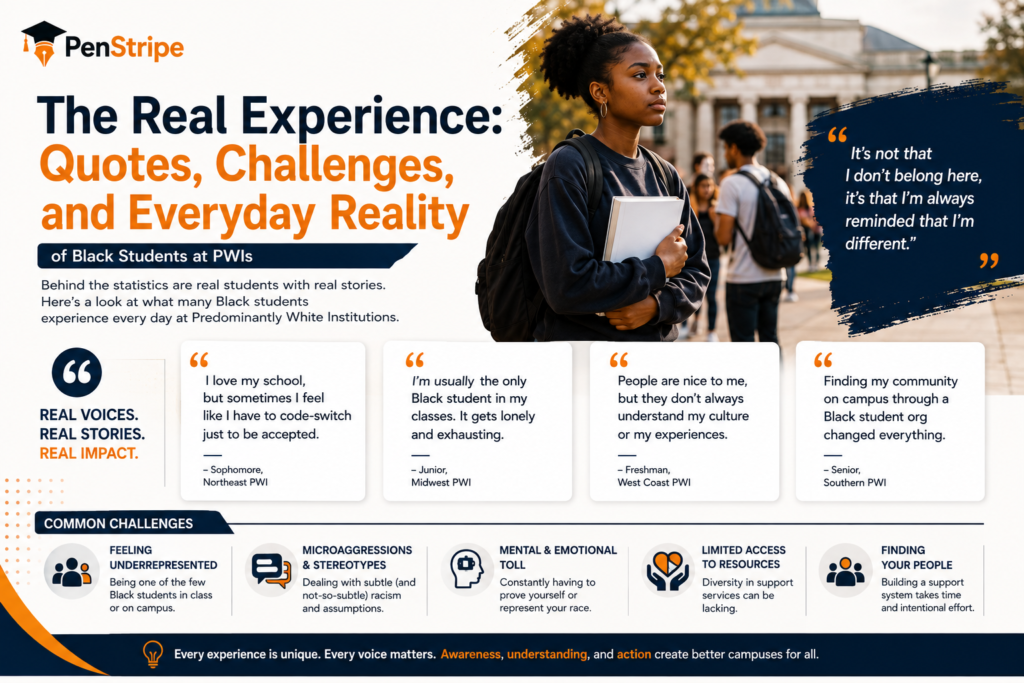
The Real Experience: Quotes, Challenges, and Everyday Reality
Common Themes in Black Students at PWIs Quotes
Across interviews, essays, and published research, a few themes come up again and again. Students frequently describe searching for people who look like them in large lecture halls, feeling pressure to represent their entire race in class discussions, and working harder to build community that felt automatic for their white classmates.
Microaggressions and Code-Switching
Many Black students at PWIs describe adjusting how they speak, dress, or act depending on who is in the room, a pattern often called code-switching. Combined with small but repeated comments or assumptions from classmates, this can add up to real emotional fatigue over a semester.
Academic Pressure Without Cultural Representation
Seeing few Black professors or administrators can make it harder to find mentors who understand a student’s specific challenges, even at schools with strong academic reputations and plenty of funding.
A Real-World Example
Consider a Black student who transfers from a small hometown to a large state university with only a small percentage of Black enrollment. Even with strong grades, that student may spend the first semester searching for a single club, professor, or peer group that reflects their background, something students at more diverse or historically Black campuses often find immediately.
HBCU vs PWI Statistics Side by Side
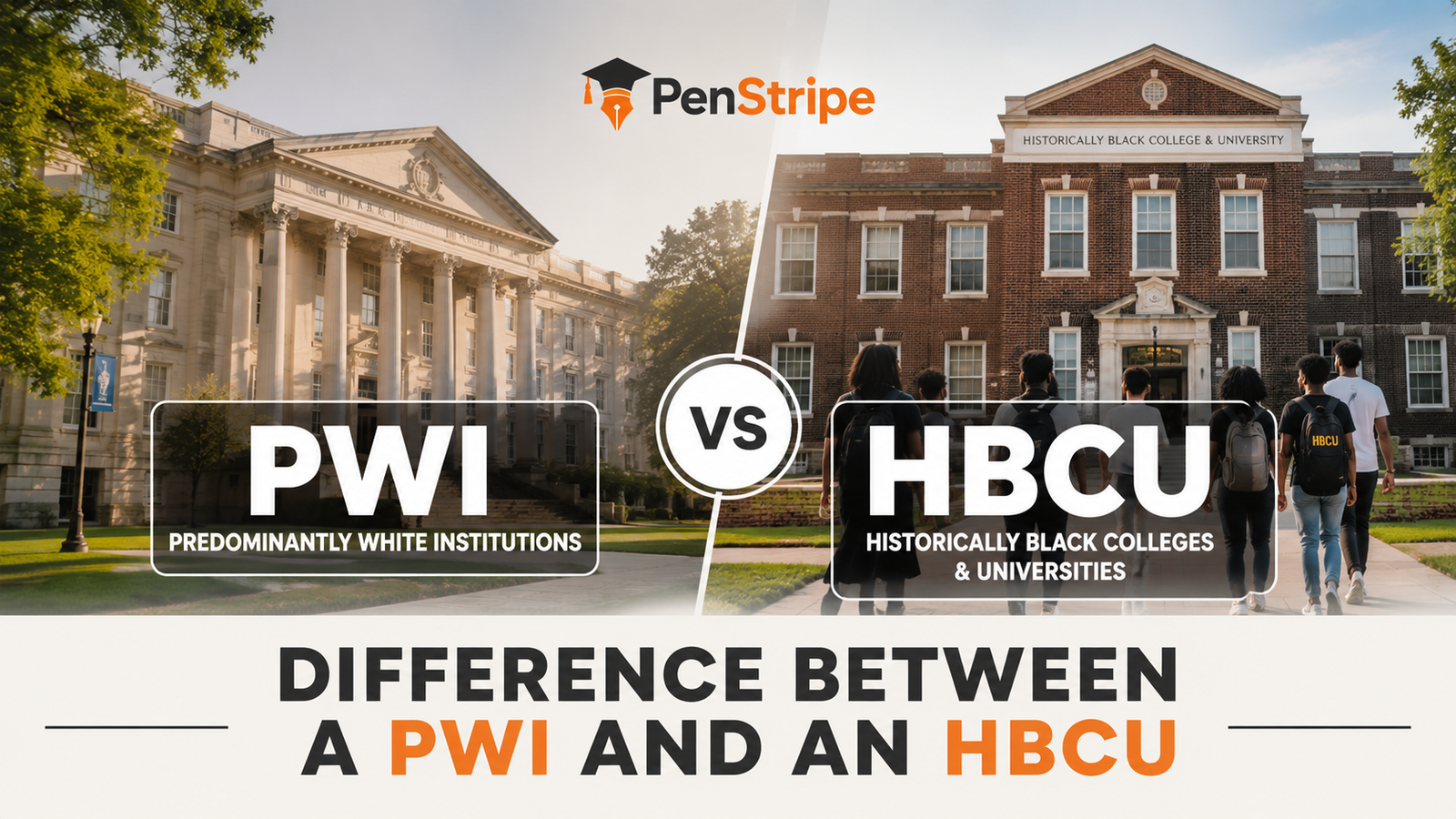
Understanding black students at PWIs statistics is easier with direct comparison. HBCUs enroll a small share of Black college students nationally, generally estimated around 10 percent, yet they produce close to 20 percent of all Black bachelor’s degree recipients, a gap that highlights just how effective their support systems tend to be per student enrolled.
| Factor | PWI | HBCU |
| Share of Black enrollment nationally | The majority of Black students attend here | About 10% of Black students attend here |
| Share of Black bachelor’s degrees produced | Majority overall, but lower per capita | Nearly 20% despite smaller enrollment |
| Reported racial stress | Generally higher | Generally lower |
| Retention for Black male students | Lower on average | About 15% higher on average |
| Faculty representation | Often limited | Typically much higher |
| Campus resources and funding | Often larger | Often smaller but improving |
How Colleges and Students Can Improve the Experience
What Strong PWIs Are Doing Right
Some PWIs have started applying lessons directly from HBCUs, including identity-focused first-year programming, active alumni mentorship networks, and curriculum that intentionally includes Black history and contributions across departments, not just in dedicated diversity courses.
A Practical Checklist for Prospective Students
- Ask the admissions office for current Black student enrollment percentages
- Research the number of Black faculty and staff in your intended major
- Look for a Black student union, cultural center, or affinity housing option
- Ask about retention and graduation rates specifically for Black students
- Talk to current Black students directly before committing
Advice for Students Already Enrolled
Building community early matters more than waiting for it to happen naturally. Joining a cultural organization in the first few weeks, finding one supportive professor or advisor, and staying connected to family or hometown support systems can all make a measurable difference in how the first year feels.
What Parents and Counselors Can Do
Encourage open conversations about expectations before move-in day, help students research support resources ahead of time, and check in specifically about belonging and mental health during the first semester, not just grades.
Frequently Asked Questions
What percentage of Black students attend PWIs? The majority of Black college students in the United States attend PWIs, simply because roughly 95 percent of American colleges fall into that category. Only about 10 percent of Black college students attend HBCUs, even though those schools produce a disproportionately high share of Black graduates.
Do Black students graduate at lower rates at PWIs? Not necessarily once researchers adjust for factors like financial aid eligibility and test scores. Raw numbers sometimes show PWIs ahead, but matched comparisons controlling for similar student backgrounds often show HBCU and PWI graduation rates for Black students are close or even favor HBCUs.
What challenges do Black students face at PWIs? Common challenges include feeling isolated, facing microaggressions, limited access to Black faculty mentors, and pressure to represent their entire race in classroom discussions. These challenges vary widely by school and can be reduced significantly through strong support programs.
Are there statistics comparing HBCU vs PWI outcomes? Yes. HBCUs enroll about 10 percent of Black college students but produce close to 20 percent of Black bachelor’s degree holders. Retention rates for Black male students also tend to run higher at HBCUs than at PWIs in national research.
How can Black students find community at a PWI? Joining Black student unions, cultural centers, and affinity-based organizations early in the first semester makes the biggest difference. Building a relationship with even one supportive faculty member or advisor also significantly improves the sense of belonging over time.
Is it harder to succeed academically as a Black student at a PWI? Not necessarily in terms of raw ability, but the added emotional labor of navigating underrepresentation can affect focus and mental health. Students who build strong support systems early tend to perform just as well as their peers.
Conclusion
Black students at PWIs face a mix of real opportunity and real challenge, and the statistics make that balance clear. PWIs often offer bigger resources and broader programs, but the data consistently shows that representation, mentorship, and cultural community directly affect retention and graduation outcomes. Whether a student chooses a PWI, an HBCU, or transfers between the two, the numbers say the same thing: support systems matter as much as the school’s name. If you are a student, parent, or counselor navigating this decision, use these statistics as a starting point, then dig into each specific school’s own data before making a final choice penstripe