

Knowing how to study for a test effectively can make exam preparation less stressful and much more productive. Many students spend hours reading textbooks or highlighting notes, yet struggle to remember the material when the test begins. The problem is often not a lack of effort. It is the study method.
Effective studying is less about spending more time at your desk and more about using that time wisely. Active recall, spaced repetition, practice testing, focused study sessions, and good sleep can help you learn information more deeply and retrieve it when you need it.
Whether you are preparing for a high school exam, college test, math assessment, or history final, the same basic principles can be adapted to your situation.
This guide explains how to study for a test effectively as a student, how to create a practical study schedule, how to remember information, how to focus during study sessions, and what to do when the test is tomorrow. You will also learn several study techniques that can make your preparation more efficient.
How to Study for a Test Effectively

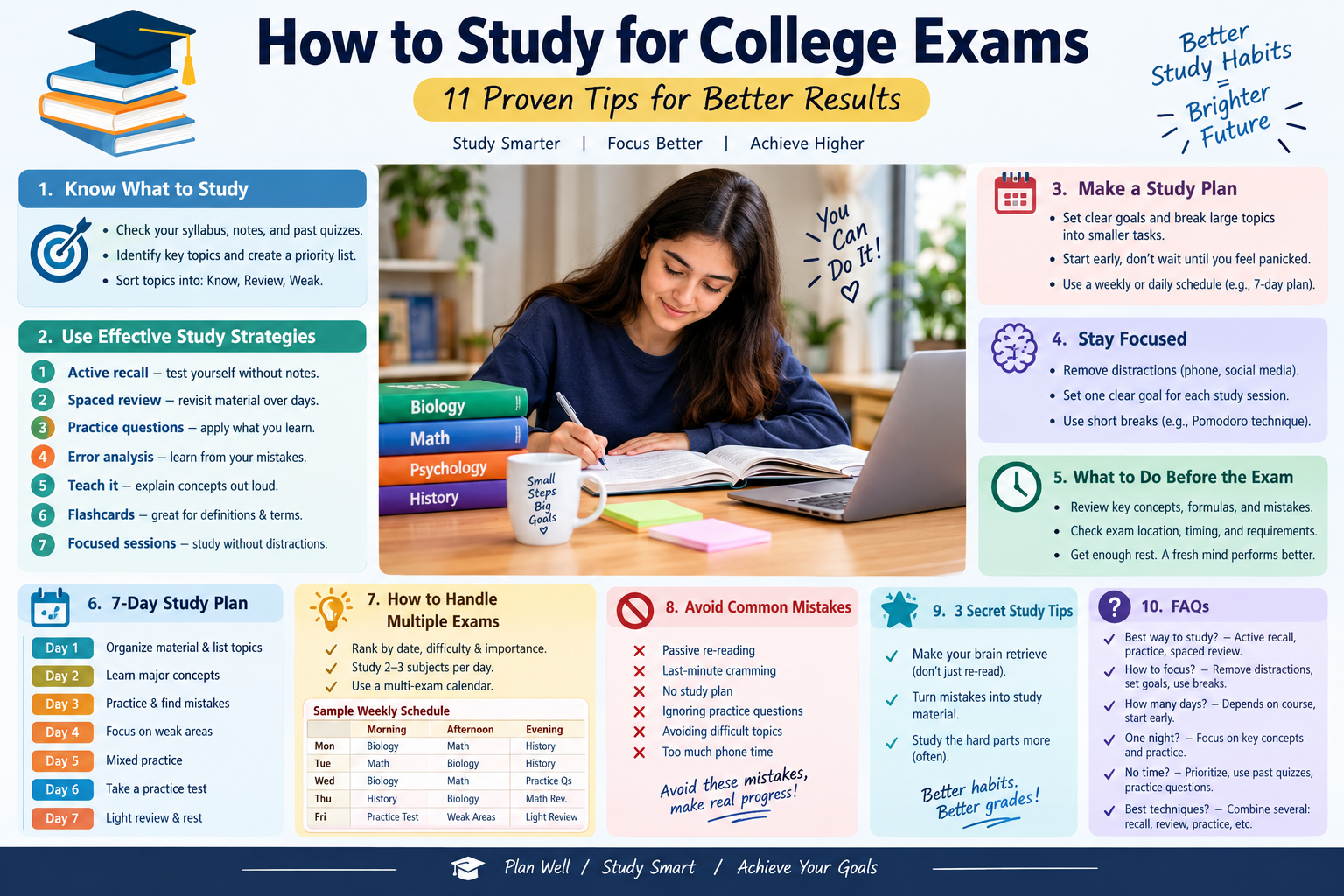
The most effective way to study for a test is to combine active recall, practice testing, spaced review, focused study sessions, and deliberate correction of mistakes.
Instead of repeatedly reading the same chapter, try to retrieve information from memory. Then test yourself, identify what you got wrong, and review those specific areas.
A simple study cycle looks like this:
Learn → Recall → Practice → Check → Correct → Review
For example, suppose you have a biology test covering five chapters. Instead of reading all five chapters repeatedly, divide the material into smaller topics. Study one topic, close your notes, explain what you remember, answer practice questions, and check your mistakes.
This approach turns studying from passive reading into active learning.
How Early Should You Study for a Test?
When possible, start several days before the test rather than leaving everything until the night before. More time allows you to distribute review sessions and identify weak areas before test day.
A simple schedule might look like this:
| Time Before Test | Main Goal |
|---|---|
| 7+ days | Learn major concepts |
| 5–6 days | Review and practice |
| 3–4 days | Focus on weak areas |
| 1–2 days | Practice testing and recall |
| Night before | Light review and preparation |
The exact schedule depends on the difficulty of the subject and how much material you need to learn.
Create a Smart Test Study Plan
A study plan gives your preparation direction. Without one, students often spend too much time on easy topics and too little time on areas they actually struggle with.
Break the Material Into Smaller Topics
Start by listing everything that could appear on the test.
For example:
History Test
- American Revolution
- Constitution
- Federalism
- Early presidents
- Major historical events
Then divide each topic into smaller concepts.
This makes a large syllabus feel more manageable and gives every study session a clear purpose.
Prioritize Your Weak Areas
Do not spend most of your study time reviewing information you already know.
Use a simple system:
Green: I understand this well.
Yellow: I understand the basics but need practice.
Red: I cannot explain this without help.
Spend the most time on red topics, followed by yellow topics. Green topics only need periodic review.
Build Short, Focused Study Sessions
A productive session might include:
- Five minutes to choose a specific goal.
- Twenty-five to forty minutes of focused study.
- Five to ten minutes of active recall.
- A short break.
- Practice questions before ending the session.
The goal is not to sit at a desk for a certain number of hours. The goal is to complete meaningful learning tasks.
Use Active Recall and Practice Testing

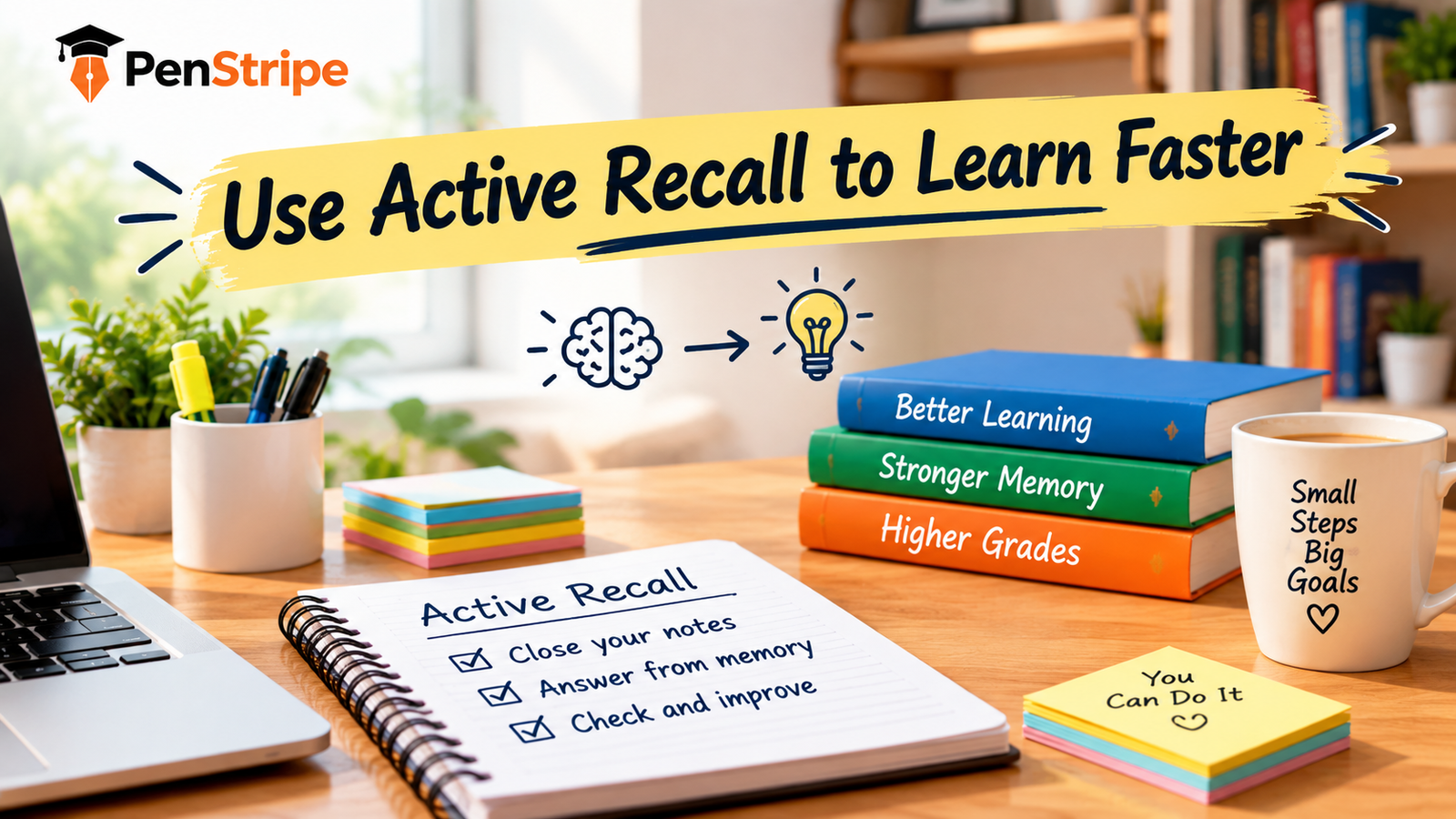
Active recall is one of the most useful approaches for learning information because it requires you to retrieve knowledge instead of simply recognizing it on a page.
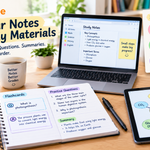
Turn Notes Into Questions
Instead of writing:
“Photosynthesis converts light energy into chemical energy.”
Create a question:
“What does photosynthesis do?”
Then answer it without looking at your notes.
This simple change forces your brain to retrieve the information.
Use Practice Questions
Practice questions reveal whether you can actually use what you studied.
After learning a topic, ask yourself:
- Can I explain this without my notes?
- Can I solve a related problem?
- Can I give an example?
- Can I explain why the answer is correct?
- Can I identify a common mistake?
If you cannot answer confidently, that topic needs more work.
Use the 3-2-1 Study Rule
The 3-2-1 rule can be adapted as a simple review technique:
3: Write or recall three important things you learned.
2: Identify two concepts you still need to review.
1: Explain one major idea in your own words.
This is not a universal scientific formula for studying. It is simply a practical structure for organizing a short review session.
Use Spaced Repetition to Remember More
Spaced repetition means reviewing information across multiple sessions instead of trying to memorize everything at once.
Avoid Cramming When Possible
Cramming may help you recognize some information temporarily, but it gives you little opportunity to revisit material after forgetting begins.
Instead, review the same material at increasing intervals.
For example:
Day 1: Learn the topic.
Day 2: Quick recall.
Day 4: Practice questions.
Day 7: Test yourself again.
This schedule can be adjusted based on how well you remember the information.
Use Flashcards Correctly
Flashcards work best when they require genuine recall.
Weak flashcard:
Front: Photosynthesis
Back: A long paragraph copied from the textbook.
Better flashcard:
Front: What is the primary purpose of photosynthesis?
Back: To convert light energy into chemical energy stored in glucose.
Keep cards focused on one idea whenever possible.
Review Difficult Cards More Often
You do not need to spend equal time on every flashcard.
Cards you consistently answer correctly can be reviewed less frequently. Cards you repeatedly miss deserve more attention.
This makes your study time more efficient.
Improve Focus and Avoid Distractions
Even an excellent study method becomes ineffective when your attention constantly shifts.
How Can I Focus 100% on Studying for Exams?
You cannot always maintain perfect concentration, but you can make focused study much easier.
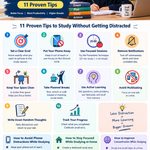
Before starting:
- Put your phone away.
- Close unnecessary browser tabs.
- Choose one specific task.
- Keep only needed materials nearby.
- Set a timer for a focused session.
- Take planned breaks.
Instead of saying, “I need to study chemistry,” create a measurable goal such as:
“I will complete 20 chemistry practice questions and review every mistake.”
A specific goal gives your attention somewhere to go.
Use the Pomodoro Technique
The Pomodoro technique divides work into focused intervals followed by short breaks.
A common version is:
25 minutes: Focused study
5 minutes: Break
After several cycles, take a longer break.
You can also use longer sessions, such as 40 to 50 minutes of study followed by 10 minutes of rest.
Choose the interval that helps you maintain concentration without becoming mentally exhausted.
Create a Distraction-Free Study Environment
Your environment can influence how easily you begin and maintain a study session.
Keep your desk simple. Put your phone somewhere you cannot casually reach it. If you study online, close social media and entertainment tabs.
The less effort required to resist distractions, the easier it becomes to stay focused.
Understand Difficult Subjects Instead of Memorizing Everything
Memorization has a place in education, but understanding usually makes information easier to remember and apply.
Use the Feynman Technique
The Feynman technique is a simple way to check whether you genuinely understand a concept.
Follow four steps:
- Choose a concept.
- Explain it in simple language.
- Identify where your explanation becomes unclear.
- Review those areas and explain the concept again.
For example, if you cannot explain supply and demand without using complicated textbook language, you may need to understand the concept more deeply.
Connect New Information to What You Already Know
New information becomes easier to understand when you connect it with familiar ideas.
For example, when learning a new scientific process, ask:
“How is this related to something I already understand?”
Connections give your memory more useful pathways for retrieving information later.
Practice Difficult Subjects Differently
Different subjects require different approaches.
For mathematics, solving problems is usually more useful than rereading formulas.
For history, timelines, cause-and-effect relationships, retrieval questions, and comparisons can help.
For science, combine conceptual understanding with diagrams, explanations, and practice questions.
Use Different Study Methods for Different Tests
There is no single study technique that works identically for every subject.
How to Effectively Study for a Math Test
Math requires practice and problem solving.
A useful process is:
Learn the method → Watch or review an example → Solve without help → Check the answer → Correct the mistake → Solve a similar problem
Do not only practice problems you already know how to solve. Include questions that require you to choose the correct method.
How to Effectively Study for a History Test
History often requires understanding relationships between people, events, dates, causes, and consequences.
Create:
- Timelines
- Cause-and-effect charts
- Comparison tables
- Practice questions
- Short explanations of major events
Instead of memorizing isolated dates, ask why an event happened and what changed afterward.
How to Study for a Test by Yourself
Studying alone can work very well when you have a structured system.
Start with a clear target, remove distractions, use active recall, and test yourself regularly.
You can also teach an imaginary student. Explain the topic aloud as though someone has asked you to teach it.
If your explanation becomes confusing, that usually shows where additional review is needed.
How to Study for a Test Effectively in College
College tests often require more independent preparation.
Start by identifying:
- Assigned readings
- Lecture topics
- Professor-provided study guides
- Previous quizzes
- Homework concepts
- Practice problems
- Areas emphasized in class
Do not assume that reading every page repeatedly is the best use of your time. Use the course material to identify what you need to know, then use active recall and practice to test your understanding.
How to Study for a Test the Night Before
Studying the night before should focus on high-value review rather than trying to learn an entire course from scratch.
Review the Most Important Topics
Start with your study guide, class notes, practice questions, and previous mistakes.
Prioritize concepts that:
- Are likely to appear on the test.
- You frequently get wrong.
- Connect multiple topics.
- You understand poorly.
Test Yourself Instead of Reading Everything Again
Close your notes and answer questions.
If you can explain the concept correctly, move forward.
If you cannot, review it briefly and test yourself again.
This prevents you from spending the entire evening rereading familiar material.
Protect Your Sleep
Staying awake all night may give you more study hours, but extreme sleep loss can make concentration and recall harder.
If you are preparing for a test tomorrow, use your remaining time strategically and allow yourself reasonable sleep rather than assuming that every additional hour awake is productive.
How to Study Effectively for a Test Tomorrow
When the test is tomorrow, you need a priority-based plan.
Step 1: Identify High-Value Material
Review the syllabus, teacher’s study guide, major concepts, previous mistakes, and practice questions.
Step 2: Use Active Recall
Ask yourself questions and answer them without looking at your notes.
Step 3: Practice
Complete representative questions, especially those involving concepts you commonly miss.
Step 4: Correct Your Mistakes
Do not simply mark an answer wrong. Determine why it was wrong.
Was it:
- A memory problem?
- A misunderstanding?
- A calculation error?
- A careless mistake?
- A failure to understand the question?
The reason matters because it determines what you should change.
Step 5: Stop When Your Preparation Becomes Unproductive
If you are exhausted and making repeated careless mistakes, another hour of unfocused study may not be useful.
Take a break, prepare for the morning, and get adequate rest.
7 Secret Methods for Studying That Actually Help
The word “secret” makes study techniques sound mysterious, but effective studying does not require hidden tricks. Most useful methods are simple strategies applied consistently.
1. Retrieval Before Review
Before opening your notes, write down everything you remember about the topic.
Then compare your answer with the material.
2. Interleave Similar Problems
Instead of solving ten identical problems, mix different types.
This forces you to recognize which method is appropriate.
3. Keep a Mistake Log
Record the questions you repeatedly miss and why you missed them.
Review this list before the test.
4. Explain Before Memorizing
Try to understand the concept before attempting to memorize details.
5. Use Examples
Connect abstract information to realistic situations.
6. Study in Multiple Locations Occasionally
Changing the context of some study sessions can prevent your preparation from becoming tied to one specific environment.
7. End Every Session With Retrieval
Spend the final few minutes answering questions without your notes.
That gives you immediate feedback about what actually stayed in memory.
3 Secret Study Tips for Faster, Better Preparation
If you only have time to remember three practical principles, use these:
Test yourself more than you reread.
Study difficult material more than comfortable material.
Review information across multiple sessions instead of relying on one long session.
These are not magic shortcuts. Their value comes from making your study time more active and targeted.
Common Study Mistakes to Avoid
Rereading the Same Notes Repeatedly
Rereading can create a feeling of familiarity without proving that you can retrieve the information independently.
Use retrieval questions after reading.
Highlighting Too Much
Highlighting can help identify important information, but highlighting an entire page does not create much opportunity for retrieval.
Studying Only What Feels Easy
Easy topics can make you feel productive. Difficult topics are usually where additional learning is needed.
Multitasking
Studying while constantly checking messages, social media, or videos divides your attention.
Use focused sessions instead.
Ignoring Practice Tests
Knowing a concept and applying it under test conditions are not always the same thing.
Practice questions help bridge that gap.
Waiting Until the Last Minute
Last-minute studying may be unavoidable sometimes, but regular review gives you more opportunities to find and fix weaknesses.
Study Methods Comparison
| Study Method | Best For | Strength | Common Problem |
|---|---|---|---|
| Active Recall | Facts and concepts | Builds retrieval ability | Requires effort |
| Practice Testing | Exam preparation | Reveals weak areas | Requires good questions |
| Spaced Repetition | Long-term memory | Reduces cramming | Needs planning |
| Flashcards | Definitions and facts | Quick review | Poor cards become passive |
| Feynman Technique | Complex concepts | Reveals gaps | Takes time to explain |
| Pomodoro | Focus | Creates structure | Short sessions may not suit everyone |
| Rereading | Initial familiarity | Easy to use | Can feel more effective than it is |
| Highlighting | Finding key information | Simple organization | Does not test recall |
How Many Hours Should You Study for a Test?
There is no universal number of hours that guarantees success. The amount of study time depends on the subject, difficulty, prior knowledge, amount of material, and your preparation level.
Instead of asking only, “How many hours should I study for a test?” ask:
“What can I accomplish during my next focused study session?”
Two focused hours of active practice may be more useful than several hours of distracted reading.
Track completed tasks rather than only time.
How to Be a Top 1% Student?
There is no single formula that guarantees a student will become a top 1% student. However, strong academic performance commonly requires consistent habits rather than occasional intense effort.
Build these habits:
- Attend and engage with classes.
- Review material regularly.
- Practice retrieving information.
- Ask questions when confused.
- Track mistakes.
- Start major assignments early.
- Protect sleep and recovery.
- Adjust your study strategy when results are poor.
The key is to treat studying as a skill that can improve through feedback.
How to Study Fast Without Forgetting
Studying faster does not mean rushing through material.
The better approach is to remove low-value activities and spend more time on active learning.
Try this sequence:
Preview → Learn → Recall → Practice → Correct → Review
For example, instead of spending 60 minutes rereading a chapter, spend 10 minutes identifying the main concepts, 20 minutes learning them, 15 minutes recalling them, and 15 minutes answering practice questions.
The exact timing can change, but the principle remains the same: make more of your study time active.
How to Study for a Test Effectively Online
Online studying can be effective when digital tools are used intentionally.
Useful resources can include:
- Digital flashcards
- Practice quizzes
- Online lectures
- Course learning platforms
- Digital textbooks
- Timed practice tests
However, having many resources can create another problem: resource overload.
Choose a small number of reliable resources and use them to practice rather than continuously searching for new explanations.
If you use online videos, pause frequently and try to recall the material before continuing.
How to Pass an Exam Test Without Cramming
Passing a test is not about finding one secret trick. It depends on understanding the material and being able to retrieve and apply it under test conditions.
A practical preparation system is:
Understand the material → Practice retrieval → Solve questions → Review mistakes → Repeat
If you consistently miss the same type of question, do not simply practice more questions. Identify the underlying problem and correct it.
How to Survive an Exam When You Feel Unprepared
If you reach exam day feeling underprepared, avoid spending your remaining time panicking.
Before the test:
- Review the highest-priority concepts.
- Look over common mistakes.
- Prepare necessary materials.
- Eat and hydrate normally.
- Give yourself enough time to arrive.
During the exam, read instructions carefully and manage your time. If a question is taking too long, move forward when appropriate and return to it later.
Frequently Asked Questions
What is the best method to study for a test?
The best approach is usually a combination of active recall, practice testing, spaced review, and correction of mistakes. Instead of repeatedly reading notes, close the book and try to retrieve the information. Then use practice questions to discover what you still need to learn.
How can I focus 100% on studying for exams?
Perfect concentration is difficult, but you can improve focus by removing distractions, setting one specific goal, putting your phone away, and using timed study sessions. Short breaks can also help you maintain attention across a longer study period.
What is the 3-2-1 rule for study?
The 3-2-1 rule is a simple review framework. Recall three important things you learned, identify two areas that still need work, and explain one major concept in your own words. It can be used at the end of a study session to check understanding.
How can I study for a test quickly?
Start with the most important and difficult material. Use active recall and practice questions instead of spending most of your time rereading. Create a short priority list, focus on weak areas, and use brief breaks to maintain concentration.
How many hours should you study for a test?
There is no fixed number of hours that works for every student. Study time depends on the subject, amount of material, prior knowledge, and test difficulty. Focus on completing meaningful learning tasks rather than reaching an arbitrary number of hours.
How do you study for tests by yourself?
Create a clear study schedule, divide the material into manageable topics, use active recall, complete practice questions, and keep a record of mistakes. Explaining concepts aloud is also useful because it reveals gaps in your understanding.
How can I study for a test effectively the night before?
Prioritize major concepts, practice questions, and topics you frequently miss. Avoid trying to reread the entire textbook. Use active recall to test yourself and review mistakes. Most importantly, avoid sacrificing excessive sleep for additional low-quality study time.
How can I study for a test effectively in college?
Start by reviewing the syllabus, lectures, readings, assignments, quizzes, and professor-provided study materials. Identify the topics most likely to matter, then use active recall and practice problems. College courses often require more independent planning, so begin preparation before the final days whenever possible.
Conclusion
Learning how to study for a test effectively is not about sitting at a desk for the longest possible time. It is about making each study session purposeful.
Start by creating a realistic plan and dividing large topics into smaller sections. Use active recall, practice testing, and spaced repetition to strengthen memory. Focus on difficult areas instead of repeatedly reviewing material you already know. When preparing for math, history, science, or college exams, adapt your study method to the type of learning the test requires.
If the test is tomorrow, prioritize high-value material, practice retrieval, correct your mistakes, and avoid exhausting yourself with unproductive cramming.
The most important step is to start. Choose one topic, put distractions away, test what you already know, and begin improving from there. With consistent practice and a smarter approach, your study sessions can become more focused, efficient, and useful penstripe