






Studying for hours does not always mean you will remember what you learned. You may read the same chapter several times, highlight important sentences, and still forget the information when you need it. The problem is often not a lack of effort. It is the way the information is being learned and reviewed.
Learning how to memorize what you study starts with changing from passive reading to active learning. Instead of simply looking at your notes, you need to retrieve information, connect ideas, explain concepts, and review them at the right times.
In this guide, you will learn 11 practical strategies that can help you remember study material for longer. You will also learn how active recall, spaced repetition,
practice testing, sleep, and focused study sessions work together.
Whether you are preparing for an exam, learning vocabulary, reviewing lecture notes, or trying to remember a difficult subject, these techniques can make your study sessions more effective.
How to Memorize What You Study?

Forgetting after studying is normal. Memory becomes stronger when information is repeatedly retrieved and connected with existing knowledge.
Passive Reading Does Not Test Your Memory
Reading a textbook can make information feel familiar. However, recognizing information on a page is different from recalling it without looking.
For example, you might read the definition of photosynthesis several times. When the textbook is open, the answer seems obvious. Close the book and try to explain photosynthesis in your own words. If you struggle, you have found an opportunity for active learning.
Too Much Information Can Overload Your Attention
Trying to memorize an entire chapter in one sitting can make studying inefficient. Your attention is limited, especially when you are tired or distracted.
Break large topics into smaller sections. Learn one concept, test yourself, take a short break, and then continue.
You May Not Review at the Right Time
A single study session is rarely enough for long-term retention. Information becomes easier to recall when you revisit it over multiple sessions.
This is why spaced repetition is useful. Instead of reviewing everything repeatedly in one night, spread your reviews across several days.
How to Memorize What You Study More Effectively
The most useful approach combines understanding, active recall, spaced review, practice, and healthy study habits.
1. Understand Before You Memorize
Start by understanding the meaning of the material.
If you are studying biology, do not simply memorize a definition. Ask what the process does, why it happens, and how it connects to other concepts.
Understanding creates connections that make later recall easier.
2. Use Active Recall
Active recall means trying to retrieve information from memory instead of looking at the answer.
Read a short section, close your book, and ask yourself:
“What were the three main ideas?”
“What does this term mean?”
“How would I explain this concept to someone else?”
Then check your answer.
This simple change can turn reading into a memory exercise.
3. Practice With Questions
Questions reveal what you actually know.
After completing a section, create several questions from your notes. Answer them without looking at the material.
For example:
Question: What are the main stages of cellular respiration?
Try answering from memory first. Then compare your response with your notes and correct any missing information.
4. Explain the Topic in Simple Words
One of the easiest ways to check your understanding is to teach the concept.
Imagine that you are explaining the topic to a younger student. Avoid complicated language unless it is necessary.
If you cannot explain an idea simply, return to the material and identify the part you do not understand.
5. Connect New Information to What You Already Know
Memory becomes more meaningful when new information has a connection to something familiar.
For example, when learning a new vocabulary word, connect it with an image, situation, personal example, or familiar word.
These connections give your brain more ways to retrieve the information later.
What Is the Best Way to Memorize Study Material?

There is no single technique that works perfectly for every student. A strong general approach is to understand the material, retrieve it from memory, review it over time, and practice applying it.
| Study Method | Main Purpose | Best Use |
|---|---|---|
| Active recall | Retrieval | Facts and concepts |
| Spaced repetition | Long-term retention | Ongoing review |
| Practice testing | Exam preparation | Test-like questions |
| Self-explanation | Understanding | Difficult concepts |
| Flashcards | Quick retrieval practice | Terms and definitions |
| Mind maps | Connecting ideas | Complex topics |
| Teaching others | Deep understanding | Concepts and processes |
The key is not simply choosing one technique. Combining several methods creates a stronger study routine.
How Active Recall Improves Memory
Active recall is one of the most practical methods for learning because it forces you to retrieve information.
Turn Notes Into Questions
Instead of copying your notes again and again, convert important information into questions.
For example:
Notes:
“The heart has four chambers.”
Question:
“How many chambers does the human heart have?”
This creates a quick self-test.
Use Flashcards Correctly
Flashcards work best when you attempt to answer before revealing the back.
Do not immediately flip the card because the answer looks familiar. Pause and retrieve it.
You can use physical cards or digital flashcards, but the important part is the retrieval process.
Use Practice Tests
Practice tests are useful because they require you to recall information under conditions similar to an exam.
After completing a practice test, review incorrect answers carefully. Do not only count your score. Find out why each answer was missed.
How Spaced Repetition Helps You Remember
Spaced repetition means reviewing information at increasing intervals rather than trying to learn everything during one session.
Review Before You Completely Forget
A simple routine might look like this:
| Review | Suggested Timing |
|---|---|
| First review | Later the same day |
| Second review | About 1–2 days later |
| Third review | Several days later |
| Fourth review | About a week later |
| Later reviews | Every few weeks as needed |
The exact schedule can change depending on the difficulty of the material and how well you remember it.
The important idea is to return to information repeatedly over time.
What Is the 2 7 30 Rule for Memory?
The “2-7-30” rule is commonly described online as reviewing information after roughly 2 days, 7 days, and 30 days. It can be used as a simple spaced-review framework.
However, it is better to treat this as a practical study schedule rather than a universal scientific law. Your review intervals should depend on how well you can retrieve the information.
If you forget something quickly, review it sooner. If you can recall it easily, you can increase the interval.
Study Techniques That Make Memorization Easier

6. Use the Pomodoro Method
Try studying for a focused period followed by a short break.
A common starting point is:
25 minutes of focused study
5 minutes of rest
Repeat several times
Take a longer break after several sessions
You can adjust the timing to fit your attention span.
The goal is not to follow a timer perfectly. The goal is to protect your attention from unnecessary distractions.
7. Use Mnemonics for Difficult Lists
Mnemonics help you create an easier way to remember information.
You can use acronyms, rhymes, short stories, visual images, or memorable associations.
For example, if you need to remember a sequence, create a sentence where each word begins with the same letter as the items you need to recall.
8. Create Visual Connections
Some information is easier to remember when you turn it into a diagram, timeline, chart, or mental image.
This can be especially useful for subjects involving processes, categories, relationships, or sequences.
Do not create complicated visuals just to make your notes look attractive. The visual should make the information easier to understand or retrieve.
9. Mix Studying With Practice
Do not spend the entire session reading.
A stronger session could look like this:
Understand the topic → close the book → recall the main ideas → answer questions → check mistakes → review weak areas.
This approach gives you immediate feedback about what you actually know.
How to Memorize Things for Exams
Exam preparation requires more than memorizing isolated facts. You also need to practice retrieving and applying information.
Break Large Topics Into Smaller Sections
Divide the syllabus into manageable topics.
For example:
Chapter 1 → definitions
Chapter 2 → key concepts
Chapter 3 → processes
Chapter 4 → examples
Chapter 5 → practice questions
This makes a large workload easier to organize.
Focus More on Weak Areas
Students often spend too much time reviewing information they already know because it feels comfortable.
Instead, mark topics as:
Strong
Needs review
Weak
Spend more time on the weak areas while maintaining occasional reviews of the stronger material.
Use Exam-Style Questions
If your test includes multiple-choice questions, practice multiple-choice questions. If it requires written answers, practice writing answers.
The closer your practice is to the real task, the more useful your preparation can become.
How to Build a Better Memory Routine
10. Protect Your Sleep
Sleep is an important part of learning and memory. Staying awake all night to study may give you additional study time, but it can leave you tired when you need to recall and use the material.
Instead of relying on an all-night session, plan your study across multiple days whenever possible.
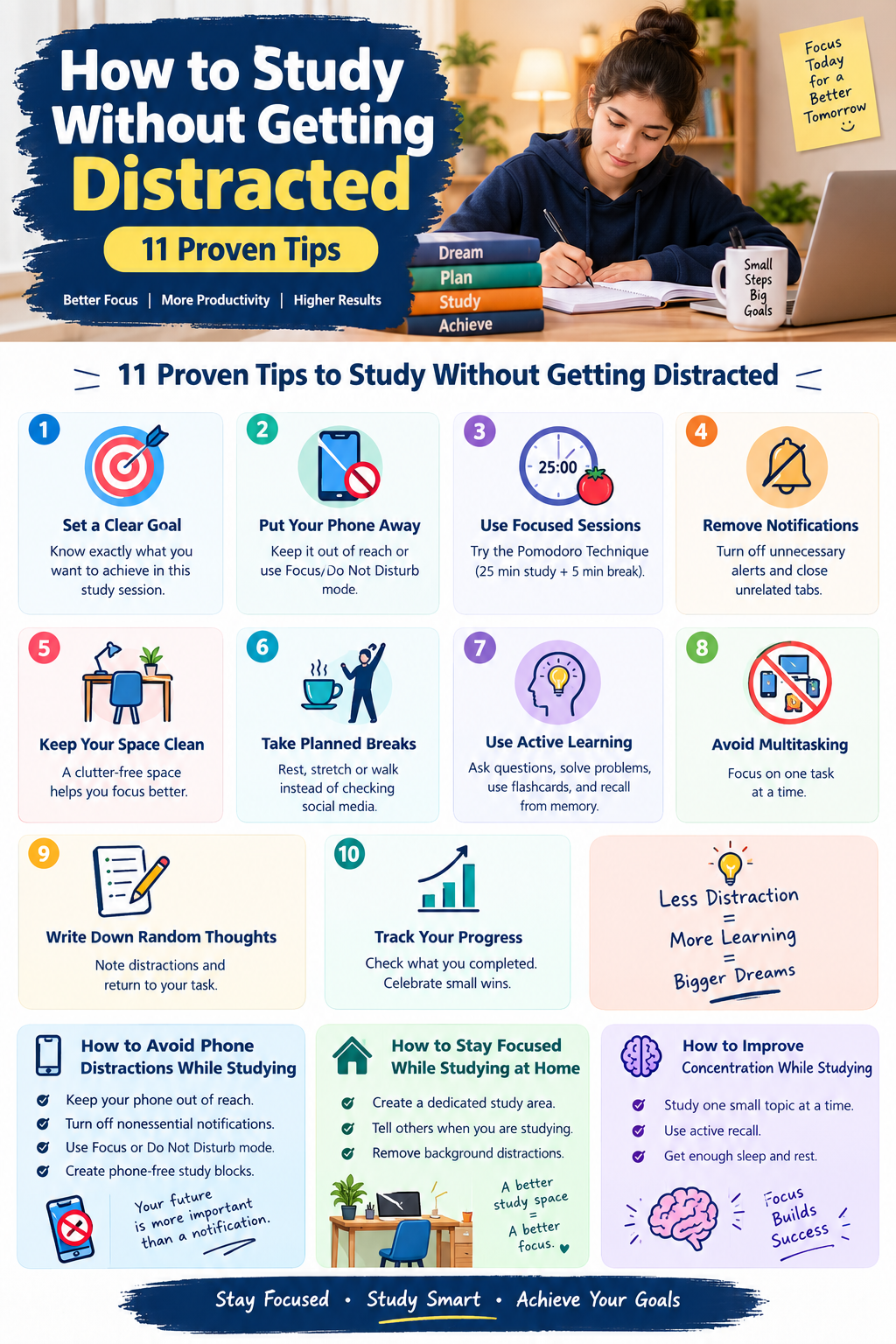
11. Remove Distractions
Your phone, social media, unnecessary browser tabs, and constant notifications can interrupt your attention.
Before starting, prepare everything you need and remove obvious distractions.
A simple study environment can include:
A clean desk
Your textbook or notes
Water
A notebook
A timer
Your practice questions
The simpler the environment, the easier it can be to focus on the task.
What Is the 9 8 7 Rule for Studying?
The “9-8-7 rule” is another study phrase that appears in online study advice, but it is not a universally established memory method with one standard definition.
Because different sources can use the numbers differently, students should not treat one version as a scientifically fixed rule.
For reliable memorization, focus on methods with clear learning principles: active recall, spaced repetition, practice testing, self-explanation, and focused study.
How to Be a Top 1% Student?
Being a high-performing student is not simply about studying for the greatest number of hours.
Strong students often develop systems that help them understand material, identify weaknesses, practice regularly, manage their time, and maintain consistent routines.
Instead of asking, “How many hours should I study?” ask:
“Can I explain what I learned?”
“Can I recall it without looking?”
“Can I apply it to a new question?”
“Can I still remember it several days later?”
These questions give you a more useful picture of learning progress.
A Simple Daily System for Better Memorization
You can put the techniques together into one routine.
Before Studying
Choose one specific topic and remove distractions.
Set a clear goal, such as:
“Learn and recall the three main causes of the American Revolution.”
During Studying
Read enough to understand the topic. Then close your material and recall the main ideas.
Write what you remember without checking your notes.
After Studying
Check your answer against the original material.
Mark missing or incorrect information.
Turn important points into questions or flashcards.
Later That Day
Test yourself again without looking at the answer.
During the Following Days
Review the same material using spaced repetition.
Each session should include retrieval rather than only rereading.
Frequently Asked Questions
How can I memorize what I study quickly?
Use active recall instead of repeatedly rereading your notes. Study a small section, close your book, and explain what you remember. Then check your answer and review the information again later. This approach helps you identify gaps instead of simply recognizing familiar words on a page.
What is the best way to memorize study material?
A practical approach combines understanding, active recall, spaced repetition, and practice testing. First understand the concept, then try to retrieve it without looking. Review it again after increasing intervals and use practice questions to check whether you can apply what you learned.
How can I remember what I read and study?
Pause after each section and summarize the main ideas from memory. Ask yourself questions about the material and explain the answers in your own words. Connecting new information with examples or previously learned concepts can also make later retrieval easier.
How can I memorize things fast for a test tomorrow?
If your test is tomorrow, focus on high-priority material rather than trying to reread everything. Identify the most important concepts, use active recall, complete practice questions, and review mistakes. Avoid spending the entire night passively reading because rest is also important for effective learning.
What is the 2 7 30 rule for memory?
The 2-7-30 rule is commonly presented as a spaced-review schedule involving reviews around 2 days, 7 days, and 30 days after initial learning. It is best treated as a practical framework rather than a universal scientific rule. Adjust the timing according to your recall and the difficulty of the material.
What is the 9 8 7 rule for studying?
The 9-8-7 rule is an online study phrase that does not have one universally accepted definition. Different study sources may describe it differently. For dependable memorization, students can focus on established learning strategies such as retrieval practice, spaced repetition, and practice testing.
How can I become a top 1% student?
Focus on consistent learning habits rather than simply increasing study hours. Set clear goals, understand concepts, test yourself regularly, review information over time, practice weak areas, manage distractions, and maintain adequate sleep. Progress comes from effective and consistent study, not from a single memorization trick.
How long does it take to memorize what you study?
There is no fixed amount of time because memory depends on the difficulty of the material, your existing knowledge, attention, practice, and review schedule. A short focused session followed by repeated retrieval can be more useful than many hours of passive rereading.
Conclusion
Learning how to memorize what you study is less about forcing information into your brain and more about using effective learning processes.
Start by understanding the material. Then close your notes and retrieve what you remember. Use questions, flashcards, practice tests, explanations, and spaced reviews to strengthen recall. Break difficult topics into smaller pieces and remove distractions during focused sessions.
You do not need to use every technique at once. Choose two or three methods and use them consistently.
For your next study session, try this simple sequence: understand, recall, check, practice, and review later. Over time, this routine can help you remember more of what you study and prepare with greater confidence penstrip